Roses

It’s been a bumper year for roses so far here in the Western Districts of Victoria. The blooms until now have mostly been big, lush, and beautiful.

After the first flush of flowers have died back the plant can look untidy so getting rid of the dead flowers is a big part of rose care, especially useful in keeping your garden looking its best.

Roses bushes are often putting on another growth spurt at this stage, so there will often be a new stem forming further back down the stem you are going to cut, behind the dead or dying flower. You can either cut back to these new growths when cutting off the dead flowers (otherwise known as ‘deadheading‘) or, depending on what shape you want to leave the plant in, you can cut back to a set of leaves further up the stem.

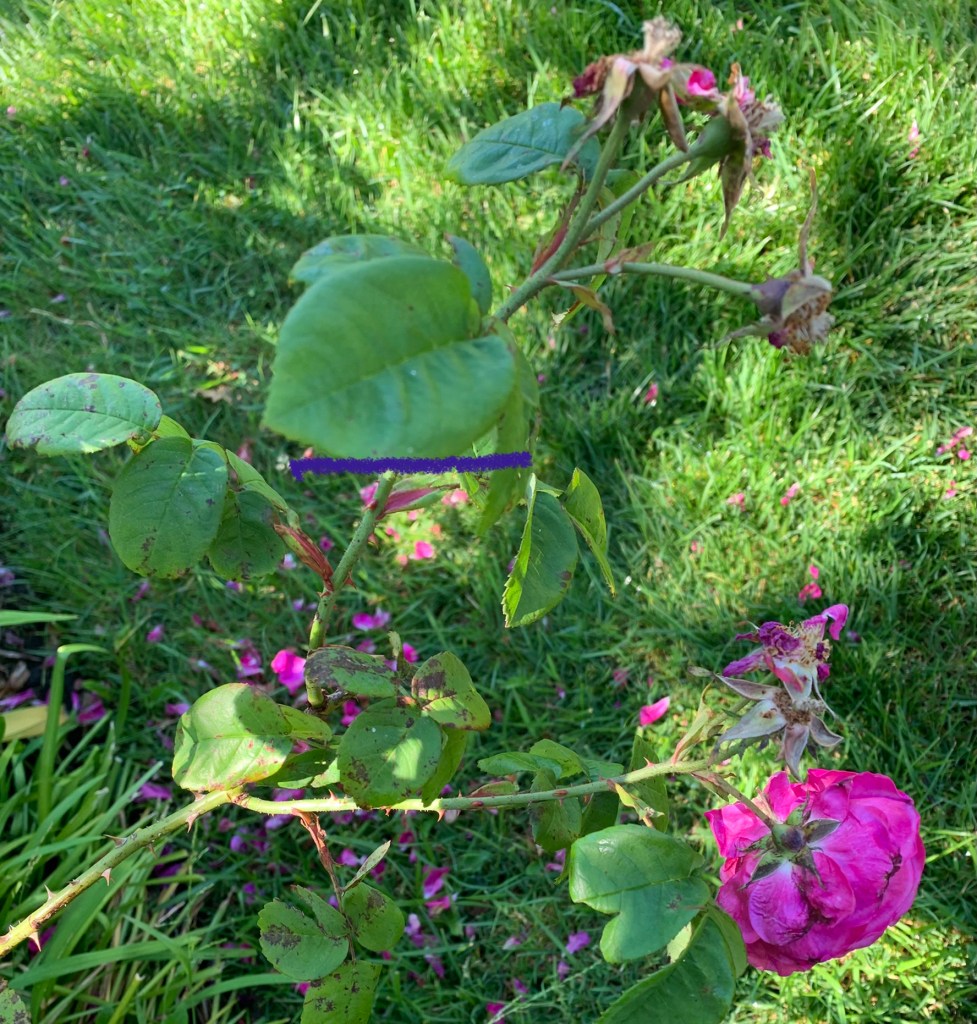
In the pictures I’ve provided the plant had a few long, arching stems left with fresh, new blooms so I didn’t want to cut the stems with the dead flowers back too hard. This would keep the plant in an even looking shape overall.

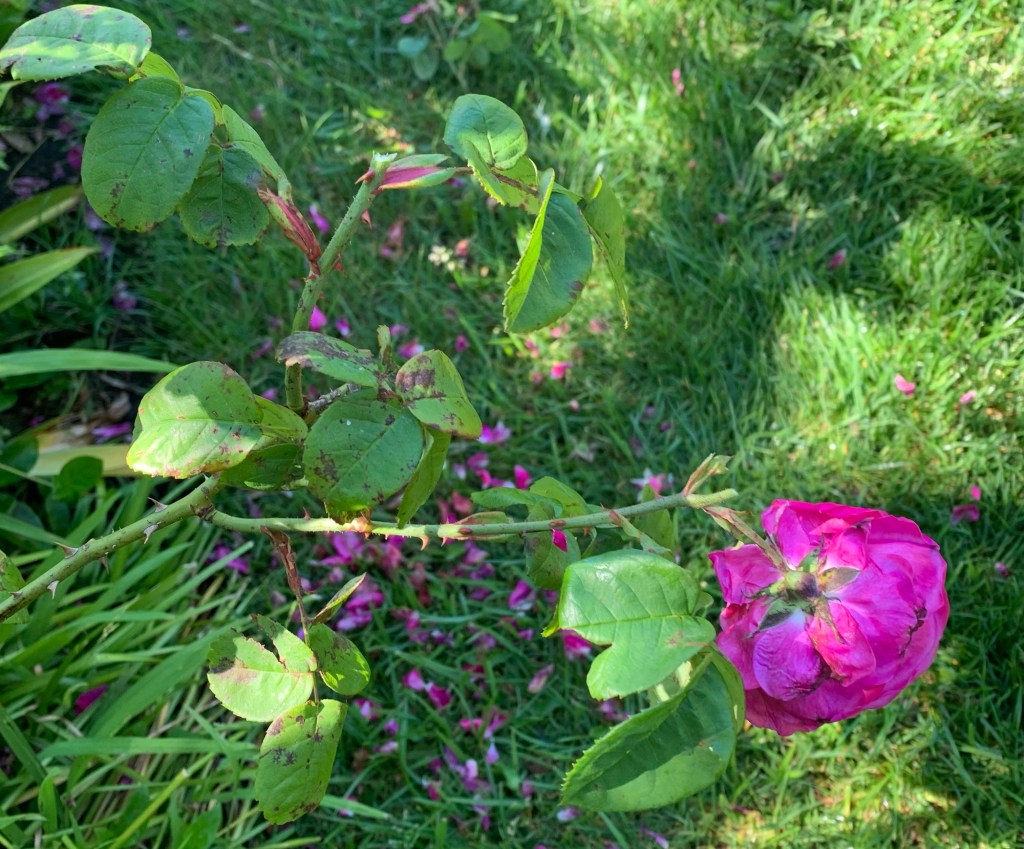
For this reason I cut the stem back to a set of leaves above a new stem which was forming. The purple mark shows where I decided to cut; the second picture shows what the stem looked like after being cut.

Some roses will have a second flowering later in the season, others won’t. When you buy a new rose it’s a good idea to check it’s flowering habit. I’m not sure which rose this one is so I’m not sure if it will flower again, I’ll just have to wait and see.

Giving your roses another feed after their first flush of flowers is another good idea, a rose specific food will have the right combination of fertilisers to keep them growing well through the rest of the summer.

Marked where I’m going to cut
After cutting

Another thing to remember is to use sharp, clean secateurs and to cut close to either the leaf nodes or new growth without leaving a long piece of stem which will die and go brown and unsightly. A pet hate.

Til next time!

Unexpectedly Edible

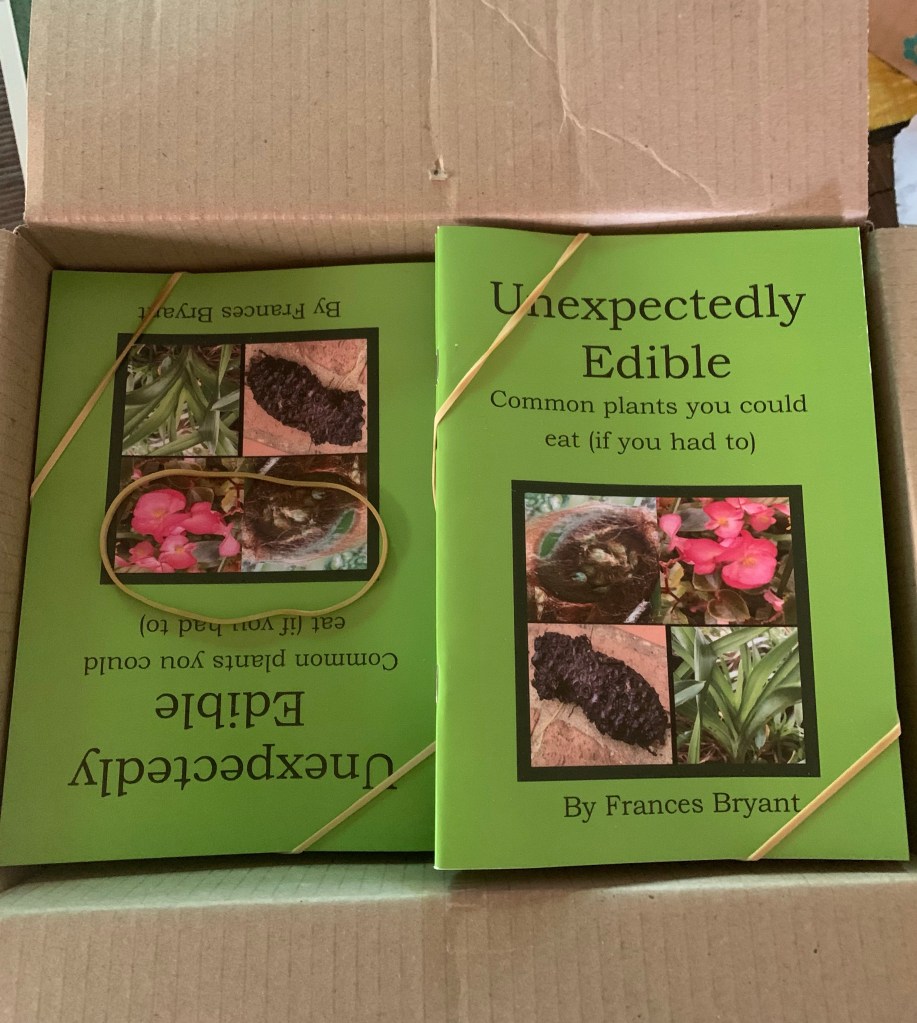
I’m very excited to announce my third book, Unexpectedly Edible, has been printed and is now for sale!

This short book is a fascinating glimpse into some plants you may have in your garden, or readily available in close proximity, that can be eaten. Some you may know of already, some you may not. Some of them are commonly eaten in other cultures but not so much in modern, western style cuisines.

My research journey really began when I tasted a black berry that had formed at the base of an old fuchsia flower, it wasn’t too bad! I then started looking into what other plants I had in my garden that I could eat and was quite surprised by the number of them which I could eat.

One of the main messages I want to pass on as well though, is to always be sure of what you are eating, test tasting is always a good idea for something you’ve never eaten before. Even just rubbing some on your lips and gauging any reactions before you eat a little bit is a tried and true method.

This book is really an extension of my very first book, Food for Survivors of the Zombie Apocalypse, which takes a humorous look at survival through knowing what weeds you can eat, along with some other survival tips such as keeping chickens for their eggs but keeping them far enough away from your compound that their clucking doesn’t bring the zombies to your door! FFSZA is available as an ebook from Amazon and GooglePlay or message me for a print copy to be posted.

Print copies are $10au plus p&h

Winners of my naming contest for this site and upcoming podcast (yes, it’s still coming!), Sam and Helen, can look forward to their copies of Unexpectedly Edible arriving soon!

‘Til next time!

Awaiting distribution

Day tripping.

The Grampians, Western Victoria, Australia.

Today I was lucky enough to head further into the west from my home on a day trip with my husband in his truck. We drove to the city of Hamilton, passing a few small country towns on the way; Hexham, Caramut, and Penshurst.

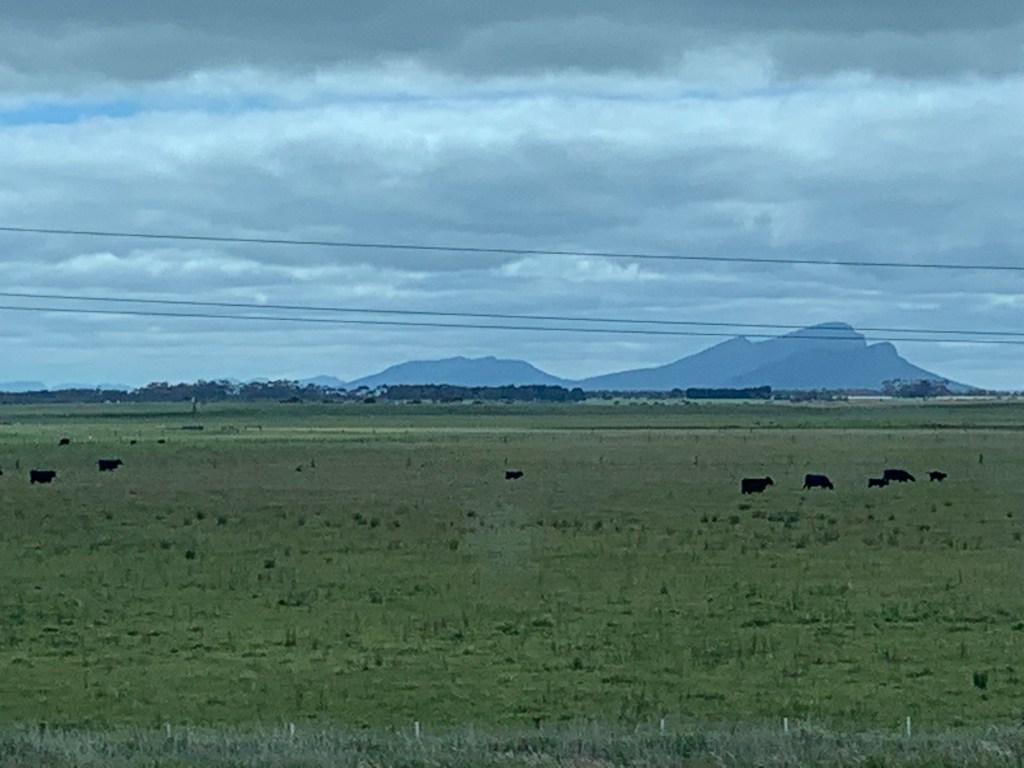
Dominating the skyline for part of the journey is a range of mountains named the Grampians (Gariwerd, as named by our First Nations people) pictured above. This mountain range was formed with a series of geological events over millions of years (more detailed information can be found at savegrampiansclimbinghome.files.wordpress.com) .

I haven’t been to visit the Grampians National Park yet, but it will definitely be the subject of a future ‘Glog’.

Wetlands at Penshurst

All along the Hamilton Highway there is evidence of creeks, rivers and wetlands, the number of wetlands birds I saw on the trip was incredible: Black Swans, White faced Herons, White Necked Herons, and many ducks of unknown varieties. I haven’t got any photos of those unfortunately, taking pics out the window of a moving truck can make it difficult to focus and you’ve usually passed them by then anyway. I was also lucky enough to see a Wedge tailed Eagle at fairly close quarters, a single Yellow Tailed Black Cockatoo, and a solitary Kookaburra sitting on a phone line, along with myriads of the usual Magpies and Ravens.

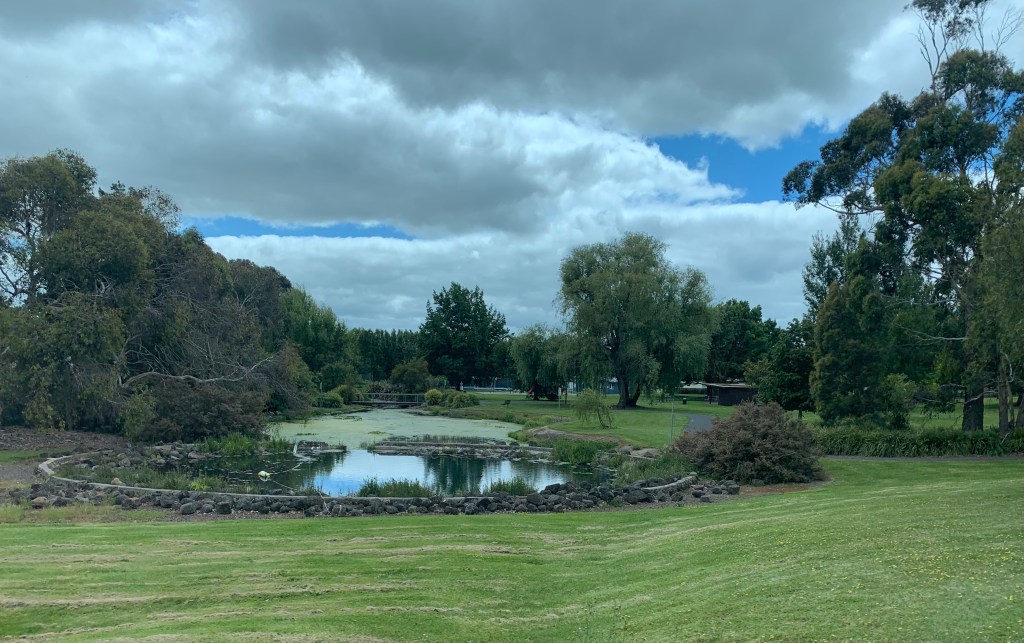
The township of Penshurst has a lovely wetlands park which I will stop and look more closely at another time too.

Hay Bale Art, Tarrington, Victoria, Australia.

On the outskirts of the town of Hamilton, Tarrington holds a festival with German (Lutheran) origins called Laternenfest which celebrates Christmas.

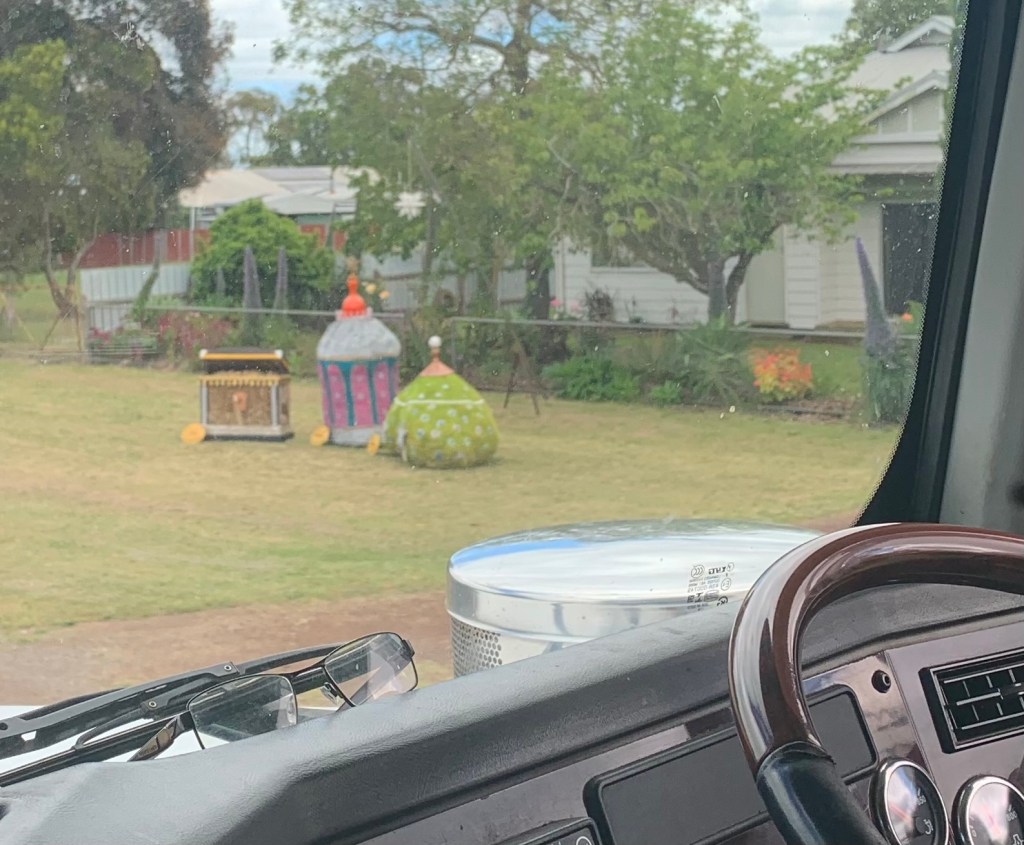
As part of the festival they produce some very fine examples of Hay Bale Art which are displayed outside their homes along the highway. I don’t think you could get a more Aussie display of artistic creativity.

That’s my day trip in a nutshell, It’s always such a great day being driven around the countryside in a Western Star, which seems appropriate somehow in the Western Districts.

’til next time!

Rainy days

There’s been a large amount of rain about these last few days with more to come. Spring is a time for rain and we can still even get late frosts into early November in these parts.

In between showers and after torrential rain it’s been nice to get out and check out the spring flowering that’s been going in regardless of my dislike of getting a drenching .

It’s been a particularly good season for roses so far, they seem to be bigger and brighter than they have in previous years, I guess the cold and wet winter has been good for something! Deadheading the old roses off the bush keeps the plant looking fresh, cutting the stem back to either a node or new growth will stop the unsightly dieback caused by not cutting the flower off far enough from spoiling the look of the shrub.

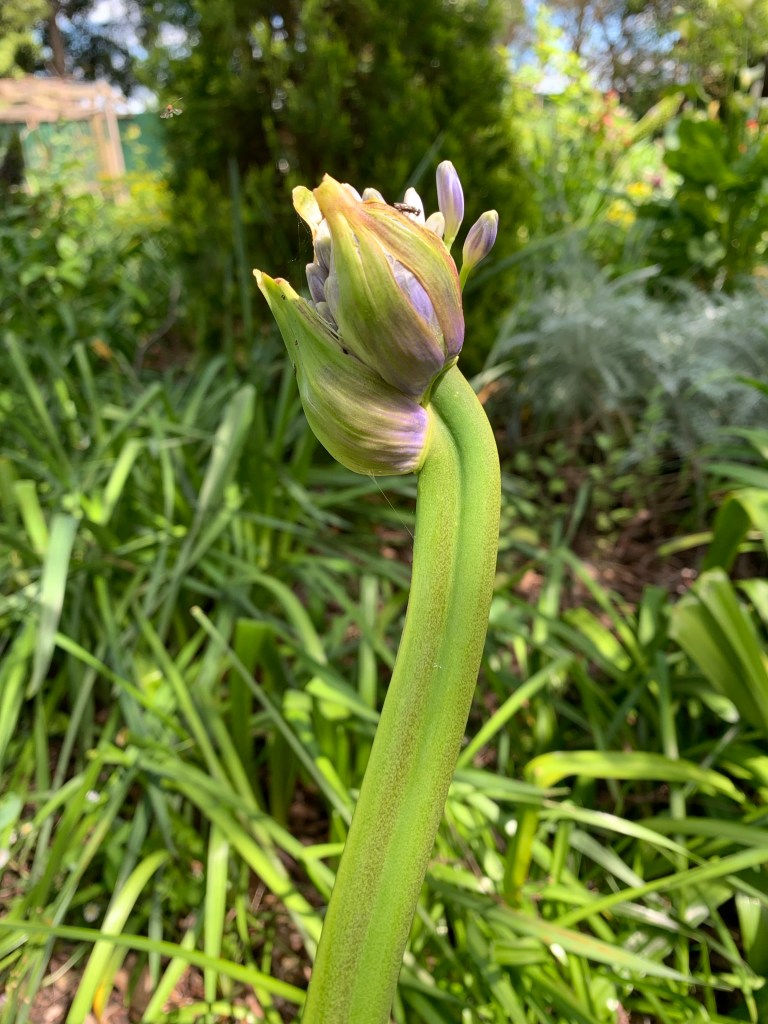
One thing that always fascinates me in the garden is the phenomenon of fasciation (see what I did there?) The flattening out of stems can cause the stem to fan out and produce double the number of flowers which is always interesting. The cause is thought to be either a hormonal imbalance, a result of insect attack during formation, or even a virus. Whatever the reason, fasciation doesn’t affect the overall growth of the plant and if the affected stem is cut out the plant will continue to grow. Personally, I just leave the stem on as it can be fascinating to observe.

All this rain we’ve been having will give us a good start for the summer dryness and heat so I guess complaining about it is a waste of time. I will have to start using that extra inside time in a better way so as not to waste it.

‘Til next time!

End of Lockdown

The opening up of Victoria from Covid Lockdown has been a long time coming but now we’re free to travel between the regions and Melbourne City.

I’ve taken the opportunity to visit two of my children, one on the Mornington Peninsula and one in St Kilda. I will have to arrange another time to see the other one!

In both of the places I’ve visited I’ve been lucky enough to be able to find natural places and see the signs of people connecting with nature.

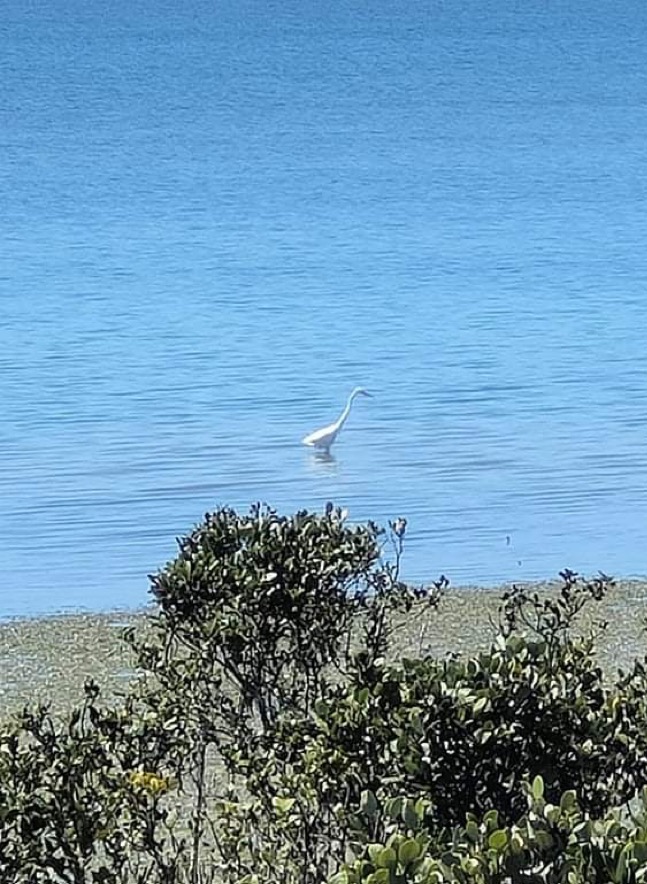
On the Mornington Peninsula a walk around the edges of Westernport Bay took me to the edges of Mangroves, an ecosystem that has always fascinated me.

Growing up in Auckland, New Zealand, the local beaches where we mostly went to dip a toe in the water most often had Mangroves around the edges which gave the ‘beach’ a muddy bottom. I was always scared crabs were going to dig their way up and bite my toes.

On the surface they may seem to be smelly, muddy places of no particular value or beauty, but they are far from that. They are extremely important ecosystems for the health of the sea and the whole planet. The following link gives some information about their significance:

Share the Facts About Mangroves (conservation.org)

Further north and off the Mornington Peninsula onto the main body of Victoria, the suburb of St Kilda sits on Port Phillip Bay. The whole foreshore has been developed and many people get out to exercise and walk with the spectacular views of the water and the cityscape. Walking out onto St Kilda pier is a joy as you look back onto land. Sometimes Dolphins are even seen at play close in to the shore, maybe there to hunt the cute penguins from the Penguin Colony? I’m not sure. Nature.

Anyway, ’til next time.

Good news!

The good news today is our beautiful state of Victoria is on its way out of Covid Lockdown and from 6pm Friday travel is allowed between Melbourne and regional Victoria. This means I will be travelling to see family next weekend ❤ ❤ ❤

In the garden it has been another week of cold, rainy days so not much has been happening here in Western Victoria. Clematis are flowering and it is shaping up to be a bumper Rose season. Aphids are starting to appear so a quick squirt with a hose or a spray of horticultural oil will keep them down to a manageable level.

I have found another source of news of the environment, ecology, and culture in Orion Magazine. I am looking forward to reading this through emails and maybe finding things of interest to pass along.

Technicalities have slowed the release of my first podcast (again) but it is getting closer! Keep an eye out on all my socials! Frances.

A Gardener’s Log

I have been lucky enough to escape from my local area to take a short trip to see my sister in central Victoria as her ‘single social bubble’.

A trip to the Bendigo Art Gallery was a treat as their exhibition of Australian artist Brett Whiteley was still open and free to visit.

I’ve not been a fan of Whiteley’s art until seeing his works in real life, which is always the best way to get an understanding of an artist’s work, but his works including plants and animals were particularly interesting to me. I had not seen any of these works before or maybe I just hadn’t noticed. Anyway, my mind on Brett Whiteley has been changed.

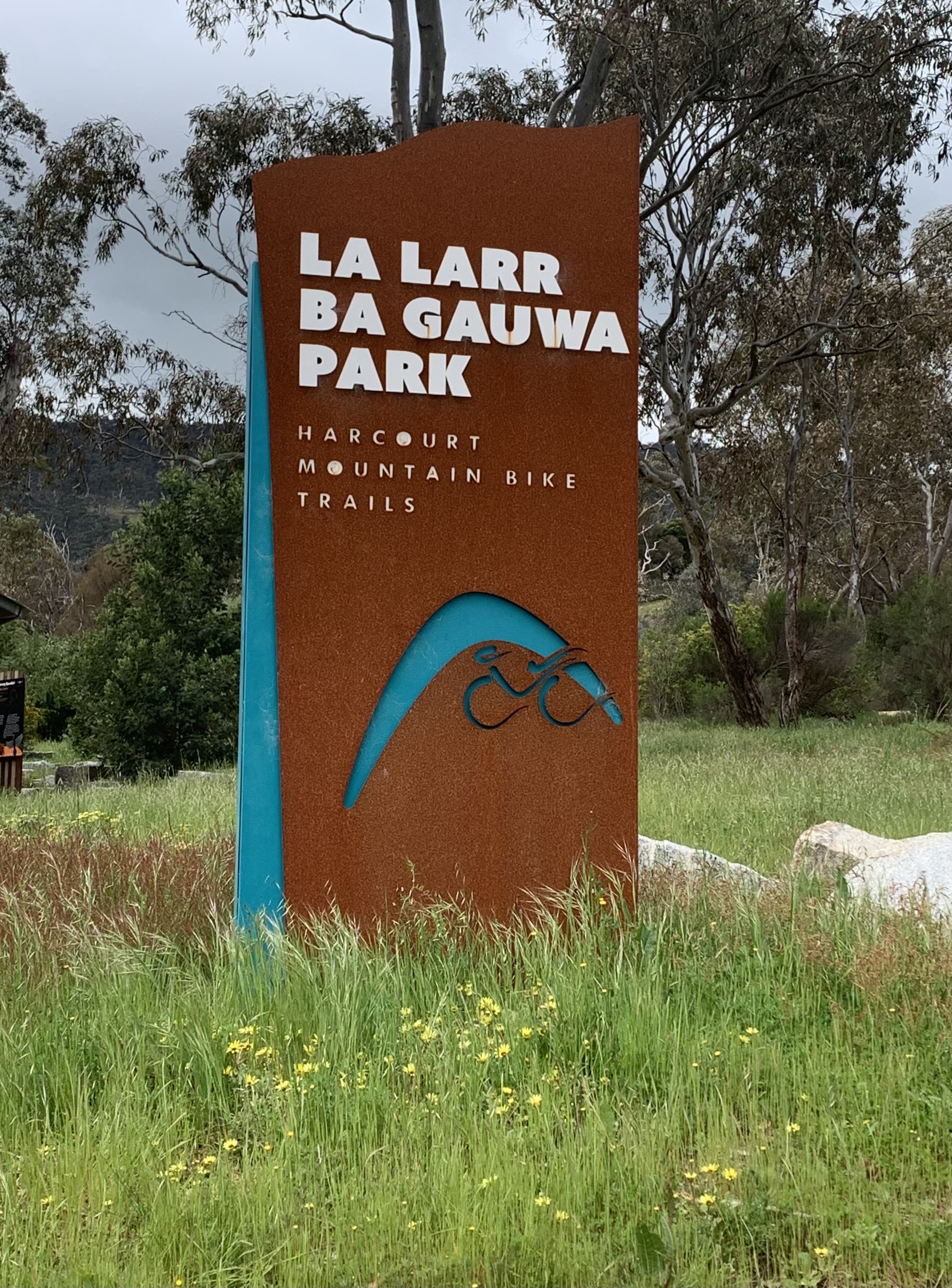
After this artistic joy and a meal at the gallery café, we took a quick drive out to scope out the Oak Forest at Harcourt, in the La Larr Ba Gauwa Park as my sister’s walking group are planning a visit.

The Oak trees were planted by the Land Department in 1900, Quercus valonia, and other varieties planted as well, were supposed to provide acorns for use in the tanning and dying process. The conditions turned out to be unsuitable for Q. valonia but the other species, along with some Elm trees planted to protect the young oaks, managed to survive and have become an attractive place to visit.

Unfortunately, it was raining, and the roads were too potholed for the car we were in so we didn’t actually get to the Oak trees, but one day I will!

Source: lalarrbagauwa.harcourt.vic.au

The Moreton Bay Fig 1979 Brett Whiteley

A Gardener’s Log (or Glog?)

Well things are still moving toward getting my podcast, The Flowerpot Pen, off the ground; It sometimes takes me a while to get all my stars aligned. But don’t fret! it will come and as soon as it does you’ll be the first to know!

Meanwhile, in real time, Spring has really gotten off to a great start with some good rain and some good sunshine, quite a mix of the two. Weeds are sprouting and taking off while the farmers are getting out harvesting all the lush growth we have here in the Western Districts of Victoria; lush, green growth as a result of the massive year of rain we’ve had so far. It looks like it might be a bumper year for all things flowers too, roses are starting to bud up, my Wisteria is divine, and my Viburnum plicatum is flowering the best it has in years.

I am working towards getting some people lined up to interview in my podcast (yes, it is coming!) so you can look forward to some interesting talks with a variety of people from the home gardener to the professional gardener, and hopefully a few academics who can take us deeper into the worlds of botany and/or conservation and land management.

Head on to my socials and like and follow!

’til next time!

Setting up

I’m slowly working through all of the steps to get this site up and running. Connecting the socials, allowing audio updates, preparing pages…it seems to be a web of interconnected digital threads that will, in the end, allow me to get some interesting information, conversations, and general gardening stuff out into the ether!

Podcast coming very soon! Look forward to connecting to some very interesting people.

See you soon! Frances.

Welcome

welcome to The Flowerpot Pen, your news source for anything to do with gardens and our environment, mainly in the Western Districts of Victoria, Australia, but also over the world. Working together we can make a difference to how our world functions, now and into the future!

Please look at the links at the bottom of the home page and follow me in my various other roles as a writer and a creator. I’m looking forward to having you join my journey. Frances.