Therapeutic Horticulture

What is Therapeutic Horticulture? Who is Therapeutic Horticulture for? They’re the two main questions I’ve been asked when speaking to people about my professional focus over 2023.

In a nutshell, Therapeutic Horticulture (or TH) is using horticultural practices to achieve therapeutic outcomes, and TH is for everyone.

TH can be as simple as keeping houseplants on the windowsill, or as complex as having a vegetable garden, or volunteering in a community garden.

Over 2024 as my TH business, Gardening for Body and Mind, expands I’ll be sharing some of my TH activities.

A couple of benefits achieved through TH are a sense of achievement, and a feeling of being relaxed; there are studies that show this to be true. So in this post I will feature one of my personal favourite activities: flower arrangement (not specifically a horticultural practice, but it still involves the scents, colours, textures of natural elements which make up a large portion of what makes TH work) Seeing I’m on holiday, this is an appropriately calm task that will provide me with both those benefits.
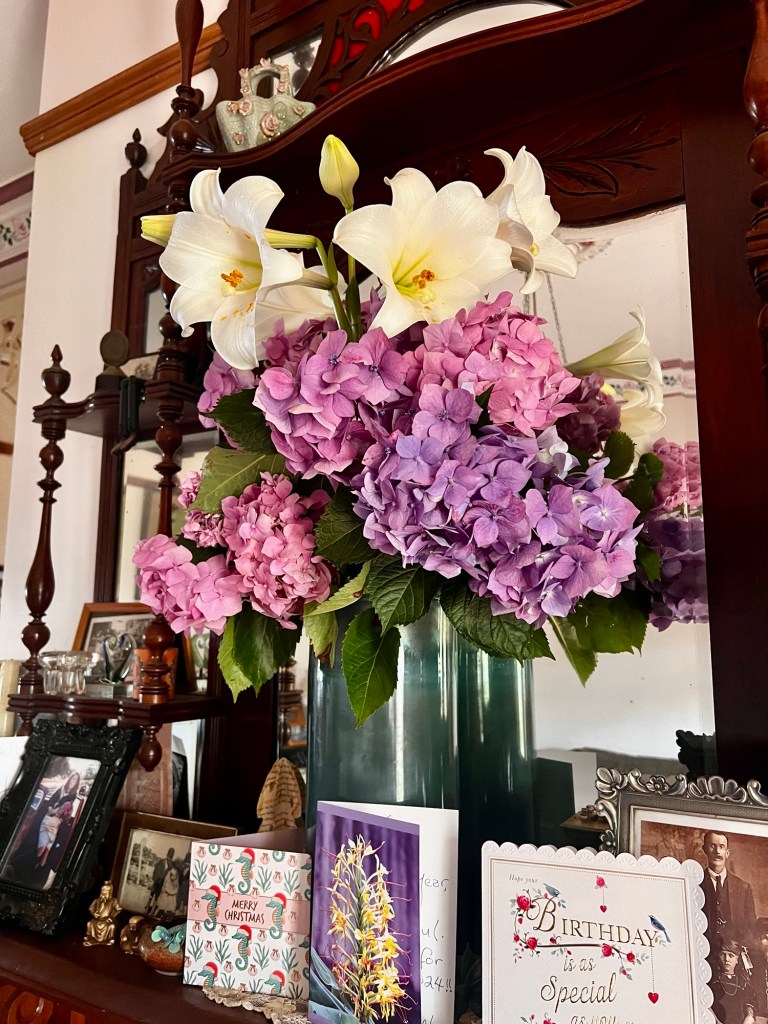
Mantelpiece with a floral arrangement and cards
Floral arrangement, Lily and Hydrangeas

I arranged these flowers on NYE and a few days later they need to be updated. Changing the water, re-cutting the stems, and replacing dead flowers will refresh it.
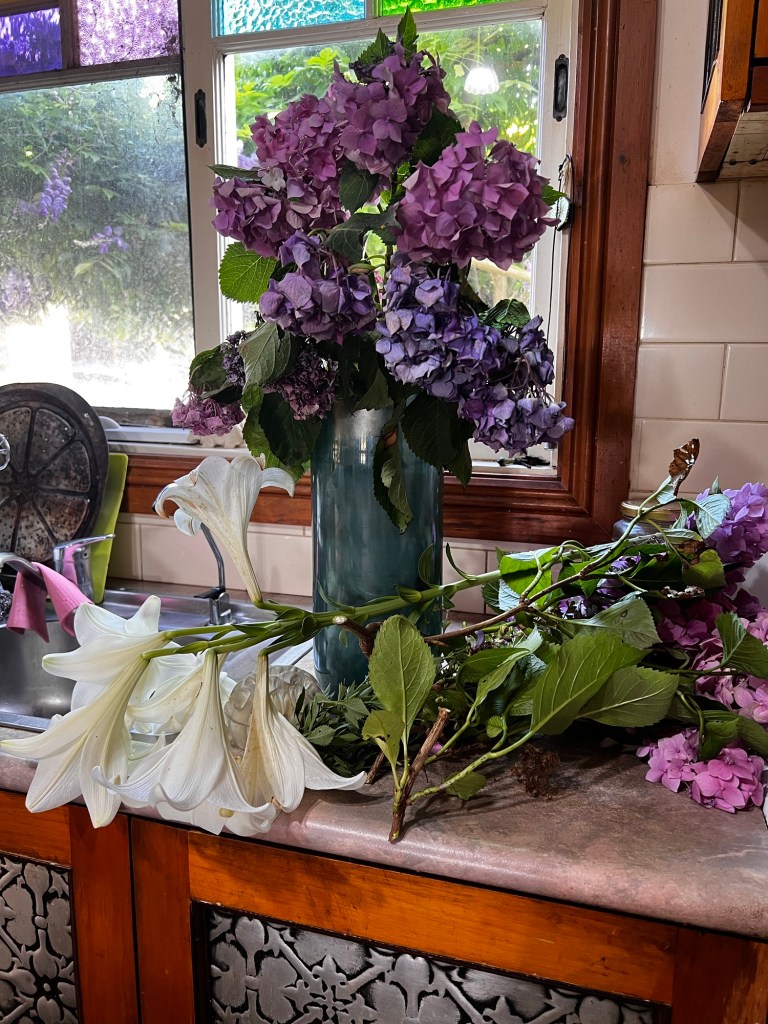
Deconstructed arrangement ready for renewal
Old and new flowers

I used the Lily again, replaced some hydrangeas, and added some Salvia flowers (I’m not sure of the species name). I will also be using a glass frog at the base to hold the Lily up straighter.

Deconstructed arrangement with Lily now in a frog
Lily in a frog
The finished arrangement
Finished ✔️

The finished result goes back on the mantelpiece to be admired for a few more days. I could have cut the lily stem a bit shorter to make the arrangement more compact, but overall I am pleased with the result.

In this simple act of reconstructing a floral arrangement I’ve performed a TH activity, it is something that is possible for most people; the scents of the flowers are good for your soul.

Til next time!
Christmas Eve Eve

It’s the eve of Christmas Eve, that makes it Christmas Eve Eve in my book.

It’s a time for a bit of calm reflection before the start of whichever emotions you will be dealing with on Christmas Day, both positive and negative.

I’m reflecting on all the things I’ve done this year, a year full of intense personal events running in the background of some big changes.

Leaping quite far out of my comfort zone this year, I’ve taken steps to start a business based on therapeutic horticulture principles; Conferences, a business course, pitching my business idea for funding (!!!), laying foundations for a big year next year, and plenty of networking (in itself a massive leap out of my comfort zone)

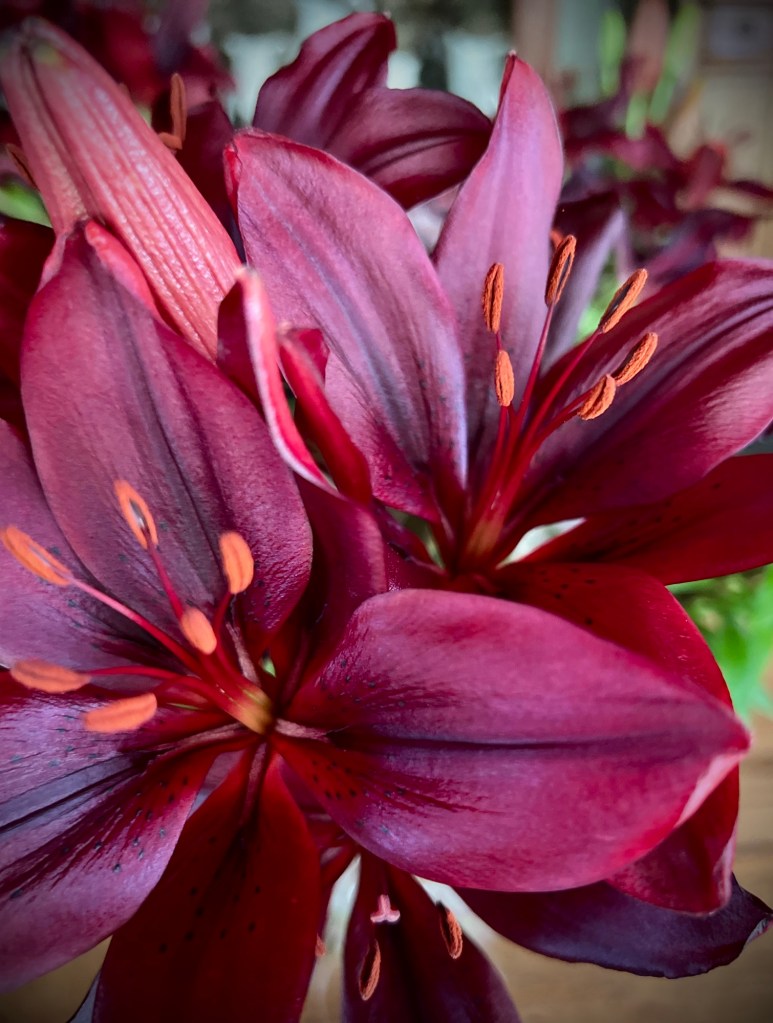
Close up photo of lilies
Burgundy Liliums

At the bottom of all this activity is a desire to share the world of flowers and gardening to all and sundry. If I can spark a love of the natural world in just a few people, I will consider it a job well done.

I will be posting again next week, probably a bit about those gorgeous Liliums flowering here at the moment.

So thank you to all who read these posts, I sincerely hope you all have a peaceful Christmas.

Til next time!

Cherry Time!

One of the joys of tending fruit trees in the garden is getting to pick the fruit. This time it’s Cherry time!

My Stella cherry is situated right where I park my car so it’s easy to keep an eye on the development of its fruit. Also to keep an eye out for those pesky (but amazing) little birds that are keeping an eye on the fruit too.

I have thought about netting, but I’m not that desperate to get the fruit I want to risk trapping and harming birds, and the tiny bats I know are around. As a result, my cherry feast is often a small one, but that’s ok.

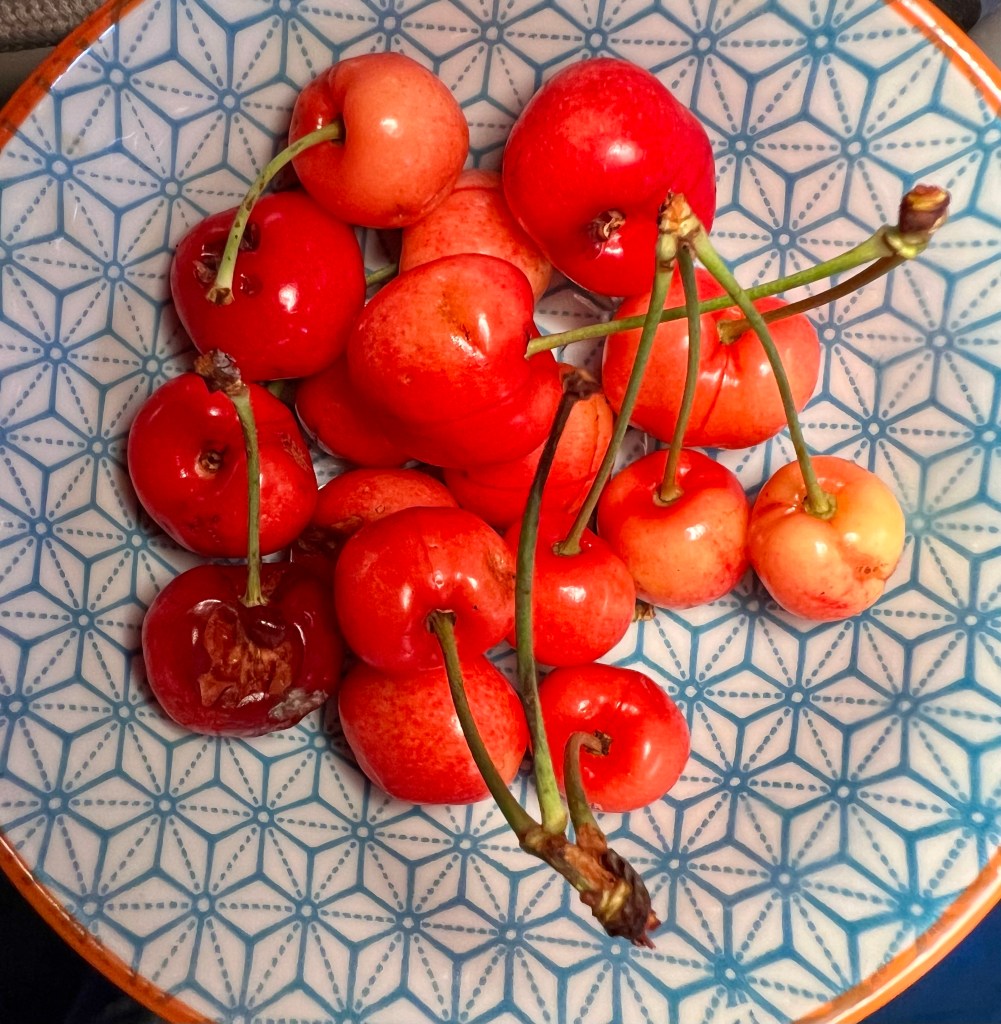
This year I decided to get in early and pick some of the fruit early, before it was fully ripe. Thus I have finally got a tiny feast waiting for me (depending on how well they ripen 🤔)

A small bowl of almost ripe cherries
Et voila!

Admittedly it’s a very tiny haul so far but I’m hoping to get a few more …

I like to prune this tree in summer after the fruit; this helps to keep the growth under control. I haven’t pruned it in a couple of years, so this prune will be a big one.

The tree has had formative pruning (to get an open, vase shape which lets light and air in to the centre of the tree) so it won’t be too hard to get it back under control, a little shorter to help fruit collection too.

Christmas is coming up very soon so I’m hoping to get some more fruit to grave the Christmas table.

TIL next time!

Backyard Birds

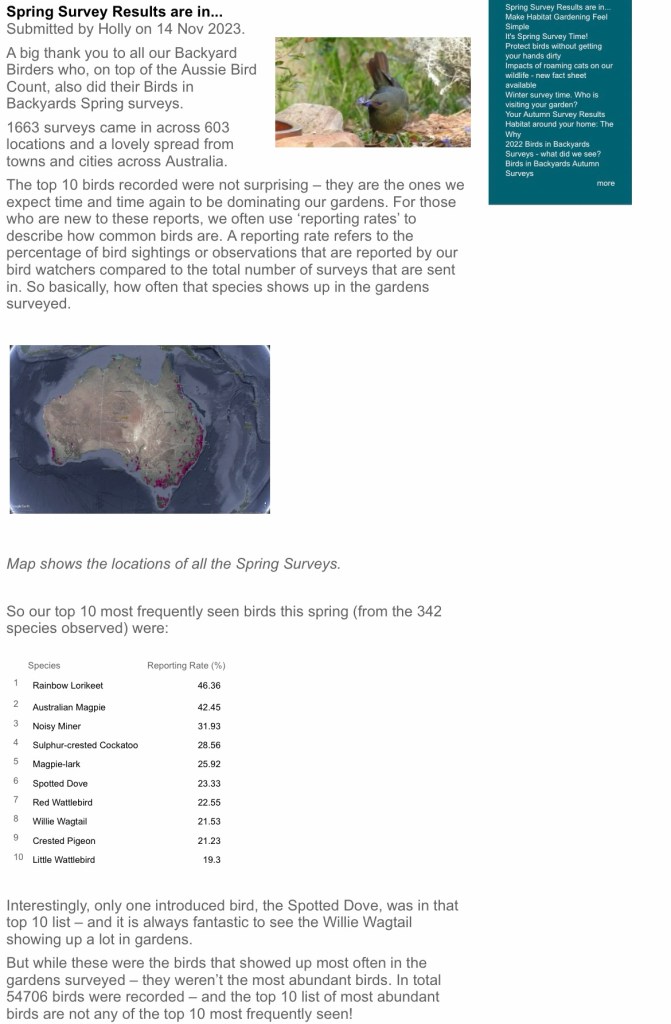
Every year Birdlife Australia run a series of seasonal citizen science events called ‘Birds in Backyards’ where we get to count and record the species and numbers of birds in our backyards.

The results for the spring survey are in, with the top ten species sighted and counted listed in the first photo.

Information regarding bird survey
Information from ‘Birds in Backyards’ website

Of these birds I regularly get to see: Rainbow Lorikeets, Magpies, Sulphur Crested Cockatoos, Magpie Larks, Red Wattlebirds, and Willie Wagtails.

These surveys are a fun way to get involved in keeping tabs on our all important bird populations. As you can see from the map in the first picture the sites of surveys is quite widespread.

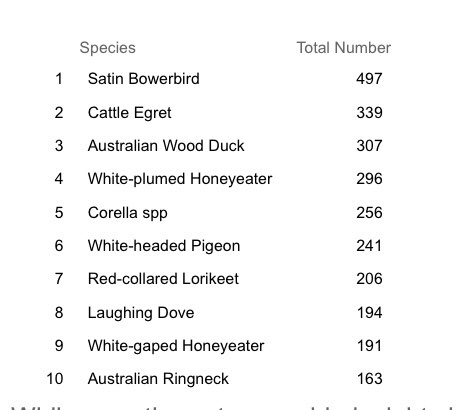
This next picture gives a list of the top ten bird species in numbers.

2023 top birds in numbers

Of these I get to see Cattle Egrets (occasionally), Australian Wood Duck, and Corellas.

It’s fascinating to keep tabs on the birds about, I keep a bird diary and was recently privileged to take a look at a bird diary kept by a local woman since 1966! The sad thing is, many of the birds she has seen in the area are no longer here.

If you’re in Australia, maybe check out Birdlife Australia’s website and hook into this fun activity. If you’re in another country, I’m sure the will be a similar organisation with similar activities.

TIL next time!

Header for ‘Birds in Backyards’ website

Simple Joy

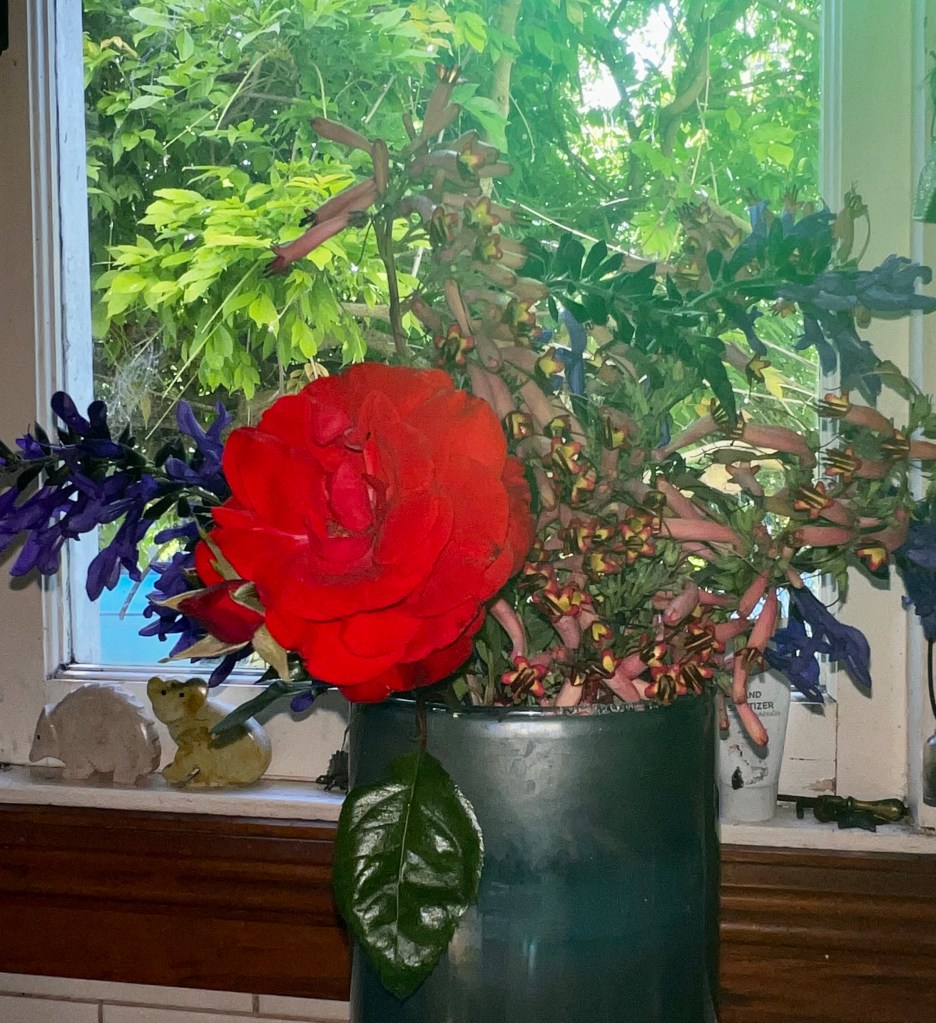
There’s a simple joy in going out to your garden, cutting some flowers, then sticking them in a favourite vase.

You don’t even need to spend any time arranging them if you don’t feel like it, just bunch them up and let them do their thing. Their beauty is in their forms, colours, scents, and the way they blend with their vase companions.

A bright red rose in a vase, surrounded by other flowers.
Flowers in a vase

Of course, you could always take time to make them sit ‘just so’ to complement each other and create a pleasing shape, but sometimes it’s ok not to.

It’s mid to late spring here, the weather is hotting up, so flowers are at their peak. It’s been a wonderful spring so far for most flowering plants; roses have been sublime.

I’m not sure which rose this one is, the real colour is a bright red, it’s lightly scented, and isn’t very thorny. It might be ‘Firefighter’ and it might not.

Flowers bounced together in a vase
Cape Fuchsia

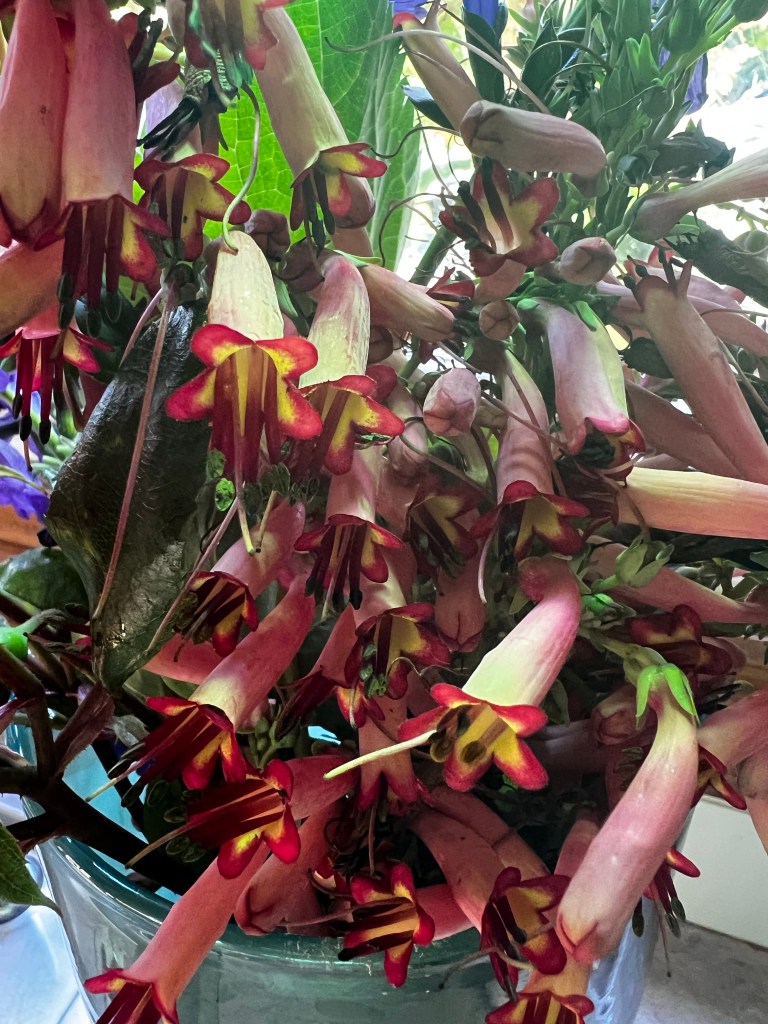
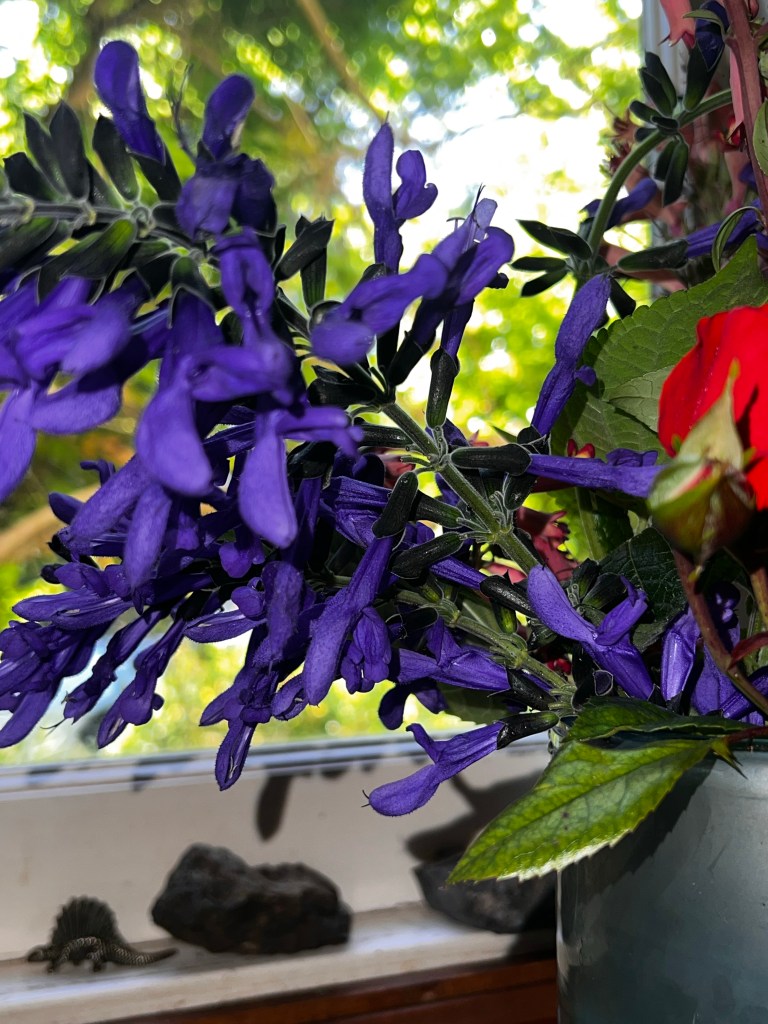
The rose is accompanied by some Cape Fuchsia (Phygelius sp) and a gorgeous but excessively active Salvia, whose name I forget. It is very lovely but I may have to cull it as it has outgrown its space, and it does drop lots of flowers in the vase.

Purple salvia flowers in a vase
Salvia in a vase

I’ll sit back and enjoy these flowers in my home while I’m starting to think about summer pruning and beginning a watering schedule as the days get warmer.

Til next time!

Wistaria

That got your attention didn’t it? Wisteria or Wistaria? Both are legitimate.

I once got into a heated ‘discussion’ on a FB garden group with a woman who was adamant she knew best. She had NEVER heard this gorgeous plant called Wistaria before, so it never had been.

Quite apart from the futility and stupidity of engaging in a heated discussion with a random stranger on a social media site, I knew she was wrong. Wrong! 😂

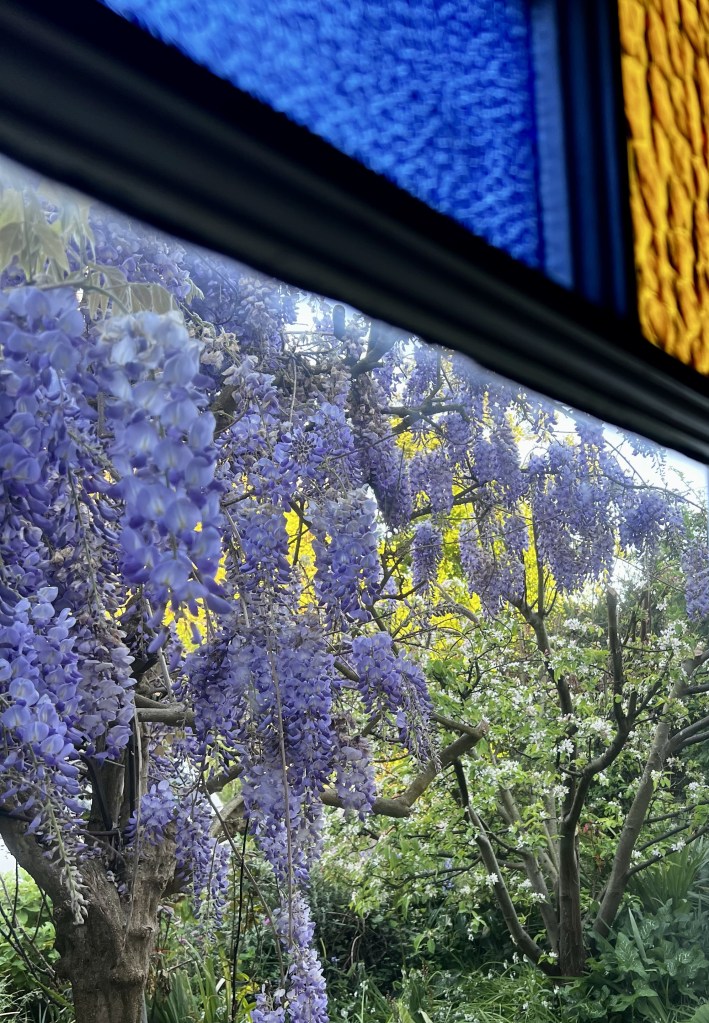
Wisteria and crabapple in flower with coloured glass
From my kitchen window

My understanding is this plant was first named Glycine frutescens by Linnaeus, the person basically responsible for the practice of naming plants with binomial nomenclature or two names. The name was later updated (an annoying habit of botanists) to Wistaria to commemorate Caspar Wistar, an American physician.

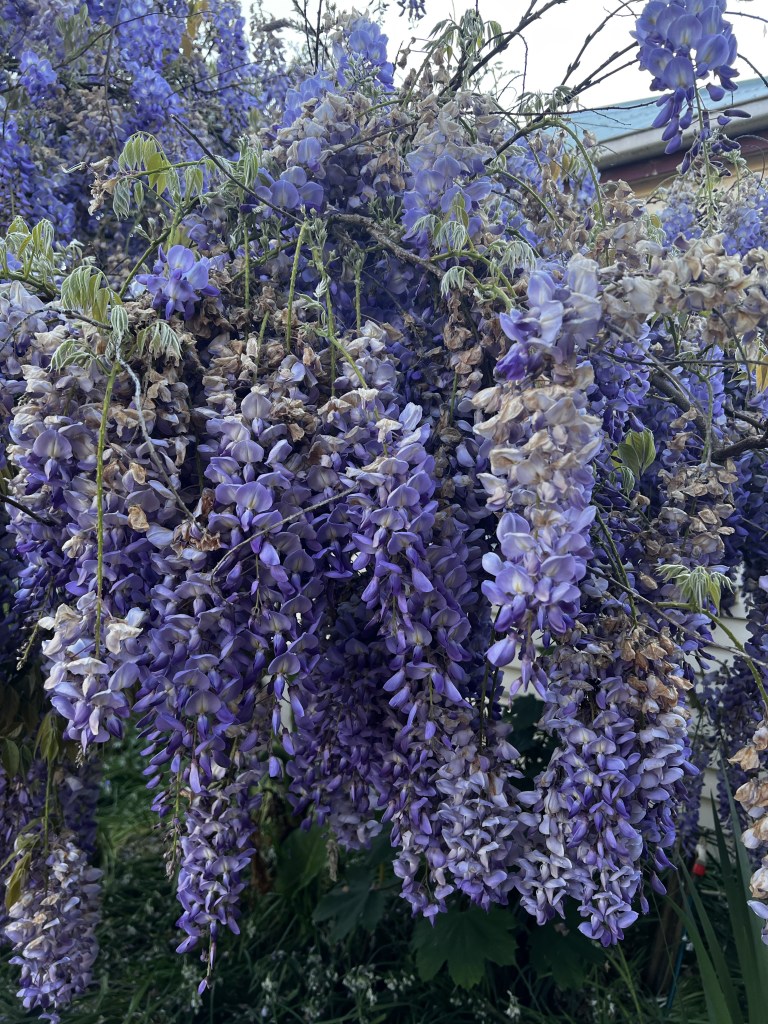
Wisteria flowers fading as they age
Fading blooms

I’m not sure why, or how, but over time the spelling became corrupted to Wisteria, which has become the most accepted form of spelling.

So there you have it. If you want a discussion on binomial nomenclature and the correct spelling of some plant names, here’s a good starting point.

Til next time!

Spring Dayz

Springtime here in South West Victoria, Australia is traditionally unsettled. True to form, we have had a variety of weather experiences lately.

Bright clear skies over a mountain
Blue skies smiling at me.

We’ve had warm, clear, sunny days, howling gales, cold, frosty or foggy mornings, rain, thunderstorms. You name it, we’ve probably had it lately.

Things could be worse, we could be having the bushfires they are having in New South Wales north of me, or the flooding rains they are having over in the eastern parts of my state of Victoria.

Word in the paddocks though, is we’re heading for a hot, dry summer thanks to an El Niño weather pattern. This, on top of having less than half our usual annual rainfall so far this year.

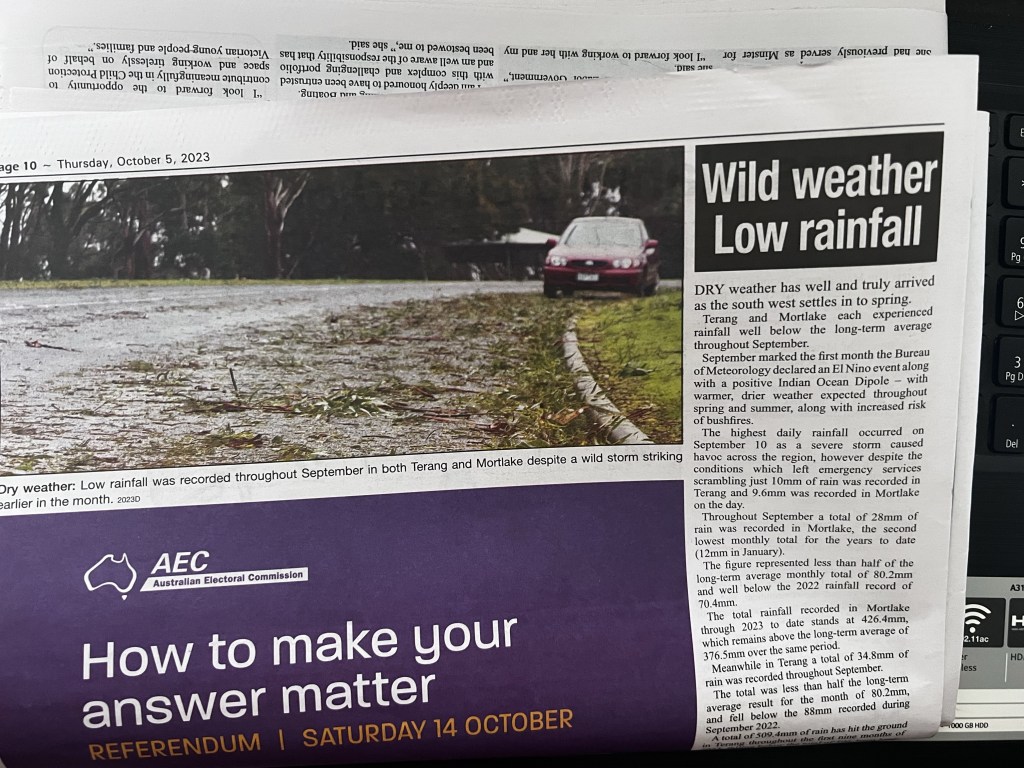
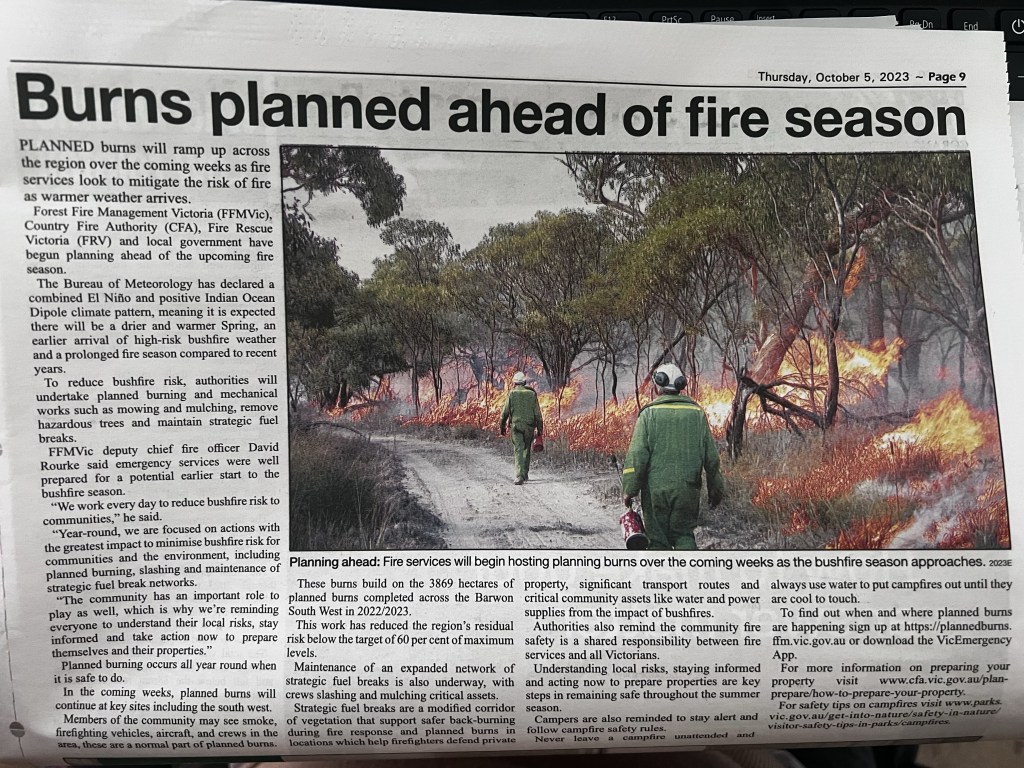
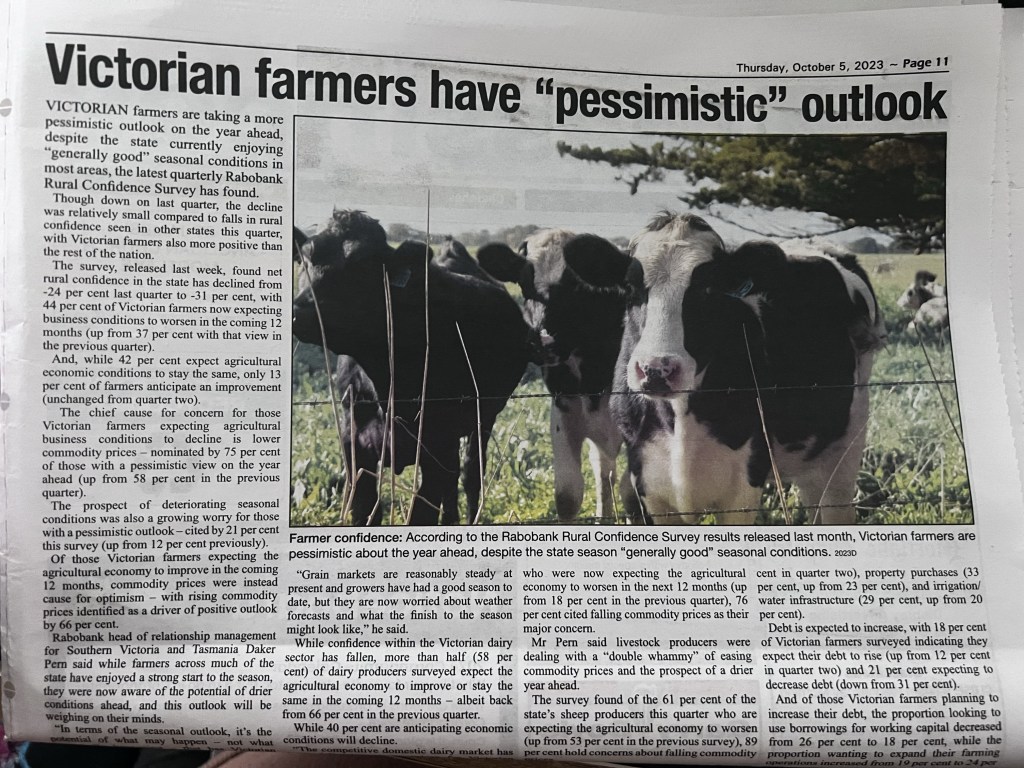
The following three pictures are from the same edition of my local paper ‘The Terang Express’ (Oct 5, 2023) so it can be safe to assume they reflect the general feeling in our community.

Newspaper article
Wild weather
Newspaper article
Fire season
Newspaper article
Are the cows pessimistic too?

I suppose the best thing to do is to plan ahead. Get your gardens fed and mulched before it gets too hot, make sure your water sources are secure, get your irrigation and hoses etc in top condition. I prefer to water in the morning, our snail populations explode over spring so watering at night tends to encourage the little blighters, and the water doesn’t sit on the plants to encourage fungus.

The spring bulbs are starting to die down now, old fashioned advice was to tie the spent plants leaves in a bundle til they die down, but now it’s generally thought best not to. The leaves will photosynthesise and ‘feed’ the bulbs for next season.

Previously I’ve just left my bulbs in the ground, but this year I think I’ll dig a lot of them up to thin them out. My jonquils have out competed the daffodils so it’s time to get them back under control.

Lots to do!

Til next time!

Blue

The colour blue is difficult to find in the flower world, there are more options for purple and lilac colours.

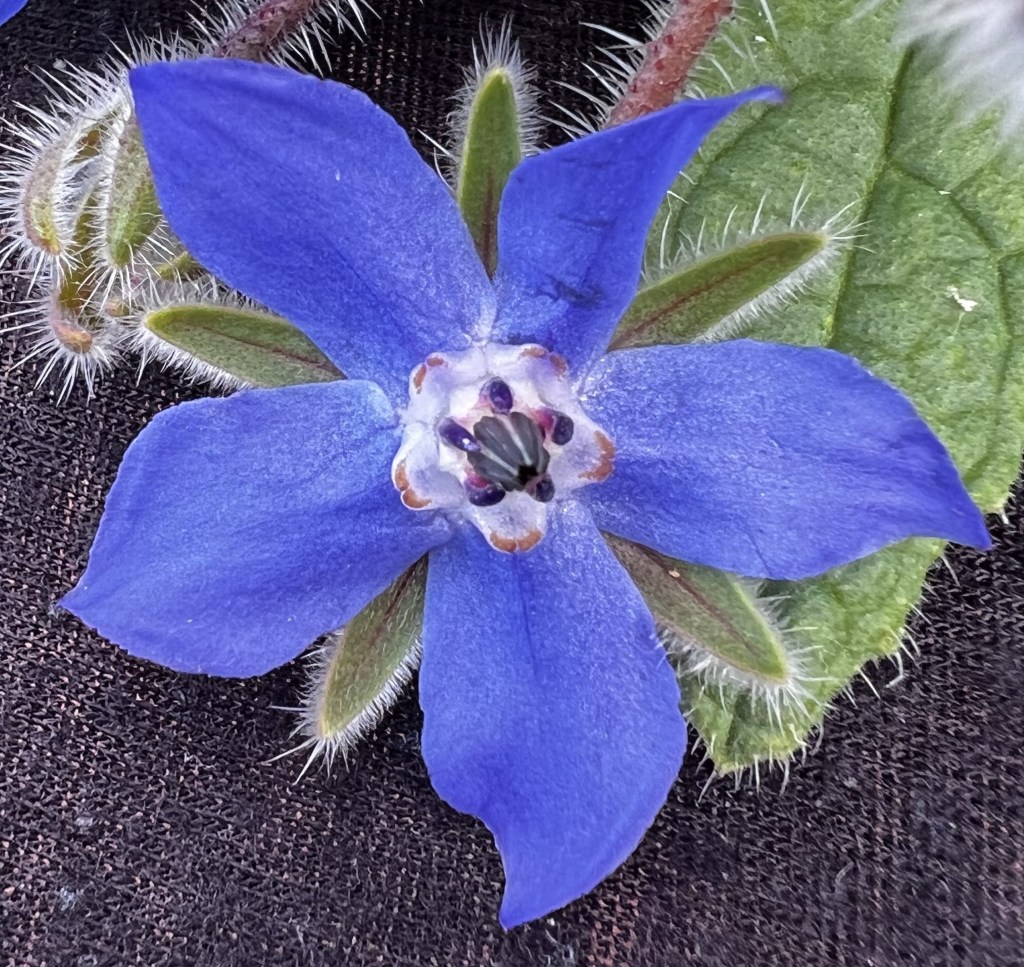
Borage (Borago officinalis) is one plant with what I would call a true blue flower, Love in a Mist (Nigella damascena) is another.

A single blue borage flower
Borage

Thinking of the theory of how colour affects our moods, the colour blue is thought to evoke a sense of either calmness and relaxation or depression (hence the term ‘feeling blue’) or even coldness. I prefer to try to think positively so I like to think the colour blue makes me feel calm. I do love both Borage and Love in a Mist flowers!

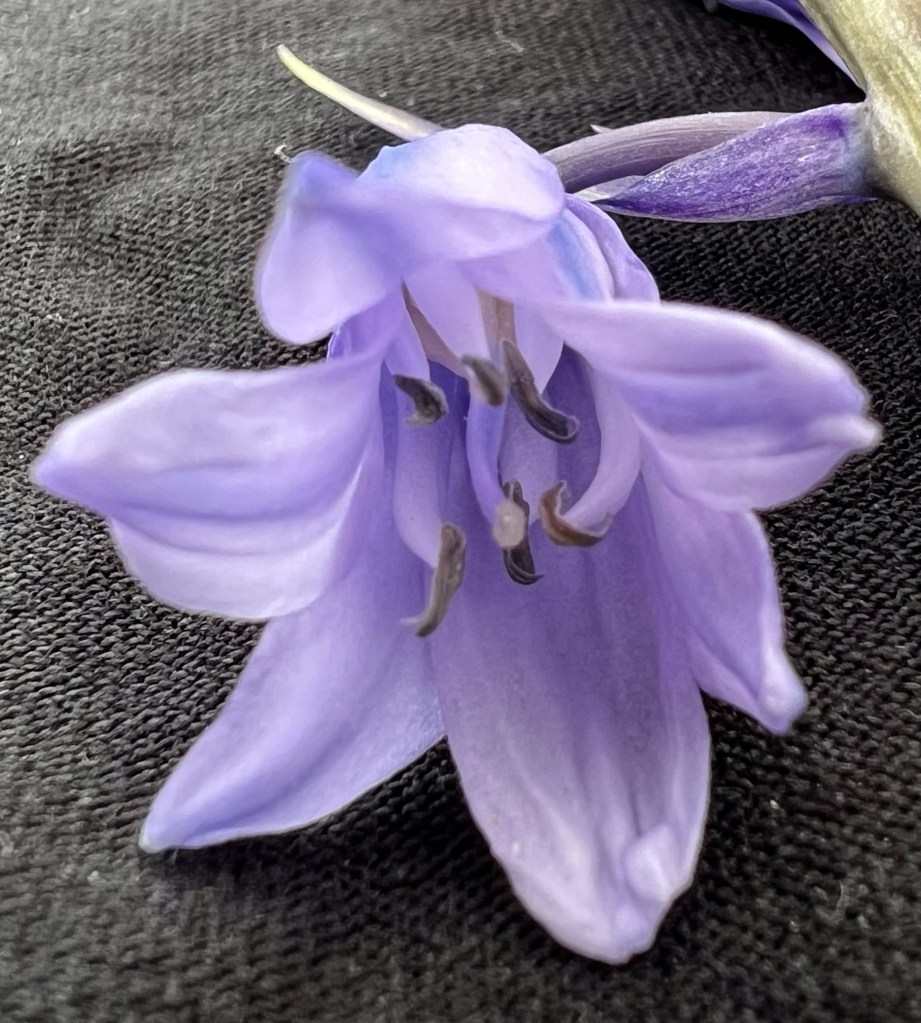
Another plant flowering prolifically in my garden at the moment are the Bluebells. Although the word blue is in the name, I always feel they are more purple or even lilac. I know you can also get pink ones, which have long been on my list to acquire.

A single Bluebell flower
Bluebell

In the world of colour theory, purple is said to trigger feelings of either joy and inspiration, or oppression. Once again, I’ll choose to take the positives of that one!

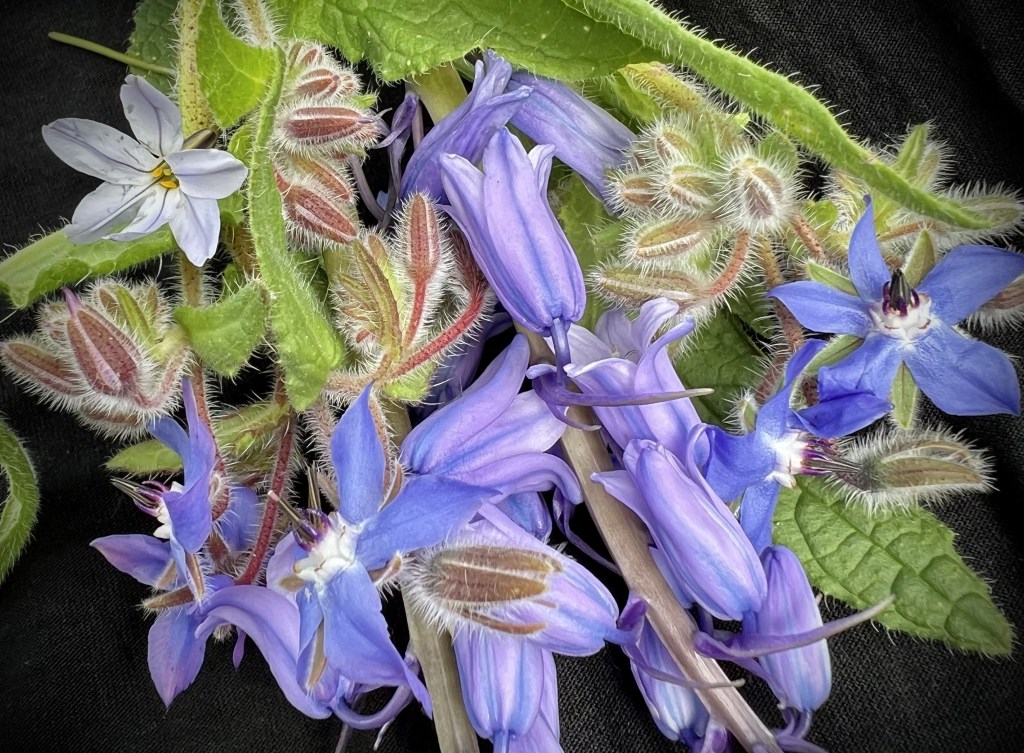
A bunch of blue flowers
Tritelia (Star Flower), Bluebells, and Borage

Til next time!

Weeds

What is a weed? I guess that’s a question that’s been asked since some plants were labeled ‘weeds’. The answer to that question differs between who you talk to.

My usual answer to that question is: a weed is a plant growing where it shouldn’t be.

Weeds in my locality include lots of pasture grasses as I live in a dairy farming area, there are also lots more.

Luckily, I think they can be quite beautiful too. Flowers, seed heads, leaves, all can have an inherent beauty.

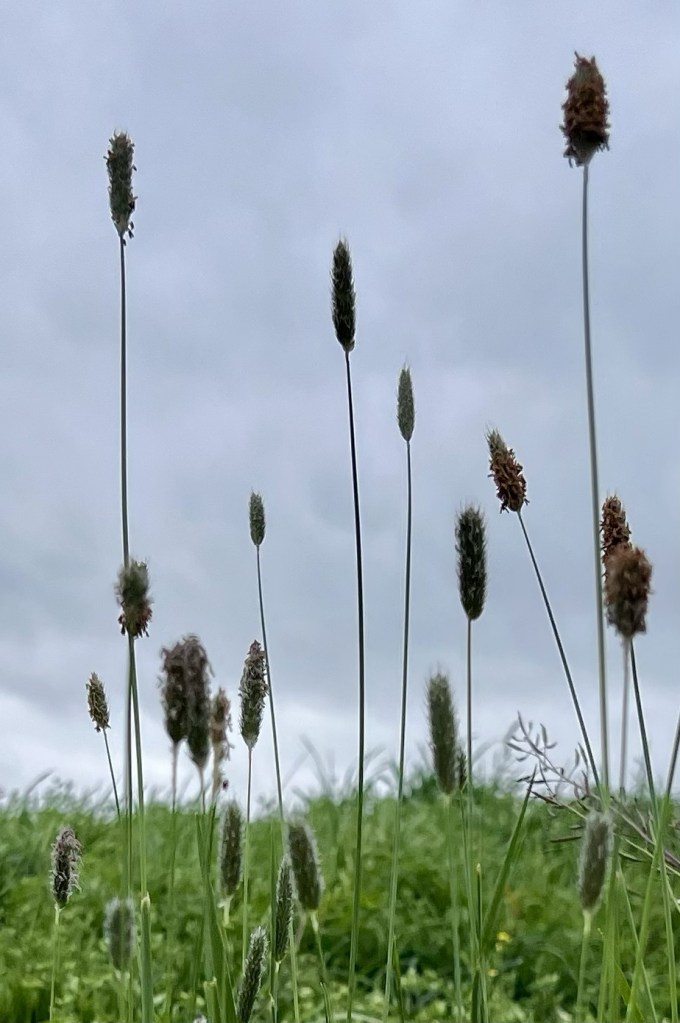
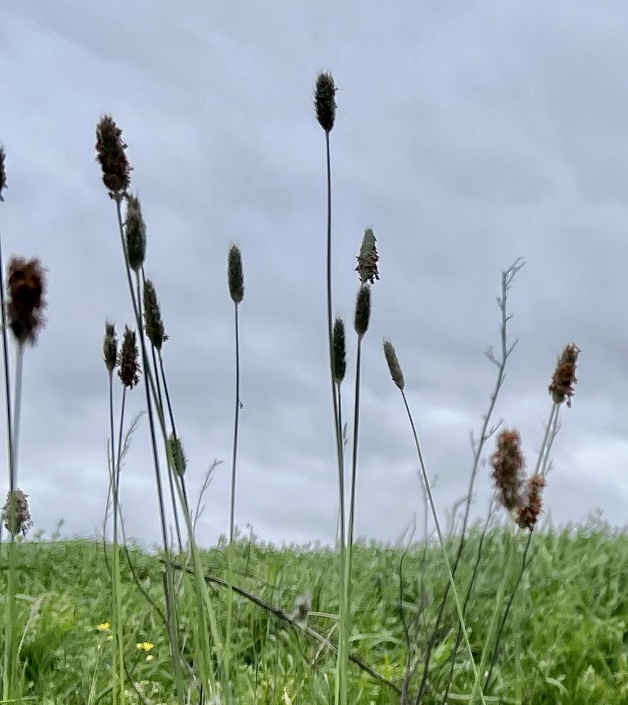
Take Ribwort Plantain (Plantago lanceolata) for example. I find the inflorescence (another word for a group of flowers forming at the head of a stem) fascinating. The brownish flowers have long, white stamens floating around the circumference of the flower and they wave above the rosette of leaves at the base.

Many a child has had happy hours ‘shooting’ each other with them. If you’ve never done it, find a disturbed, open area and you’re bound to find some. Pick a long stem down the base, bending the stem to wrap just under the base of the flower, pull it tight , then ‘ping’! The flower will fly off and hit your opponent. hours of fun!

The long, heavily ribbed leaves can be eaten if they’re picked young enough but they get quite tough as they get older. They have been used in herbal teas, but I’m not qualified to give advice on that.

Stop to take a look at a plant you’d otherwise call a weed and try to find something positive about it.

Til next time!

We’re In Clover

This little plant is loaded with symbolism. White Clover (Trifolium repens) has been used as animal fodder probably since the domestication of farm animals. It is also connected to the idea of good luck and prosperity.

I also think the flowers are beautiful.

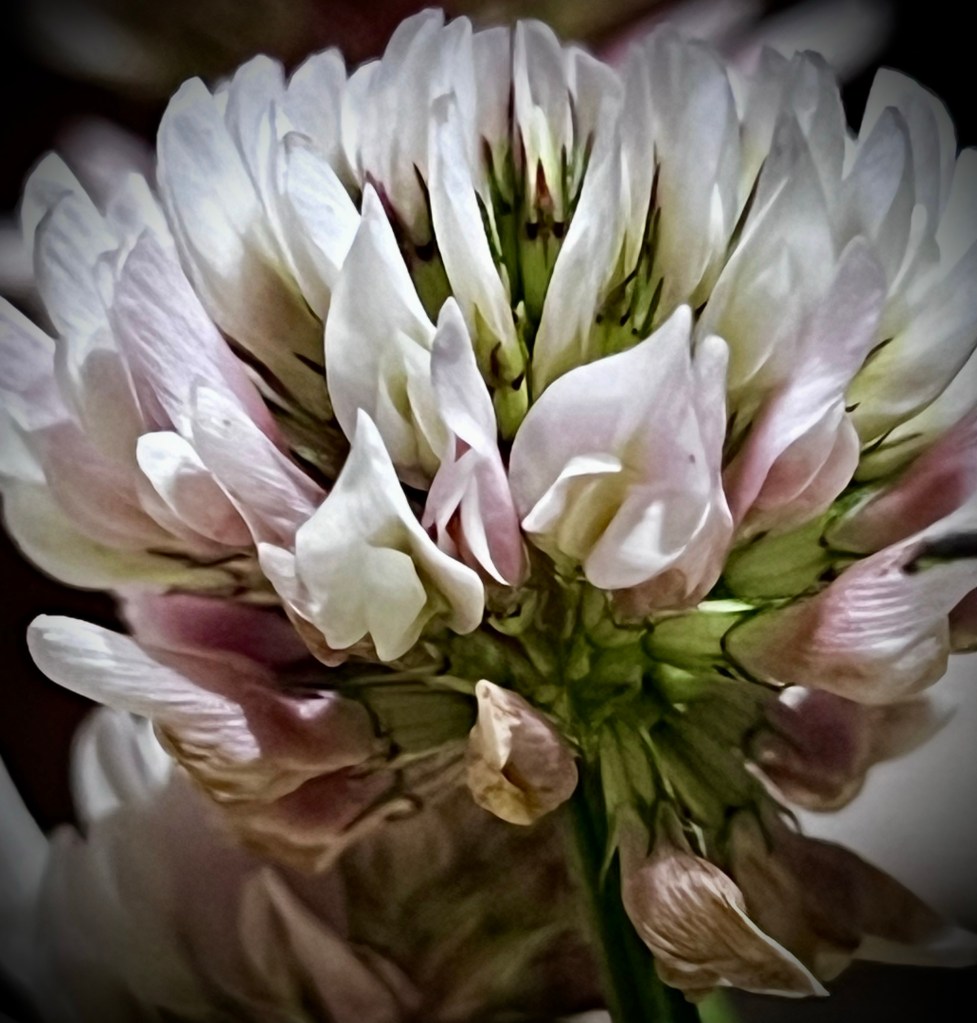
Close up photo of a clover (Trifolium repens) flower
Trifolium repens flower

The saying ‘we’re in clover’ is believed to be linked to the fact cattle that feed on clover grow fat and healthy and thus bring prosperity to the farmer or the family with a milk cow.

The name of this plant gives away a couple of its characteristics, Trifolium- three leaves, repens- usually meaning it grows along the ground.

Finding a clover leaf with four separate parts instead of the usual three will supposedly bring the finder good luck. This ancient Celtic belief later became associated with Christianity with the idea the first three leaves represented Faith, Hope, and love, while the fourth leaf represented God’s grace. Personally, I think it’s just a variation the plant throws out occasionally. That doesn’t stop me looking though!

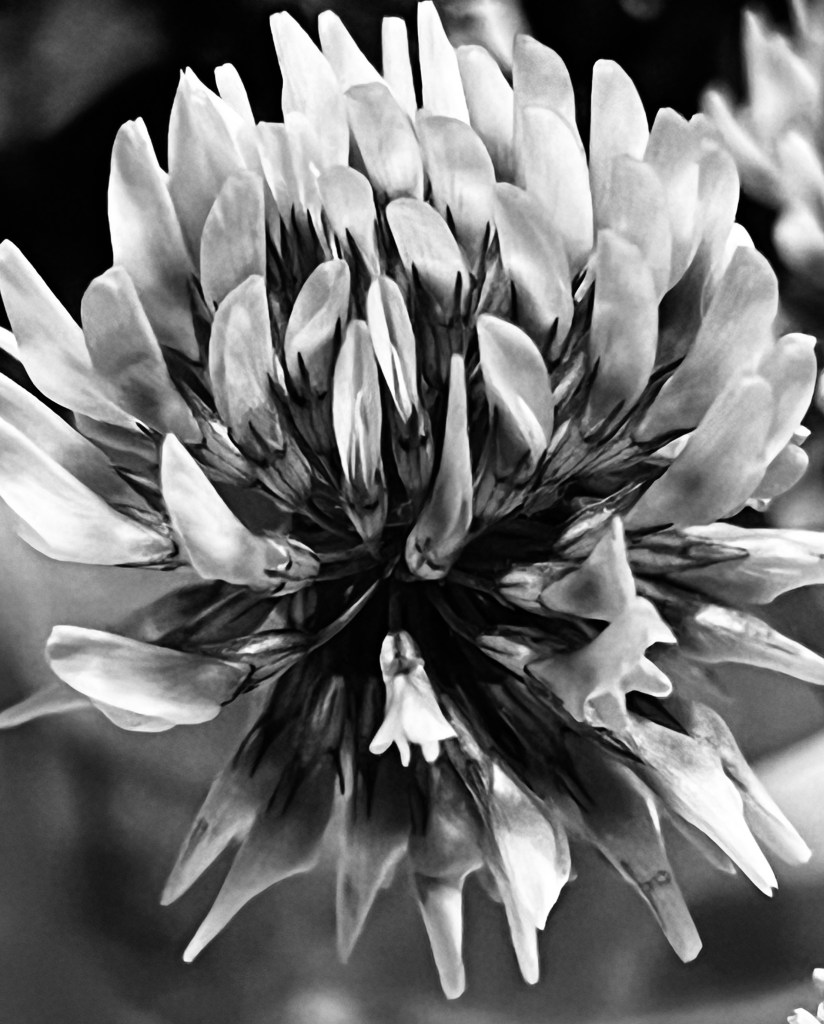
Black and white photo of a clover flower
Clover flower

Clover has been used as a pasture grass and in some lawn mixes due to the fact it is a nitrogen fixer. This is a term that describes a plant that has the ability to interact through its root system with beneficial bacteria in the soil and the nitrogen gases to make that nitrogen available to the plant. Nitrogen is a very important element for plant growth.

I also think the flowers are beautiful. 🙂

Til next time!