Autumn again?

We’ve had a brilliant sunny day here in the Western Districts of Victoria, Australia, but is it nearly Autumn again?

The evenings are becoming cooler and there’s a definite feel of autumn skies in the mornings now. I feel like Summer has been short and sweet, but who knows? We could still get more summery days too.

Over the last few months I’ve been experimenting a bit more seriously with drying flowers and seed pods. I’ve always had flowers in a flower press and piled heavy books on top of flowers I can’t bear to throw out, but now it’s time to start being more meticulous about my processes.

Dried poppy seed pods
Poppy Seed Pods

I’ve had good success with poppy seed pods of different types, Aquilegia seed pods, Nigella seed pods, and the very easy and popular Honesty seed pods.

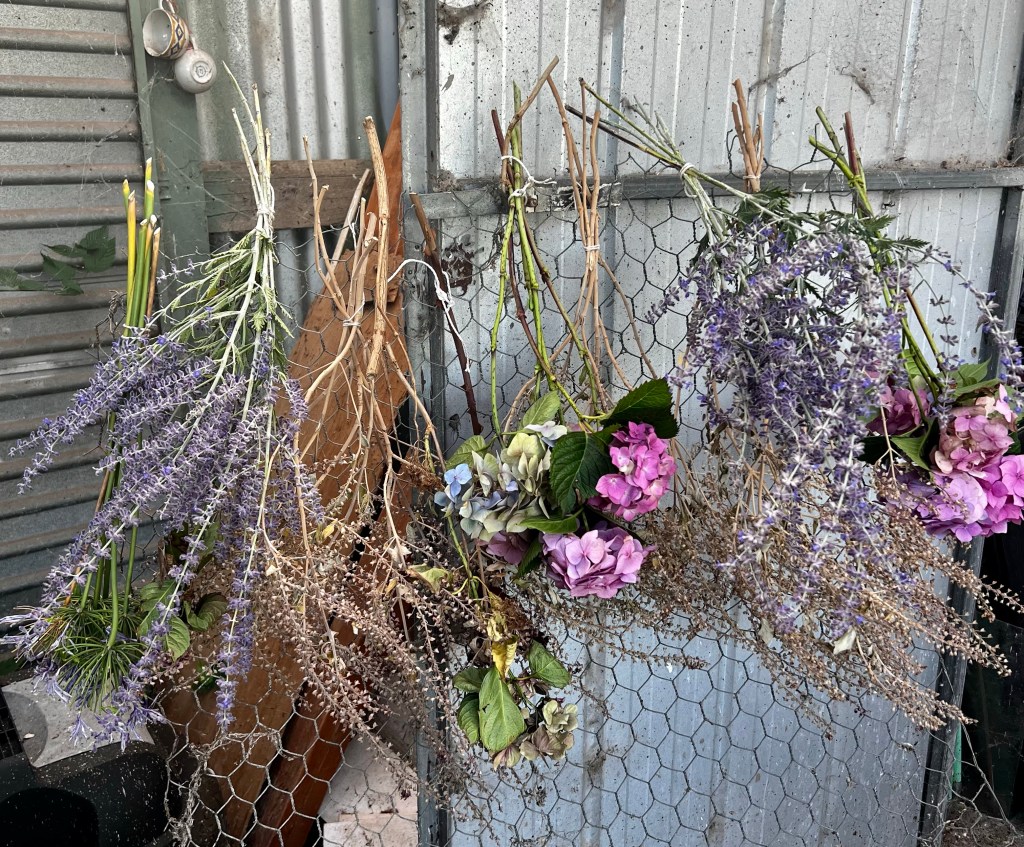
I’m mainly just using the ‘hanging upside down in a cool, dry place’ method of flower drying which works well for lots of different types of flowers, but I’d like to try different methods to try to keep better colour in the flowers. Future blog posts…

Different types of flowers drying on a wire ‘rack’
Drying flowers.

Dried flower bouquets last longer!

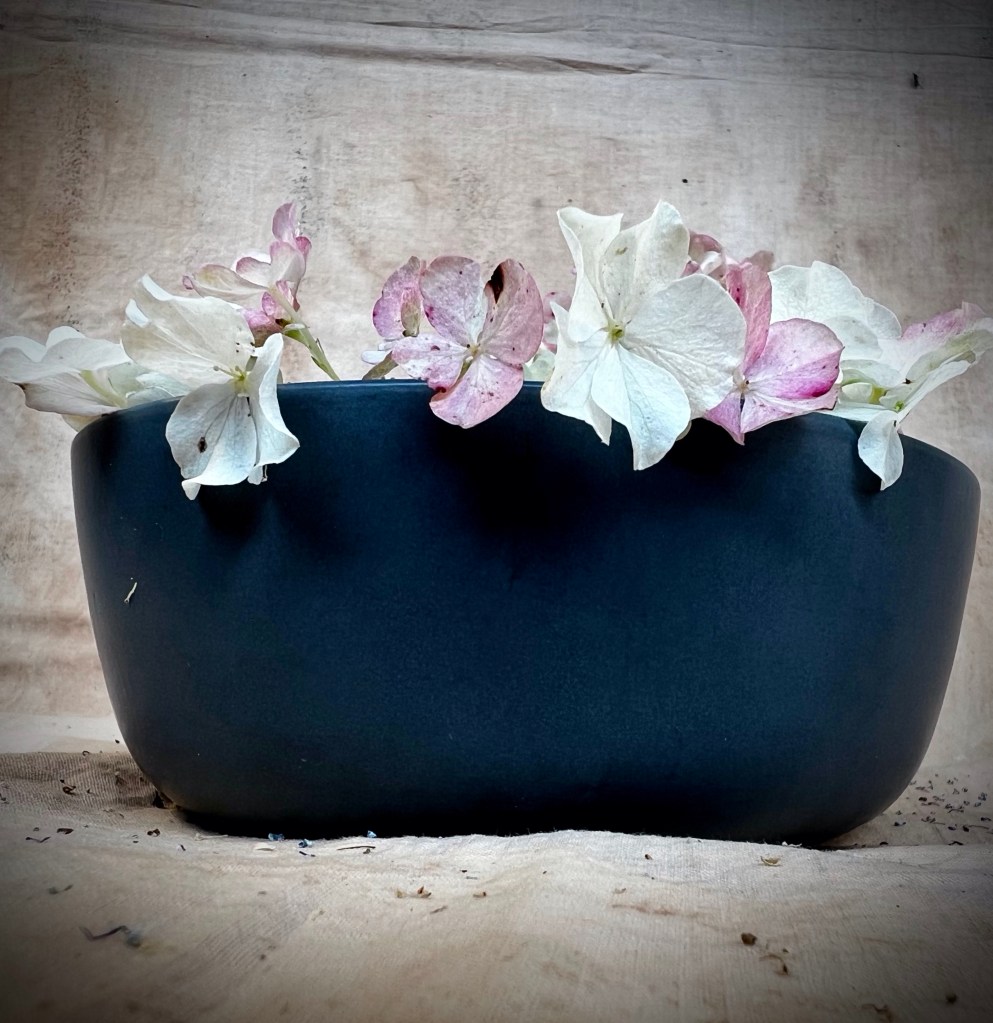
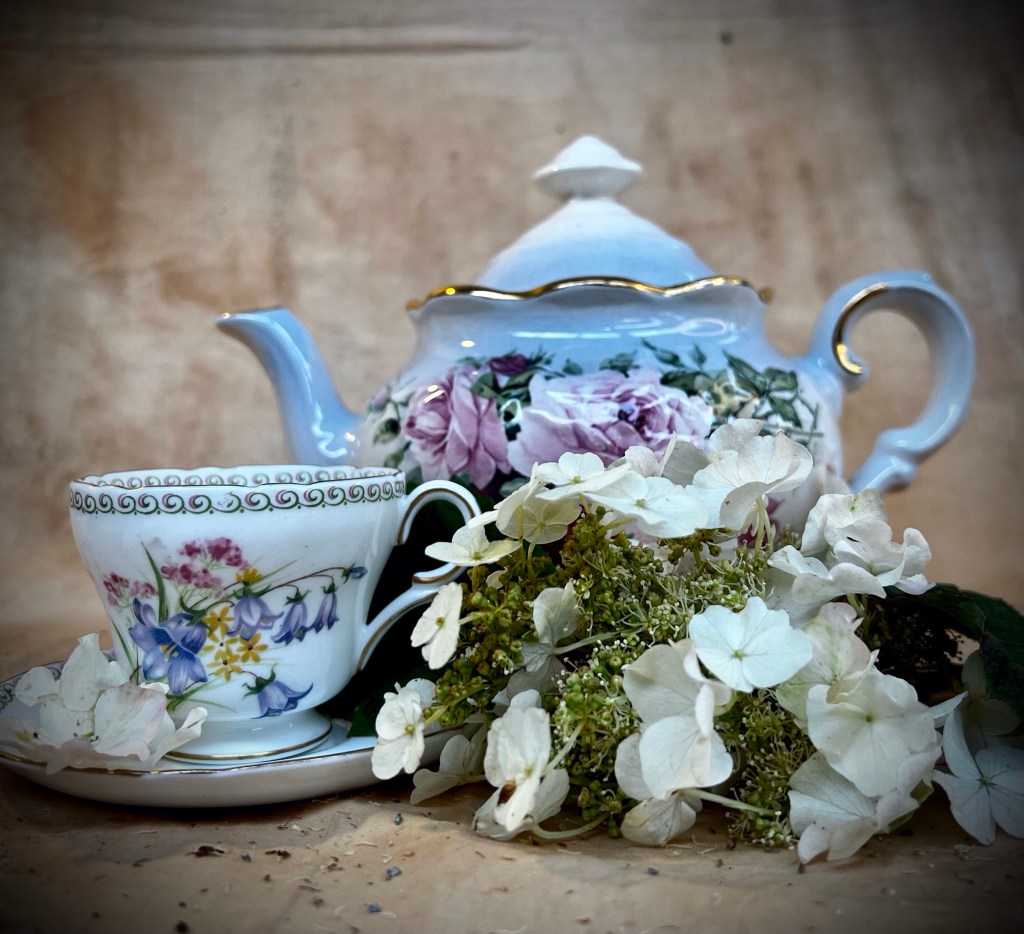
Another hobby/love I have is taking photos of flowers, still life settings, and some landscape photography. I’m excited to have some of these, along with some of my other crafty hobbies like eco dyed papers and handmade books, along with my three self published books, displayed in a local shop window as part of an effort to bring attention to a vibrant arts community in our area. It’s an exciting start to 2023!

Photography displayed in a country shop window
Shop front window.

Along with all my arty hobbies I’ve had some good days in the garden. The main jobs for now have been giving roses a light summer prune, cutting back perennials that have finished flowering (after collecting the seed pods of course), and keeping the weeds (including the Kikuyu grass in the lawn) at bay. There’s always something to do in the garden!

Til next time!

A few random pics

Sometimes I feel like chilling out and just feeling the vibe, so here’s a few random pics I’ve taken since I last posted a blog. Enjoy.

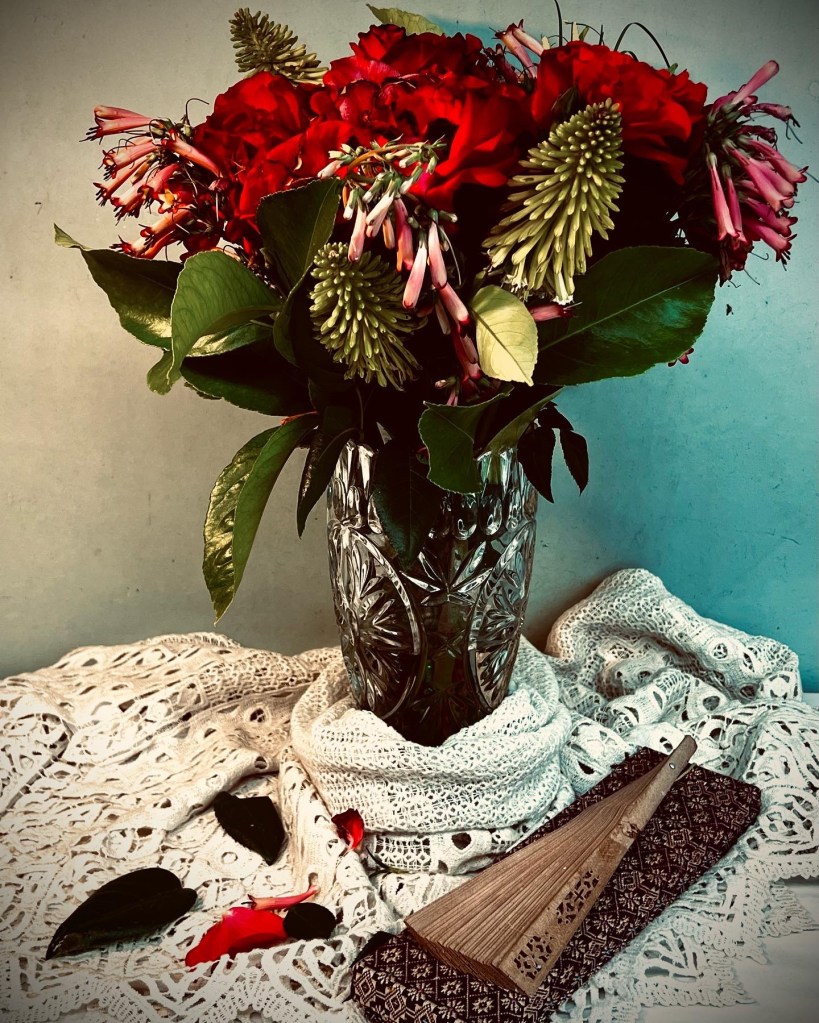
Still life featuring flowers in a vase and a wooden fan
Still life

Flowering Wisteria vine under a blue summer sky
Wisteria under a summer sky
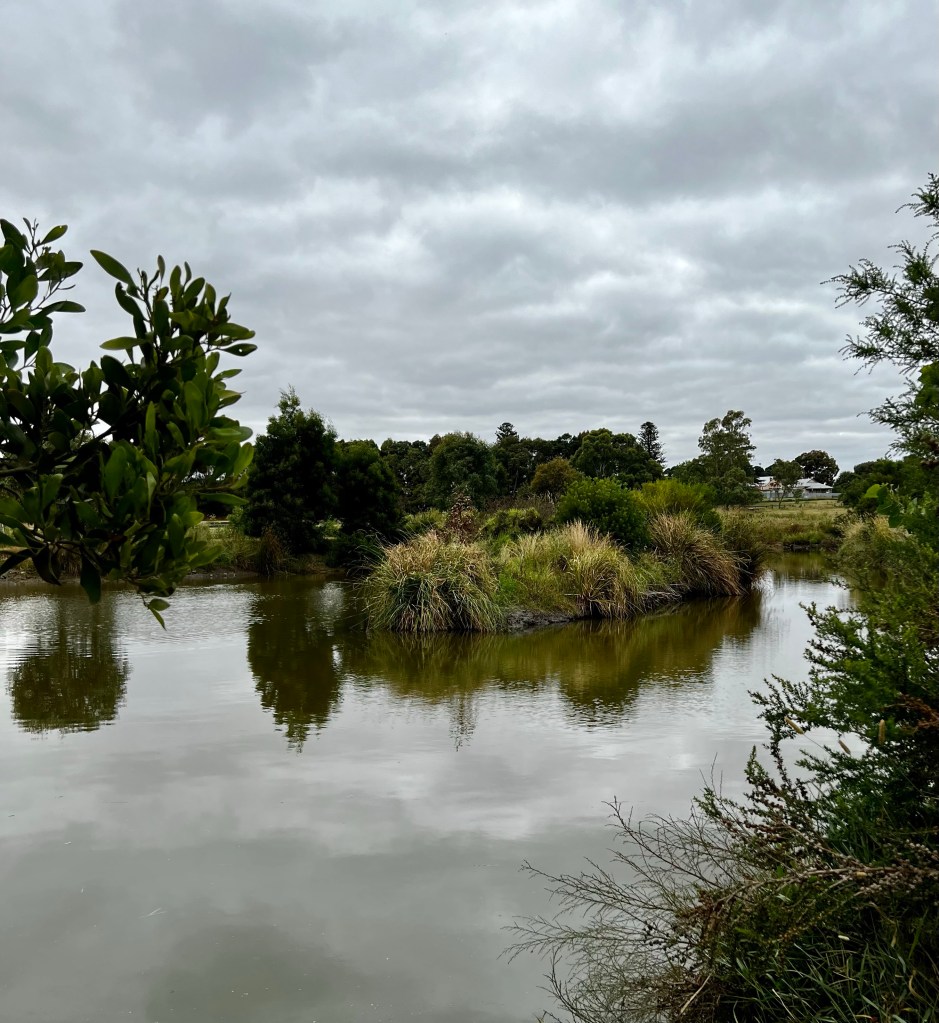
An island in a pond at Terang Community Park and Wetlands. Grey skies reflecting in the water.
Feeling reflective at Terang Community Park and Wetlands
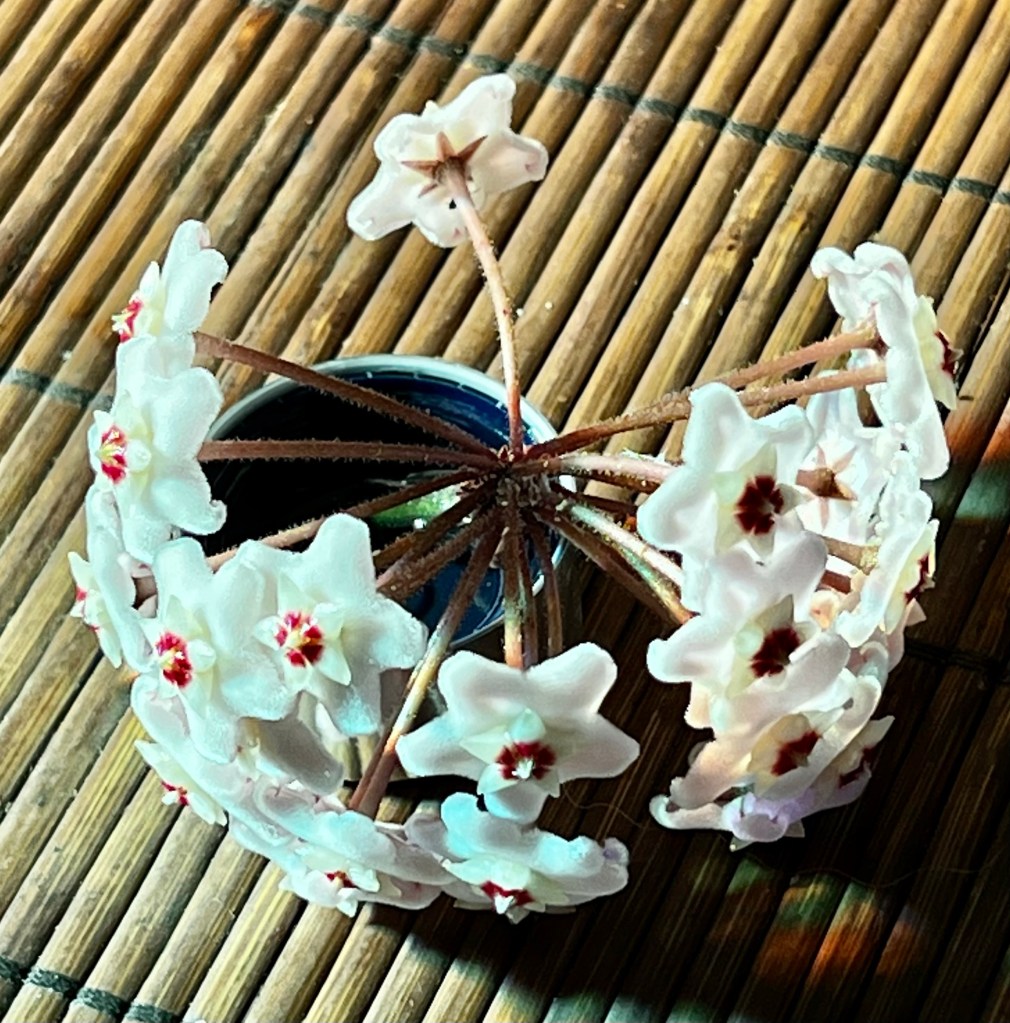
Hoya flower in a lid sitting on a mat on the table
My Hoya is flowering
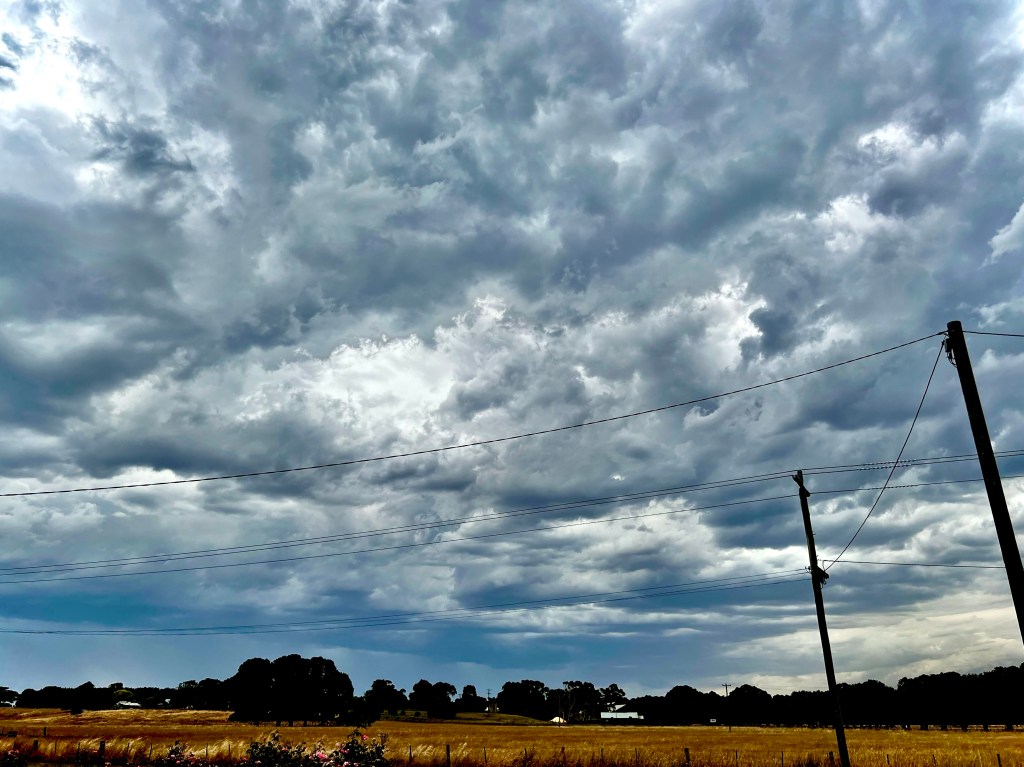
Intense, grey, stormy skies over a country road
Stormy skies

Til next time!
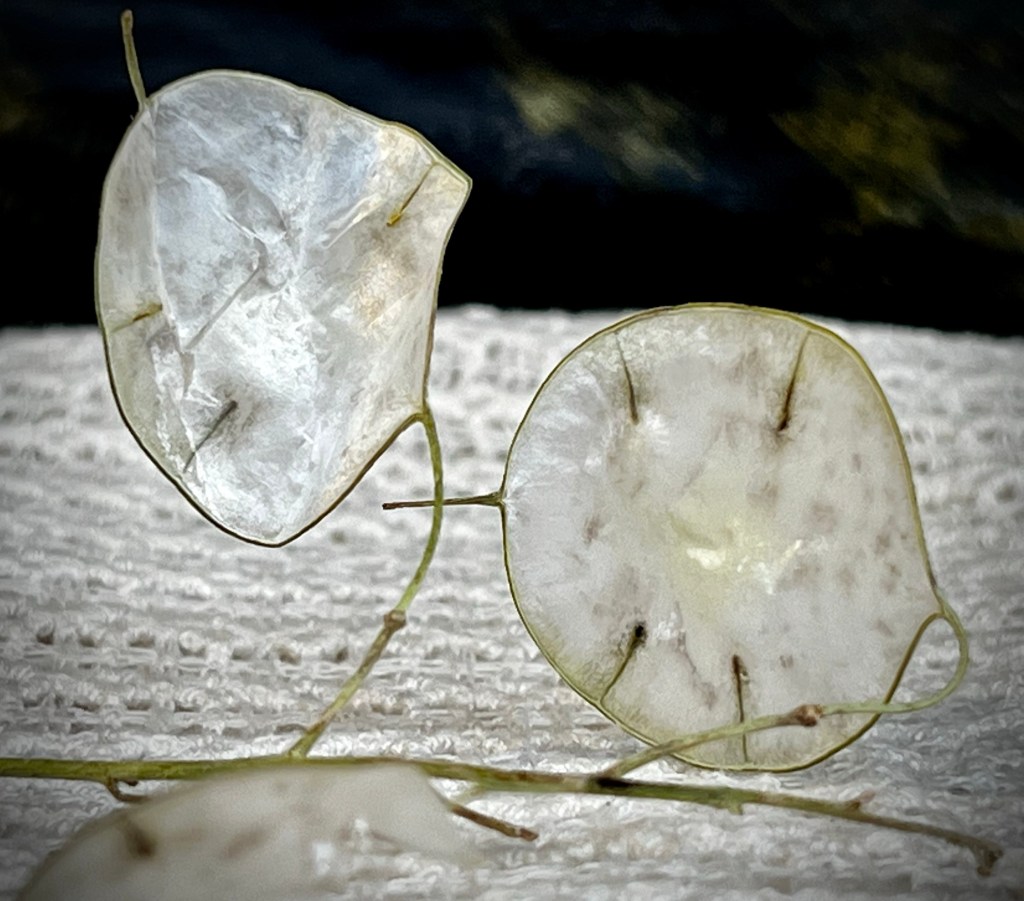
Honesty

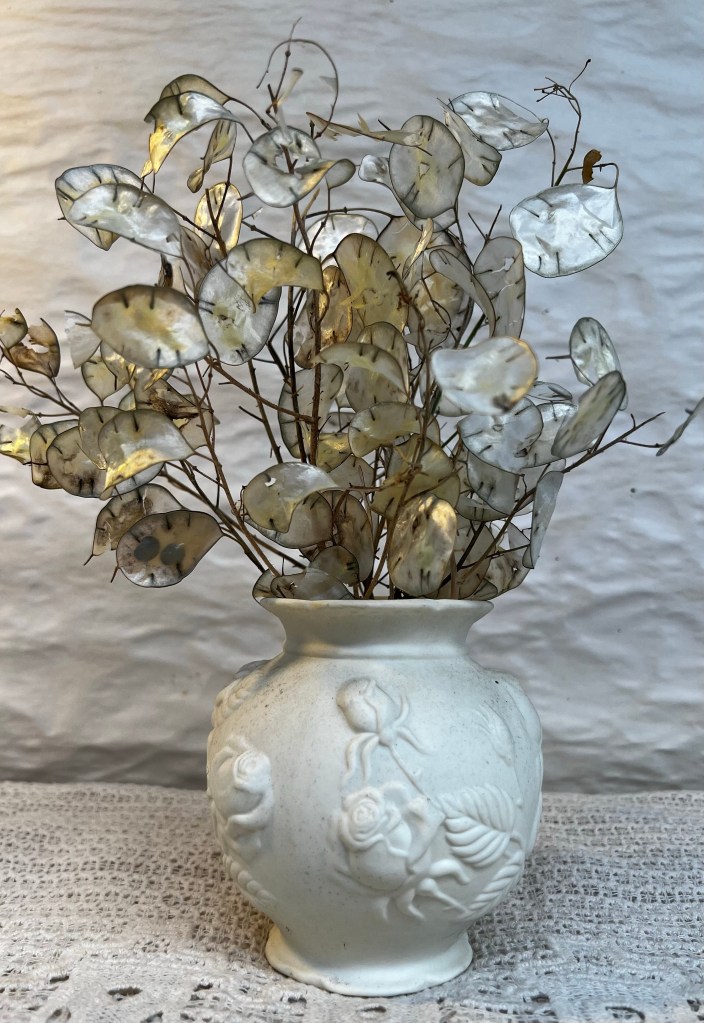
It’s easy to see why Honesty is given the botanic name Lunaria annua, the papery, moonlike remnants of the seed pod shine silvery bright.

Decorative seed pod remnants, Lunaria annua
Honesty

This plant has been given various names over its very long history of being commonly cultivated; Dollar plant and Money-in-the-pocket are just two. These too are easily explained by the shape of the remnants of their seed pod.

While mostly it has been given positive connotations in folklore, there are some negative ones too. This link is quite comprehensive: https://bugwomanlondon.com/2016/04/20/wednesday-weed-honesty/?amp

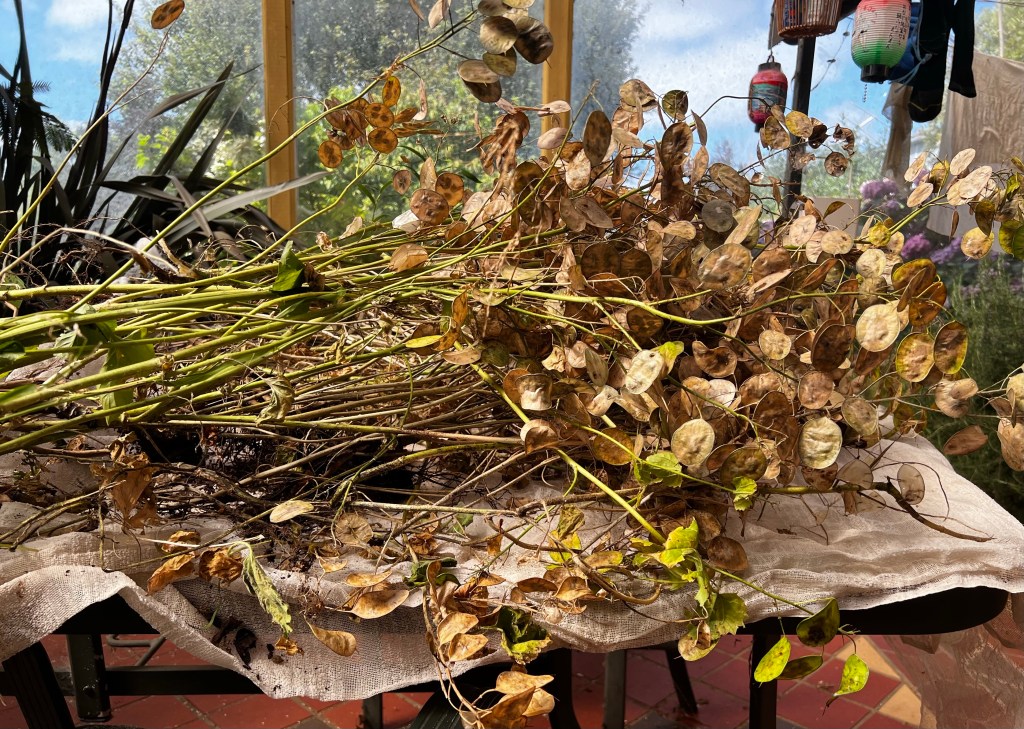
A pile of Lunaria sp. stems waiting for cleaning.
Lunaria sp. stems

After flowering in Springtime, the long stems produce the seed heads which should be left to ‘ripen’ by becoming dry and brown if you want to harvest them for decorative purposes. If you’ve just enjoyed the flowers you can cut the stems down to avoid them self seeding (which they do quite readily).

If you do want the decorative seed heads they are easy enough to prepare by gently rubbing them and removing the two outer layers leaving the silvery centre.

Growing Honesty is very easy, they are very hardy and grow in most positions as long as they’re not allowed to get wet feet too often. Seeds can be sown over summer to flower in Spring. Flowers can be a lovely purple colour or white, as mine are.

Surprising to me is they are in the same family as the brassicas and as such, all parts are edible! I just love the seed heads and every year I harvest them for use in floral art.

Honesty seed heads in a white vase
Honesty in a vase

The cold, wet, dreary days are well and truly over, the holiday season has turned out to be bright, sunny, and warm to hot. The late sunsets have also been great for me to get out into the garden and get it back under control. I’ve discovered the weed situation is worse than what I initially thought, but it’s nothing I can’t handle. Dead heading roses and other perennials, watering, and keeping the lawns down are the major concerns at the moment, along with battling the flies in the daytime and the mozzies at night!

Til next time!
Merry Christmas

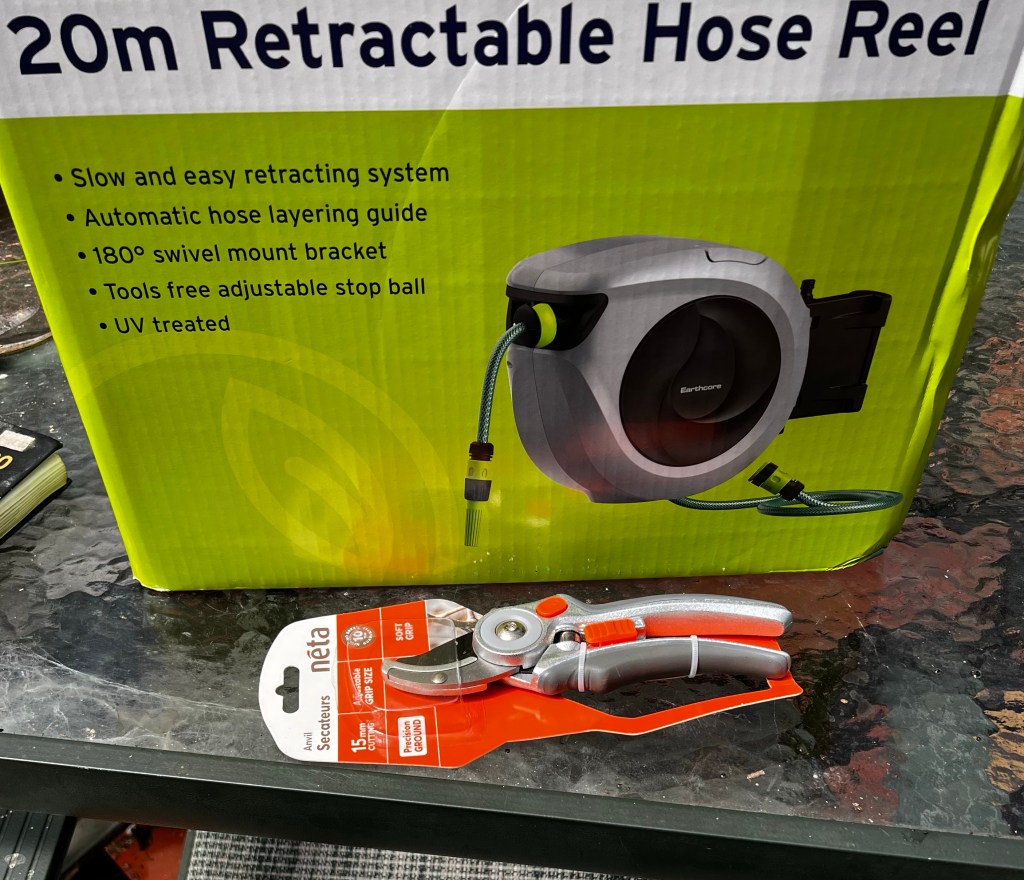
On Christmas Day my true love gave to me a retractable hose, new secateurs and a bottle of Gin. And who needs a partridge in their pear tree? Not me!

Retractable hose and a pair of brand new secateurs
My Christmas presents

He’d watched me fighting with the normal hose I use to water the plants in our entertainment area and had the brainwave. Present sorted!

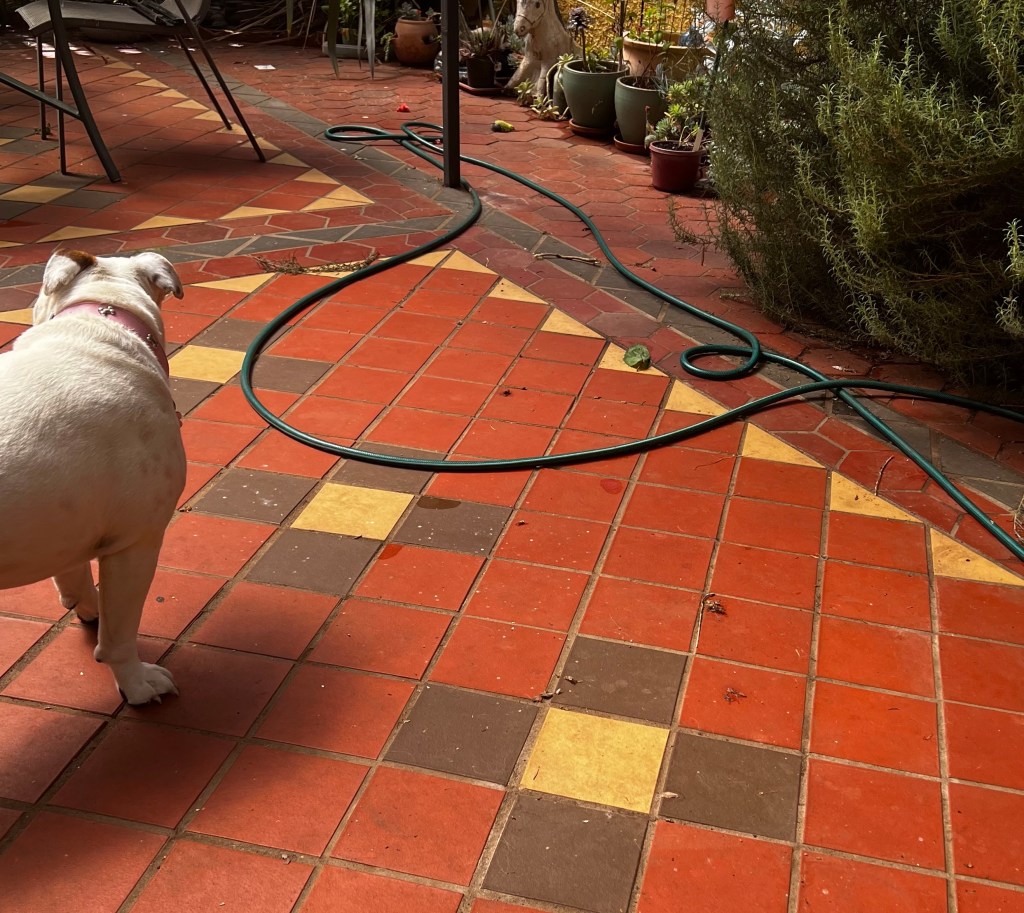
Hoses are an indispensable part of the garden tool kit but all too often aren’t cared for properly. There are so many different types of hose and ways to store them, but often they just get left in a pile on the lawn or spread out ready to be tripped on. I’m guilty of this as much as the next person.

Garden hose left lying out
My usual storage method.

If hoses aren’t stored properly they start to deteriorate and form those extremely annoying kinks that always happen much father down from the nozzle causing you to have to find a spot to put the nozzle to keep the dirt out and hopefully keep watering when it’s unkinked , then walk back to unkink it, then walk back to keep watering…ugh! You know what I mean.

Anyway, this new hose,with its little house to store the hose in with a flick of the wrist when you’ve finished watering, will hopefully reduce that annoyance for me. If all goes to plan…

One question I’m often asked is ‘when is the best time to water?’. Generally it is best to water when the sun is either low down in the east or the west (morning or evening), not high up in the sky (midday). My preference is to water in the morning for two reasons, a) it gives the plants time to dry off which reduces the risk of fungal infections, and b) snails are less likely to hang around as the day goes on than they are to hang around at night. And we all know snails love damp soil and plants to galavant about on.

Watering in the heat of the day increases the risk of sun damage to plants as well. Generally speaking it’s also best to avoid watering the leaves of plants on a sunny day; keeping the water down on the soil is preferable.

We’re having a bit of a heatwave at the moment, expecting a top of 38C today. I’ve moved some of my potted plants (to be planted after summer) into a shaded area to keep them out of the harsh direct sunlight. Having them close to the house makes me remember to water them too.

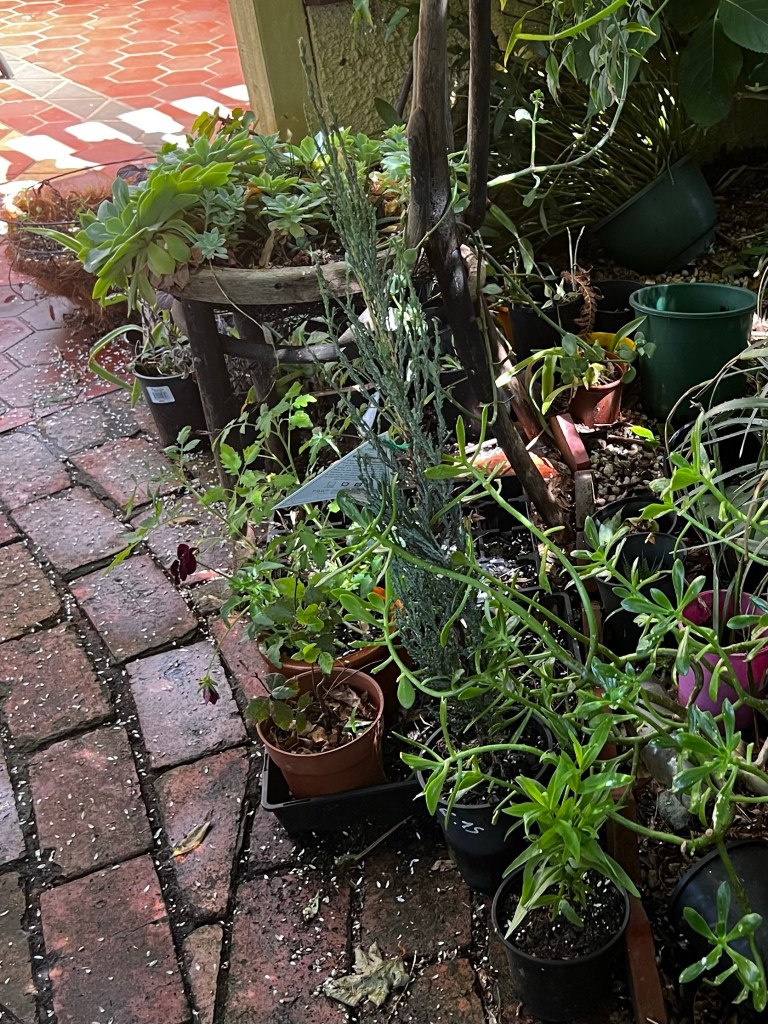
Potted plants waiting in the shade to be planted
Waiting in the shade

Wishing you all a safe and happy holiday period, celebrating life in whichever way you can.

Til next time!
Quirky Hydrangeas

We’re all used to the ‘normal’ hydrangeas with their summery voluptuousness, but another Hydrangea that’s fairly uncommon in gardens these days is the Oak Leaf Hydrangea, or Hydrangea quercifolia.

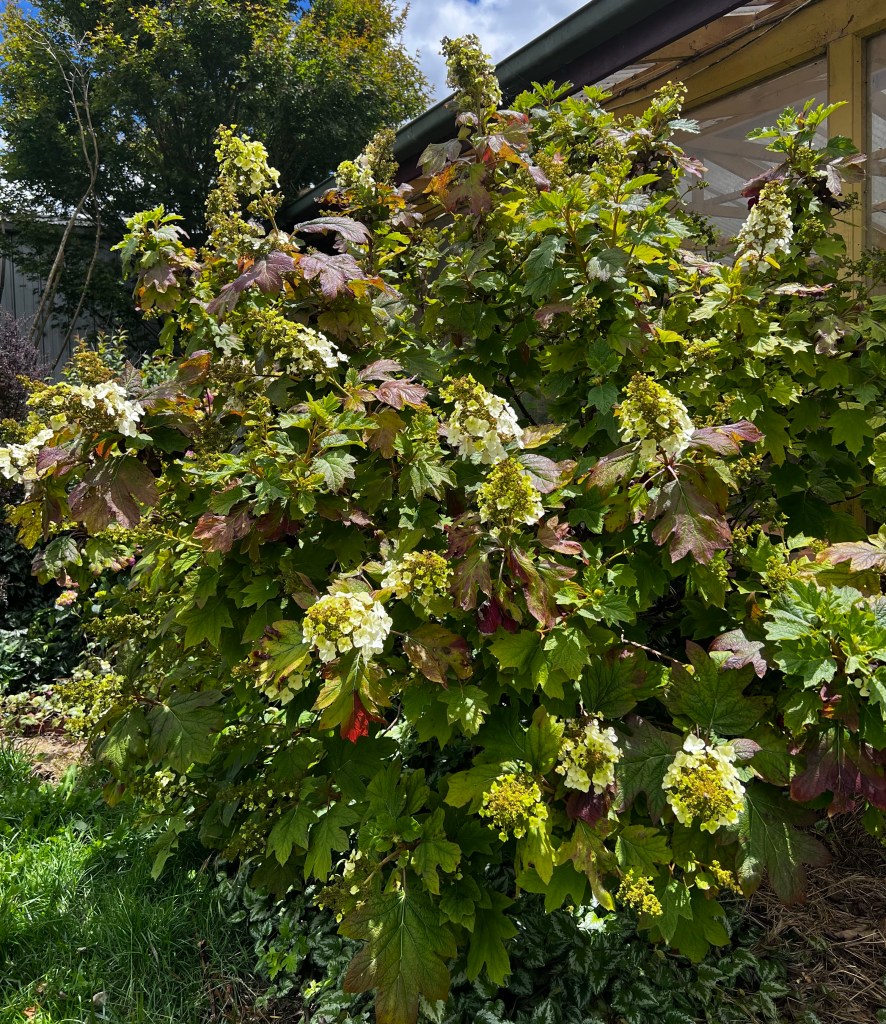
After a severe cut back last winter, the one in my garden has burst forth in abundance with a multitude of flowers. It may be the result of hard pruning, and it also may be the huge amounts of water it’s had fall on it from the sky over winter.

A large hydrangea shrub with many flowers
Hydrangea quercifolia

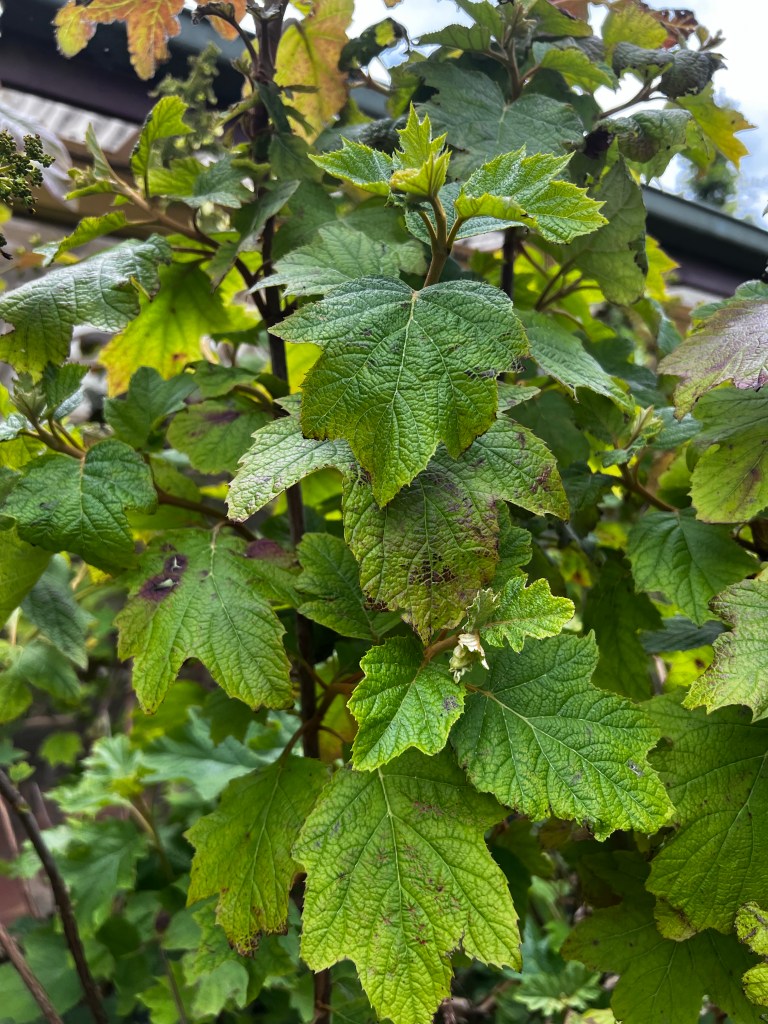
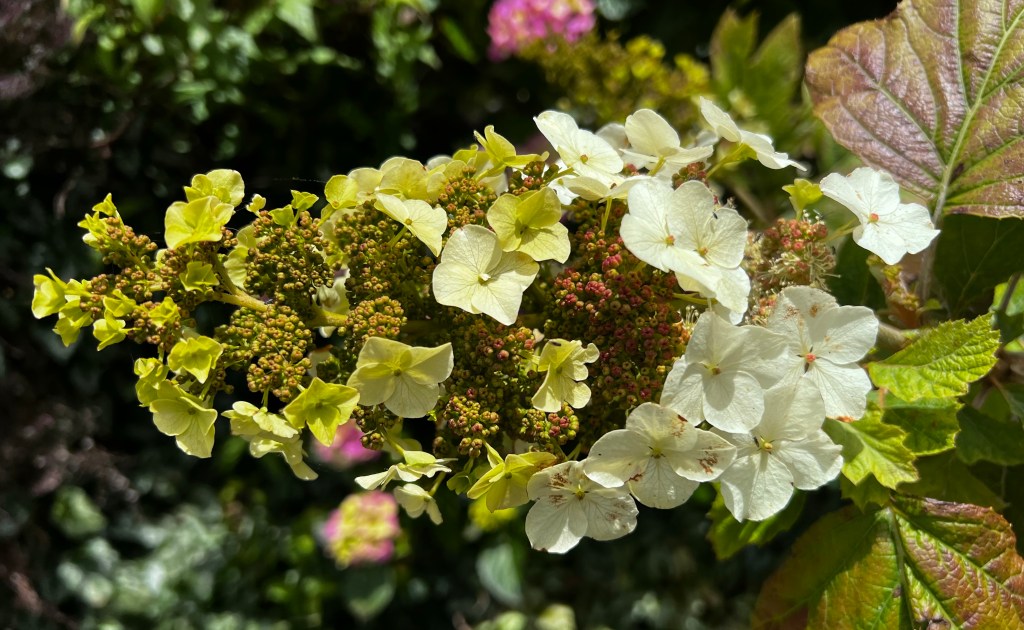
The creamy white flowers appear at the ends of the sometimes ‘scraggly’ stems so they flounce about a bit. The oak leaf shaped leaves from which the plant gets its name can vary greatly in both size and colouring, from green to rusty brown colours.

Leaves on the stem of Hydrangea quercifolia
Oak leaf Hydrangea Leaves
Hydrangea quercifolia flower
Oak leaf Hydrangea flower

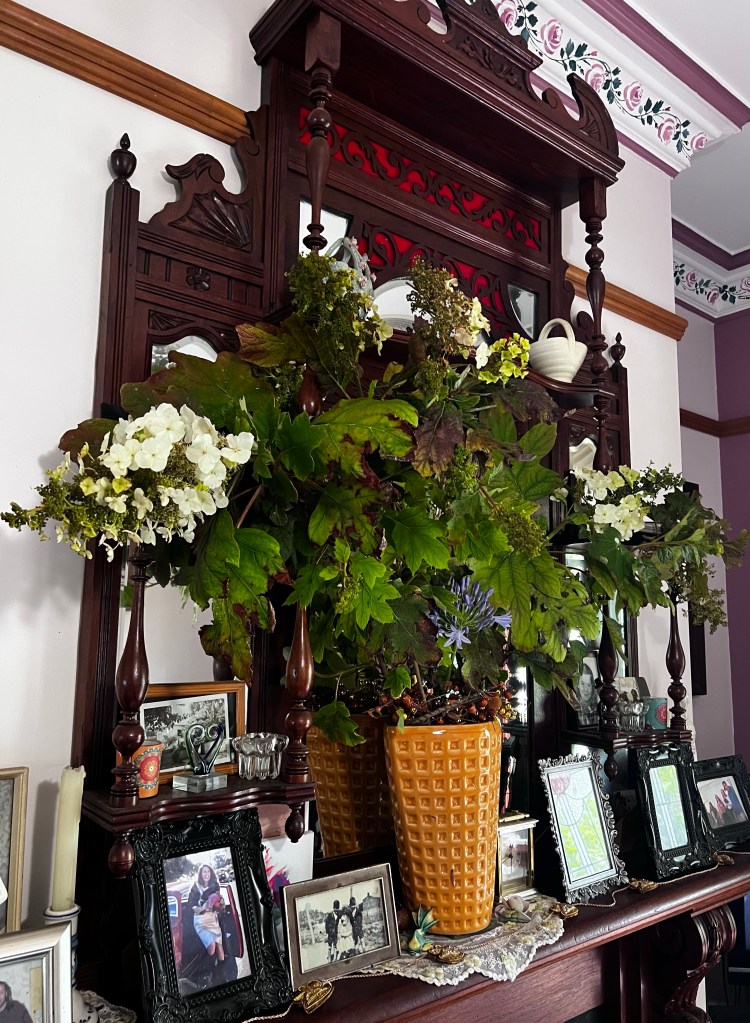
This shrub has grown quite vigorously, so it has produced very long stems which can look very dramatic in a vase. Unfortunately the flowers and leaves don’t last very long as a cut flower so I try not to use them with too many other types of flowers, so I don’t have to do much rearranging as they fade away.

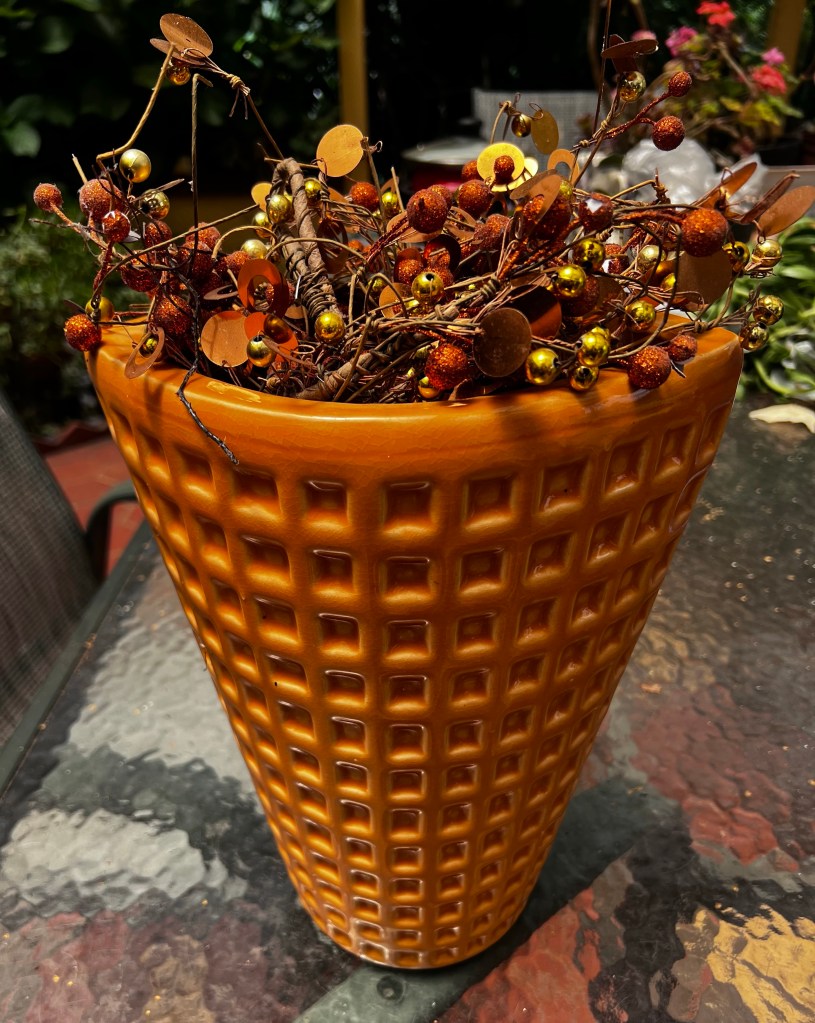
I’ve been reading up on alternative ways to hold floral arrangements in place, instead of using the unsustainable floral foam blocks, so I decided to try to use the colourful, wired, decoration curled up around the top of the vase to hold the stems in place. I think it worked quite well!

An example of alternatives to floral foam
Finding sustainable alternatives

The result of my floral arranging is quite large and very voluptuous, but some say there’s no point doing anything unless you do it large!

Til next time!
Floral arrangement on a mantelpiece
Ta da!

Surviving Strong!

In my recent blog post about snails, cannily titled ‘Snails’, I wrote about my extreme distaste for those creatures!

I had written that the slimy little b%^*+#%s had chewed on my Hippeastrum’s flowering stems. I feared the blooms I had been waiting for, (quite literally) for years would be lost.

Well, I’m here to say they’re not lost!

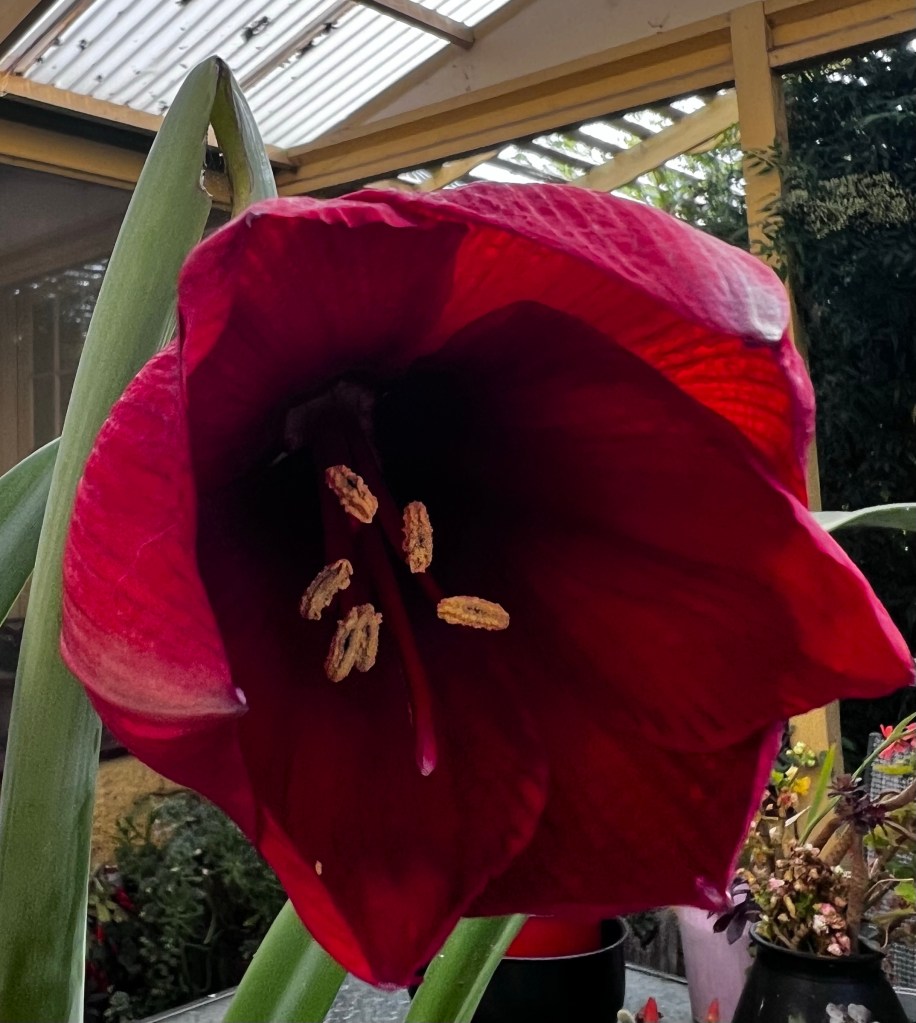
A red bloom on a snail damaged stalk.
A Hippeastrum bloom

I’m pleased to report that even the blooms on the most damaged stem have opened in their extreme magnificence. They are surviving strong!

A snail damaged red flower
Snail damage

The bud that was chewed on isn’t the most perfect of blooms but in my opinion it’s still beautiful.

The moral of the story could well be not to give up on anything!

Til next time!

Snails

I’m a live and let live kind of a person usually, but when it comes to snails, I have limits!

When I’m in the garden and I come across a snail going about its business, I’ll either just leave it or throw it out on to the grass. I figure if it survives long enough to get back to its hidey spot, it may even deserve to live.

I don’t use snail bait on the ground, after a traumatic experience with a puppy and a $1000 vet bill, and I generally don’t get round to using other, non toxic forms of snail control.

What non toxic methods do you speak of? I hear you say. What I mean is some of the methods used such as putting down a physical barrier like sand, or coffee grounds, or using copper tape around the top of planter boxes etc.

The sand idea is meant to deter snails by being horrible for them to slither over, the copper tape is meant to give them a bit of an electric jolt (I think). Either way, that kind of thing takes organising, so it doesn’t happen in my garden.

Some snail baits are meant to be ‘safe’ for pets, but I’m not willing to test that theory, so I often just leave snails alone.

Not today.

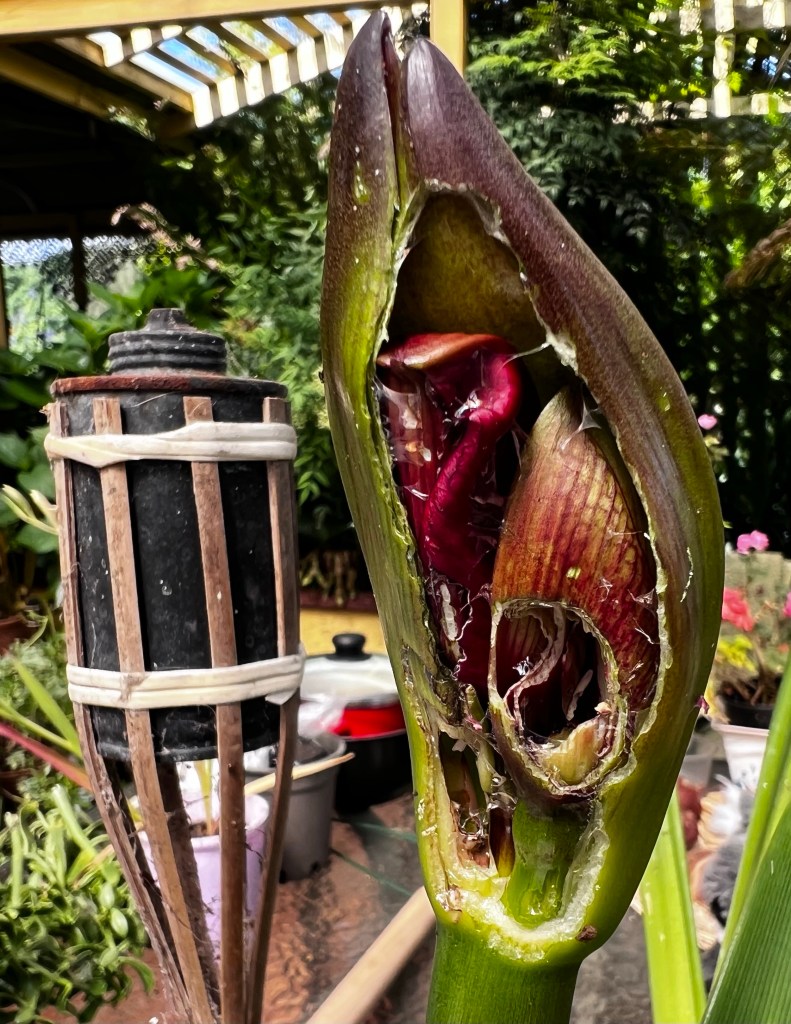
Today I find some dastardly, slithering, b*#%^+d has had a chew on the Hippeastrum buds I’ve been waiting two seasons to see. Not happy.

A Hippeastrum bud chewed by snails
Snail damage

Today I begin my quest to destroy all those who would chew on my plants and wreak havoc in my garden. I think my plan of action is to use the humane method of killing them outright with a direct hit with a gumboot.

Til next time!

Roses and Chickens

This weekend the small town I live close to had its annual show. Well, it had been annual for 80 or so years until covid put paid to it for two years, but now it’s back!

The Noorat Show first happened in 1933 and has grown to be one of the main events in the country calendar for the state of Victoria.

We had worked our collective butts off to get our native garden up to scratch and all the lawns were mowed, so the town looked as pretty as a picture.

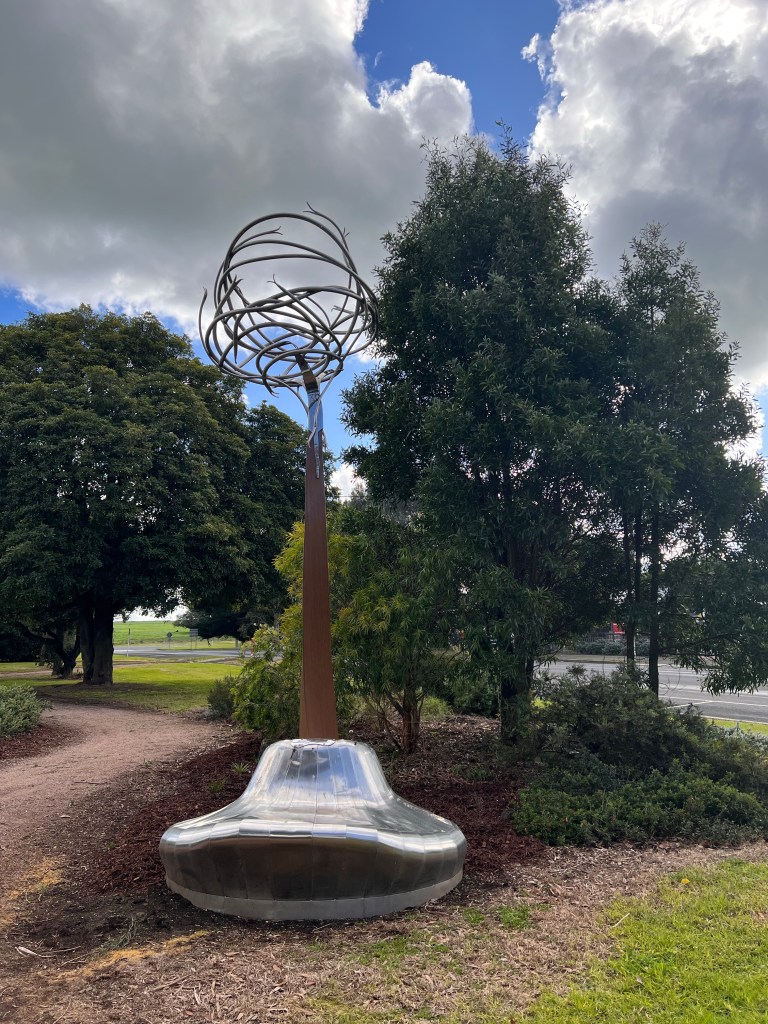
A sculpture in the native garden in the small town of Noorat, VIC, Australia
The Eagles Nest sculpture in the Noorat Native Garden

Apart from a rainy and sometimes blustery day that made some parts of the footy grounds where we hold the show a little boggy, a great day was had by all.

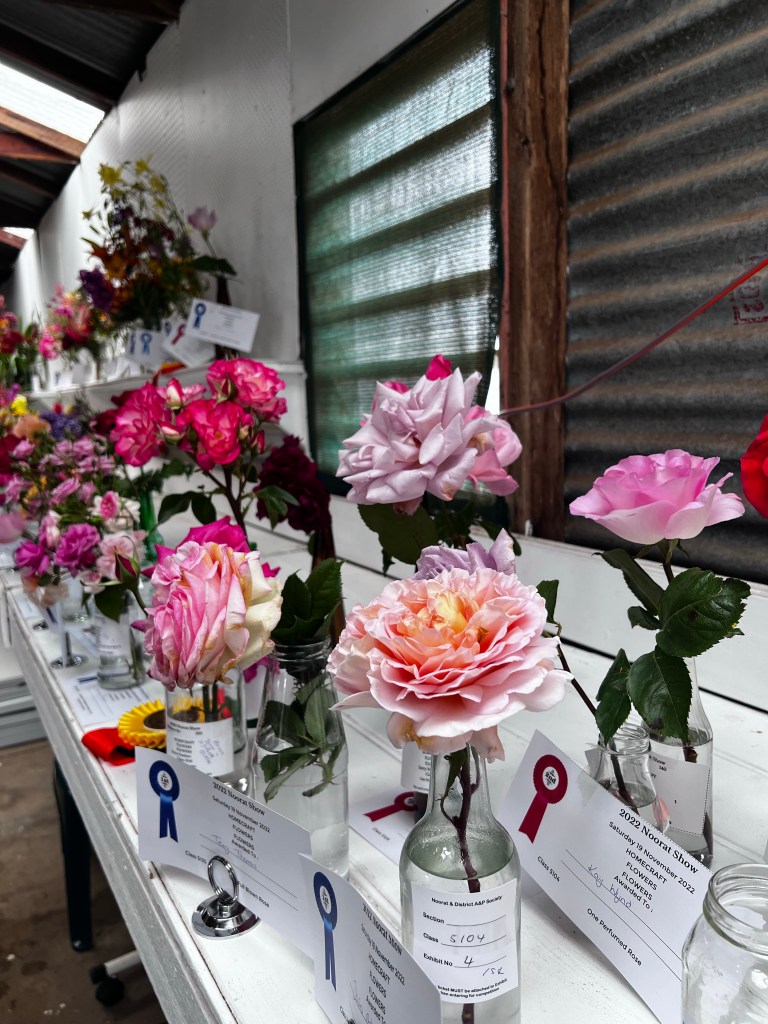
There was a lot going on but pretty much the only things I got photos of were the roses in the floral competition and an interesting looking chicken.

Roses entered in the homecrafts section of the Noorat Show, 2022
Beautiful roses on display

I love to see which roses are being grown in local gardens, and to see which ones are holding up the best. One unfortunate entrant sadly had their whole rose collapse. The petals were white, so I suspect it may have been an Iceberg which don’t hold up very well unless you pick them early in their life. Never mind, they more than likely won’t enter that one again; we all live and learn.

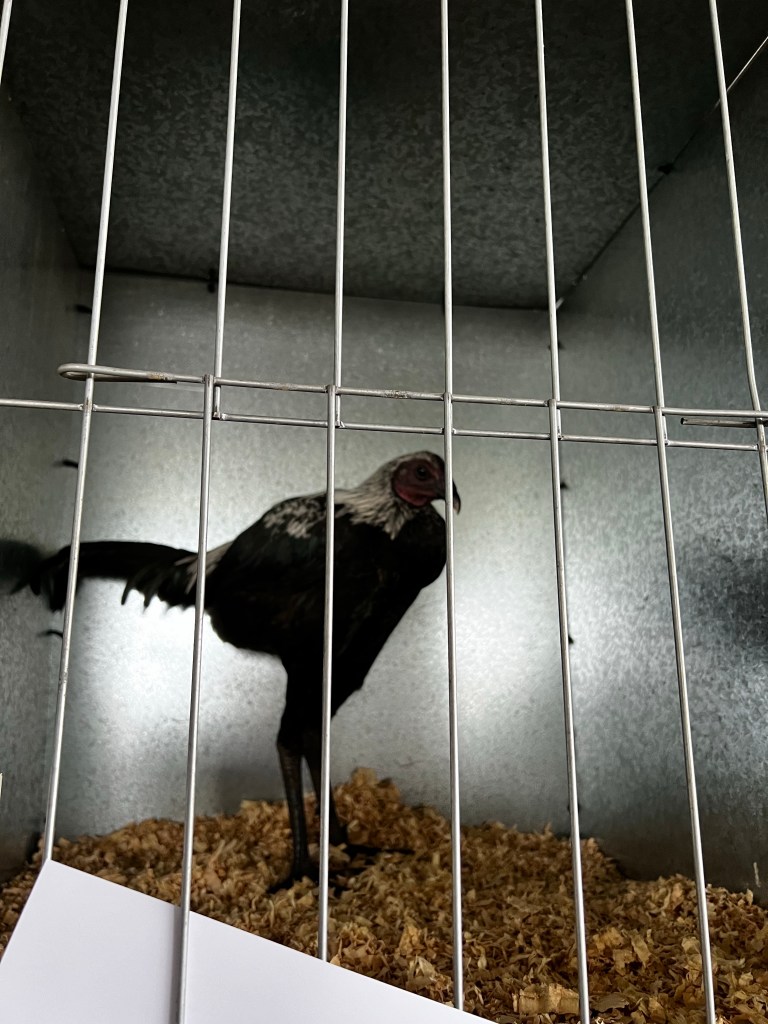
The chicken that caught my eye was of a breed called ‘Modern Game’. At first I was taken aback by its baleful glare and malevolent countenance and decided to get a photo so I could find out more about it so I didn’t buy one accidentally…😳😂 but I’ve warmed to them.

A chicken of the breed ‘Modern Game’ at the Noorat show, 2022
Modern Game Chicken

The breed was apparently bred in the late 1800’s from the ‘Old English Game’ and a Malaysian breed. I believe they are mostly just ornamental; exhibitionists rather than useful workers. I intend to find out a bit more about them, maybe I’ll even get some?

Til next time!

To tease, or not to tease…

As a professional gardener I get asked a lot of gardening questions. Planting questions are right up there, and one of the most asked is “Do I tease out the roots, or do I not tease out the roots?”

My answer is always “it depends”. Not very helpful, I know, but it really does depend on what comes out of the pot, and also what plant you are planting.

If you’re planting an ornamental perennial plant that isn’t ‘pot bound’, then you don’t have to do anything to the roots, just place it gently into the hole and backfill with soil.

By ‘pot bound’ I mean a plant whose roots have filled up the pot, displacing the soil, and are growing around the bottom of the pot. We’ve all seen it.

A plant out of its pot, before planting. No need to tease or cut the roots.
This plant will go straight into the hole.

If you’re planting a plant that has become ‘pot bound’ it’s often best to either tease out the roots, or make some cuts around the bottom. This will stimulate the plant to grow more roots which will head out of the hole to give the plant more stability and a better chance of getting nutrients.

This plant isn’t pot bound but it will be cut as the roots are growing around the bottom of the pot.

Some plants, such as some Australian natives, don’t like their roots being disturbed. However, if you take one out of its pot and it is horribly pot bound, unlike the one pictured above which was only mildly pot bound (not visible in the picture), it would pay to gently tease the roots out, not to cut them.

A pot bound plant that has had the roots cut, waiting for planting.
This plant’s roots have been cut before planting.

So, what it all comes down to is, it depends completely on the circumstances whether we ‘tease or not tease’ when planting. Mostly though, it’s best to give the roots of a plant a little ‘tickle’ to loosen them up before planting. Giving them some encouragement and a bit of a pep talk helps as well. Always plant a plant with love and care, they’ll respond to that. Or not.

Til next time!

Sunny days

Well it was bound to happen eventually. Sunny days are here!

Don’t get me wrong, there are still plenty of places in Australia struggling with the excess of water we’ve had in recent weeks. And weeks and weeks it seems… but here in my little garden oasis it is ‘sunny days time’.

Pink roses on a sunny surface. David Austin rose, ‘John Clare’
‘John Clare’ a David Austin rose.

Flowers are blooming, I have roses, salvias, Kniphofia, Bearded Iris, Pelargoniums, Aquilegia, Daisies, Alstroemeria, Viburnums, Poppies, Fuchsia, and Wisteria all making a show now. That’s all I can see from where I’m sitting and which I know to be flowering now, but if I got up and walked around I would see plenty more!

A pot of pansies sitting in the sunshine
Pansies on my verandah.

The camellia hedge still needs cutting back, the box hedge still needs cutting back, and the lawn is looking slightly out of control due to not being able to mow it because it’s been raining too long, but if you disregard all that you can see the beauty which is springtime.

Potted pansies and violas with a metal bird sculpture.
And Violas too!

As I’m sitting here, the garden is calling out to me. Best I get up and do something in it. Soon…

Til next time!