Episode 4 of The Flowerpot Pen Podcast will be dropping very soon!
Available on Anchor, Acast, and Spotify so download one of these on to your favourite podcast listening device so you can subscribe and not miss out on a thing!

Episode 4 of The Flowerpot Pen Podcast will be dropping very soon!
Available on Anchor, Acast, and Spotify so download one of these on to your favourite podcast listening device so you can subscribe and not miss out on a thing!

Well that got your attention didn’t it?
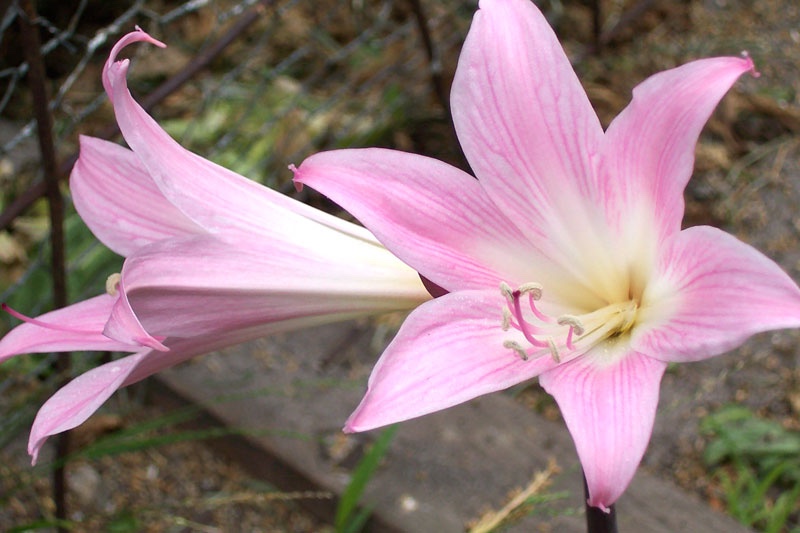
What I’m talking about are Amaryllis belladonna. When you see them popping up in your garden and sometimes by the roadside, you know Autumn is on its way (or Fall for the Americans)

Originally from Sth Africa, they would have been brought here to Australia as a garden plant as they are quite beautiful. Unfortunately, as with so many imported plants they have become invasive in some parts of Australia.
When the temperature starts to drop and the days start to get shorter the bulb under the ground pushes out it’s flower. They can come in pink and white, and while they have their basic trumpet shape, some can have slight variations such as double petals and variations of colour in the throat of the flower.
I think they are quite beautiful and as they last well in a vase, quite useful for flower arrangements.
Once the flower ends the bulb pushes out leaves which then act to feed the bulb before they die down and the bulb becomes dormant over the drier months.
They’re starting to appear now, so that means our lazy summer days are slowly coming to an end and we can expect cooler days ahead. Autumn is my favourite time of the year, so bring it on!
Til next time!
It’s been a bit muggy here in South West Victoria, but the warm nights and long hot days have been interspersed with cloudy, cool days. Fairly typical for a Victorian summer.
Summer grasses and weeds are still bursting out of the ground and invading garden beds.
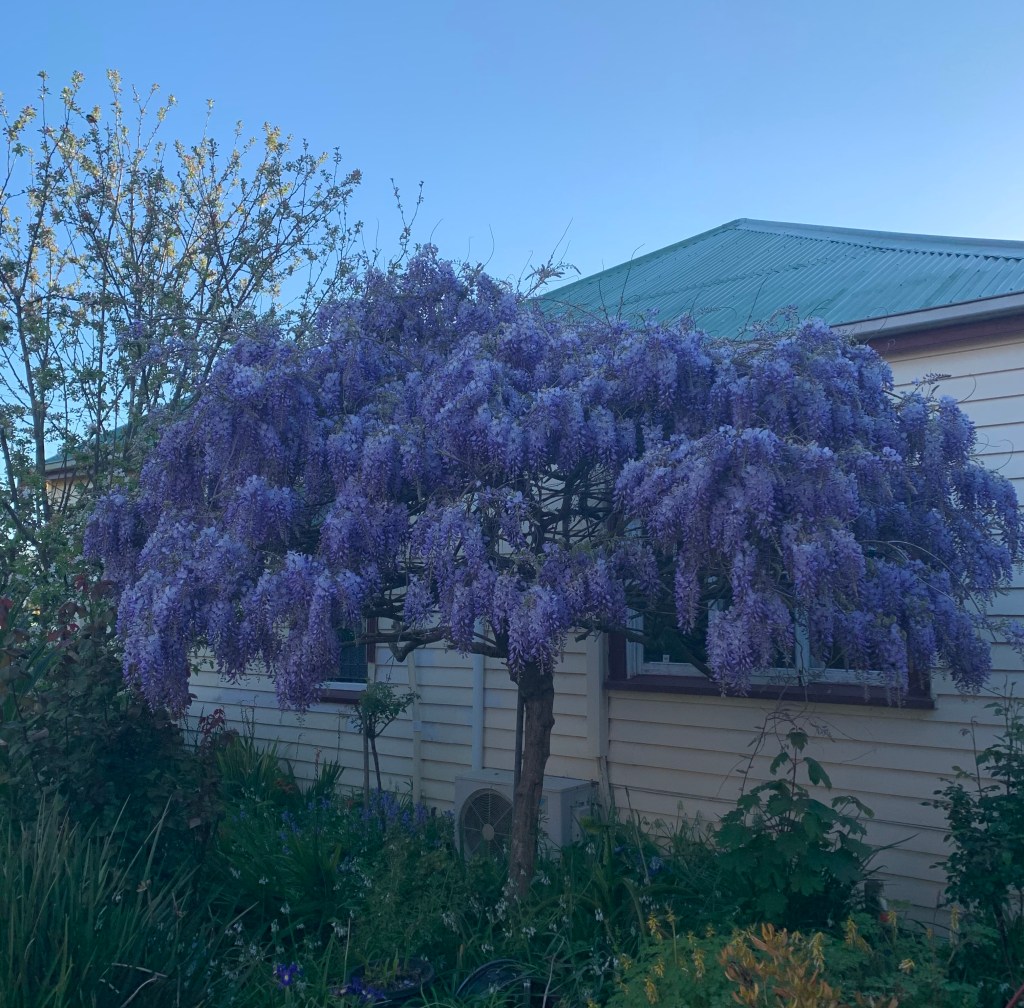
Another thing that’s been growing a bit wild is my Wisteria.
Wisteria chinensis is a plant in the Fabaceae (or Pea) family that originated in China. It’s been an extremely popular plant in Australian gardens due to the beautifully scented and, quite frankly spectacular, drooping racemes (or bunches) of flowers that can be purple, pink, or white in colour.
There are quite a few different cultivars which have different flower habits, W. chinensis is probably most common here in Australia, W. floribunda (Japanese Wisteria) has larger bunches of flowers, and W. alba has white flowers, just to name a few.
I have two wisteria in my garden, one is grown over a wooden structure and the other is grown on a metal frame to form a graceful, treelike shape. It is right outside my kitchen window so I’m lucky enough to have a front row seat to its spectacular flowering season.

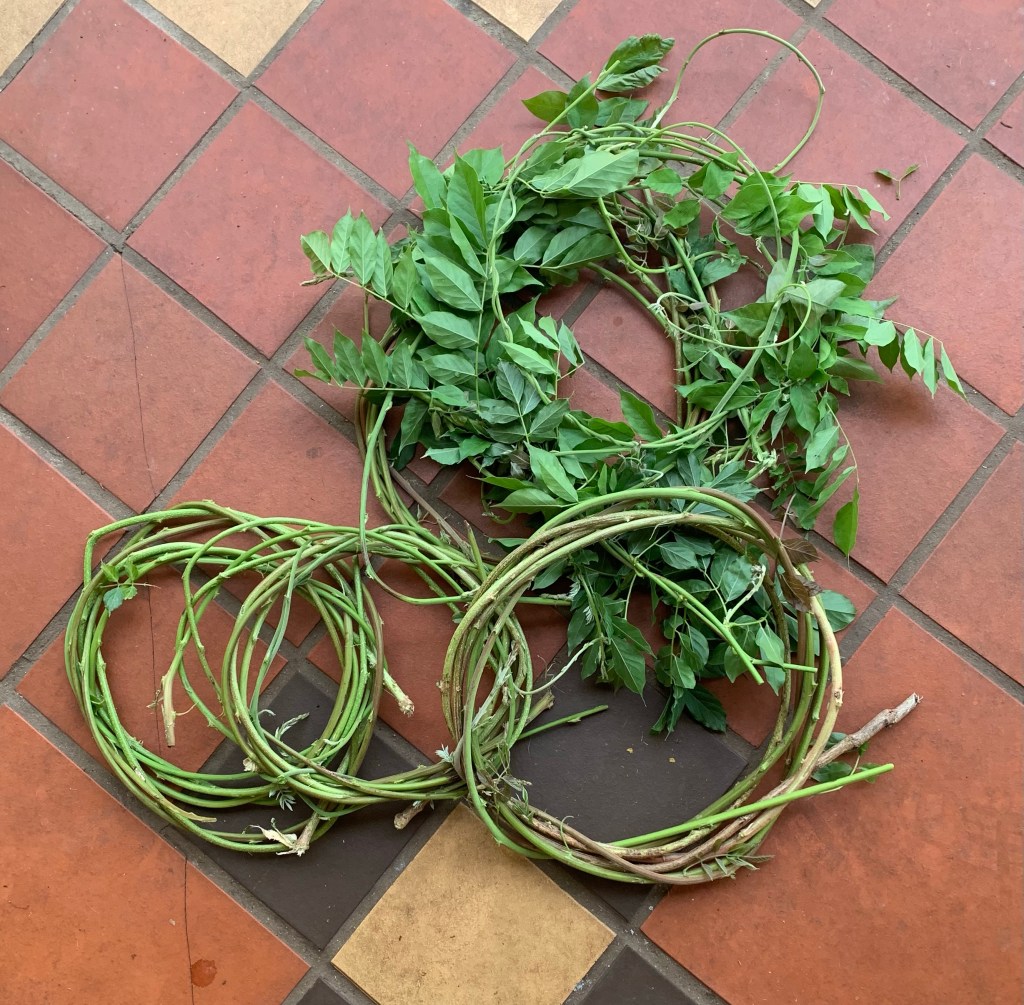
One issue with keeping this in its shape is the habit Wisteria has of pushing new growth out from wherever it can. Long tendrils of new growth can snake out from anywhere.
One thing I do which can be a fun hobby is to collect these tendrils and form them into wreaths which can be decorated for Christmas. Or just decorated merely to look pretty.

The best way to remove any unwanted new growth or suckering growth is to take hold of the growth near its base and give it a short, sharp tug in the opposite direction to which that growth is leading. This removes all of the growth point whereas cutting it will leave the growth point in situ and won’t remove it entirely.
One very important thing to remember about Wisteria is that all it’s parts, except for the flowers, are toxic. The leaves, stems, bark, and seed pods are all inedible for humans so it’s a good idea to be vigilant with small children and pets.
In my research for this blog post I came across a website that was of some interest to me. This site, moodymixologist.com, is dedicated to cocktails and cocktail recipes. One page was about using Wisteria Syrup in cocktails and a recipe was provided. There are also a few other recipes provided which use Wisteria Syrup. That might be something I have to try.
https://www.moodymixologist.com/blog/foraged-cocktails-wisteria-blossom-syrup-whiskey-sour
Til next time!
Episode three of The Flowerpot Pen podcast is available now on Anchor, Acast, and Spotify.

In this episode I’ll have a quick look at talking to plants, also a study on how small gardens can feed as many pollinators as large gardens can.
I’m not going into any of the topics I discuss in any great detail at this stage of podcast development, but I will always endeavour to give links or some other way to find the information given, should you want to delve further into anything I talk about.
The Flowerpot Pen is a work in progress, as time goes by I hope to further refine it. I’m sure experience will be a good teacher.
Search for The Flowerpot Pen by name on Anchor, Acast, and Spotify. More podcasting platforms will be added as time goes by. Take a listen!
Til next time!
Continue reading “Podcast alert”A series of large storm fronts trundled across the state of Victoria over the last week resulting in flooding, wind damage, and grass fires.
Here in the Western Districts, and very close to home for me (too close to home for me), we experienced the lot.
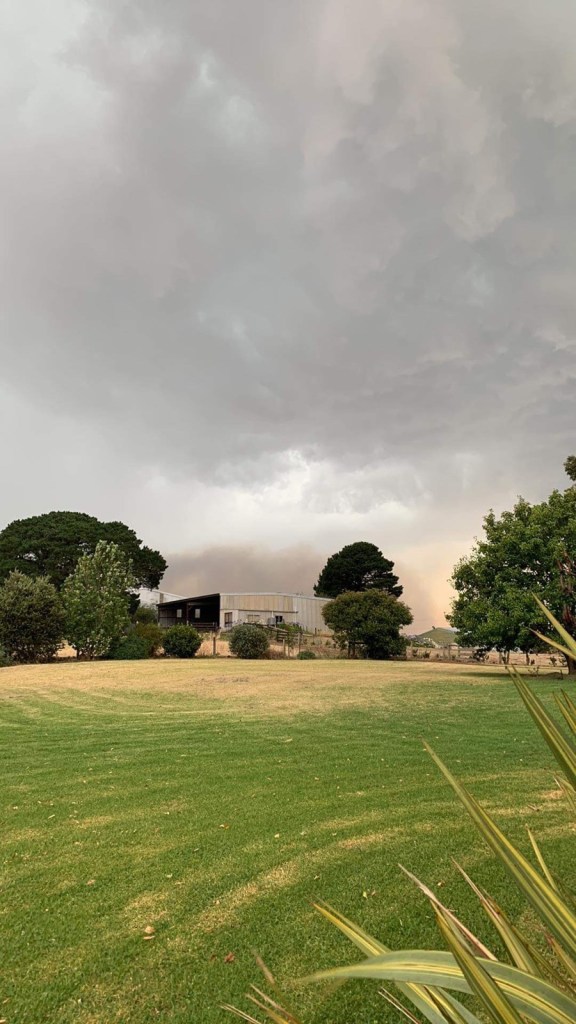
An enjoyable afternoon by a friend’s pool was cut short by lightning strikes starting a grassfire nearby. Luckily it was under control within a couple of hours and the continuous rain helped.

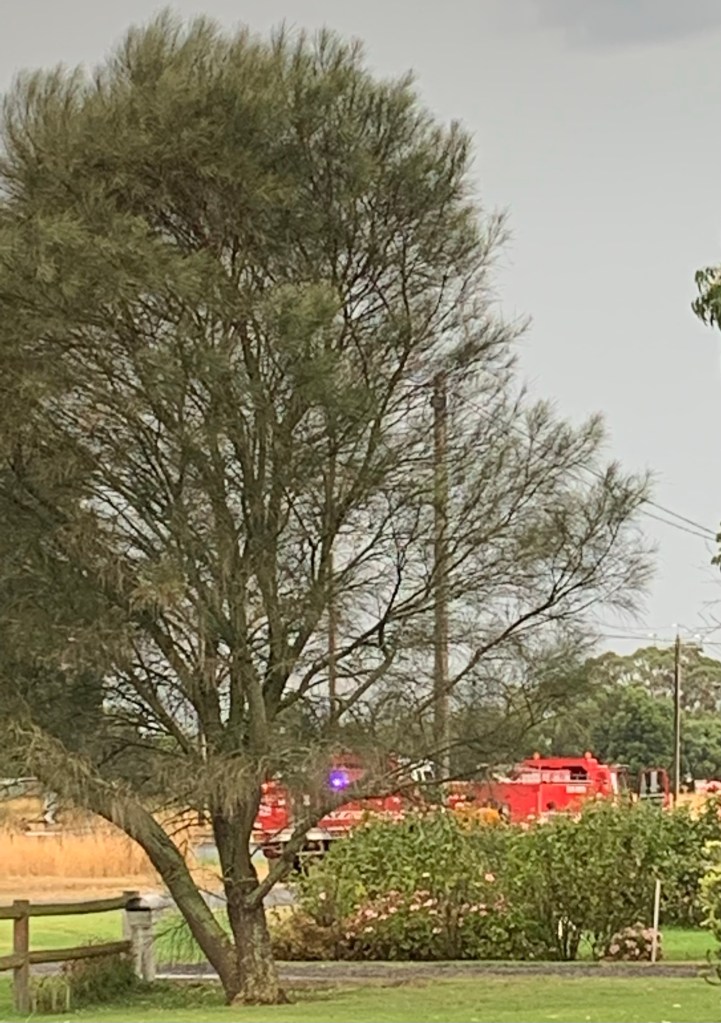
A couple of hours later two more alerts showed more fires, luckily one was a false alarm and the other was small so it was put out quickly. CFA (Country Fire Authority, for anyone not from Victoria ) crews from all around the area are always greatly appreciated when they appear on the scene.


The storms continued for a couple more days with varying intensity, affecting different parts of the state to varying degrees but thankfully it seems to have come to an end for now.
The moral of the story, I suppose, is to be prepared for all eventualities. A ‘bug out’ bag should be prepared, or at the very least be aware of where everything you may need is, and have a plan for when you will leave and which ways you are able to leave. In this case this time I would have had three or four different ways out away from a fire front, but in the case of a larger fire that may be less.
A bag was packed, the dog was kept where I could see her, a lead and her food, bottles of water, long pants and sturdy boots were all ready to go. Luckily, this time, none of that was needed but it was prepared. Our plan is to take the dog and get out as soon as there is any danger.

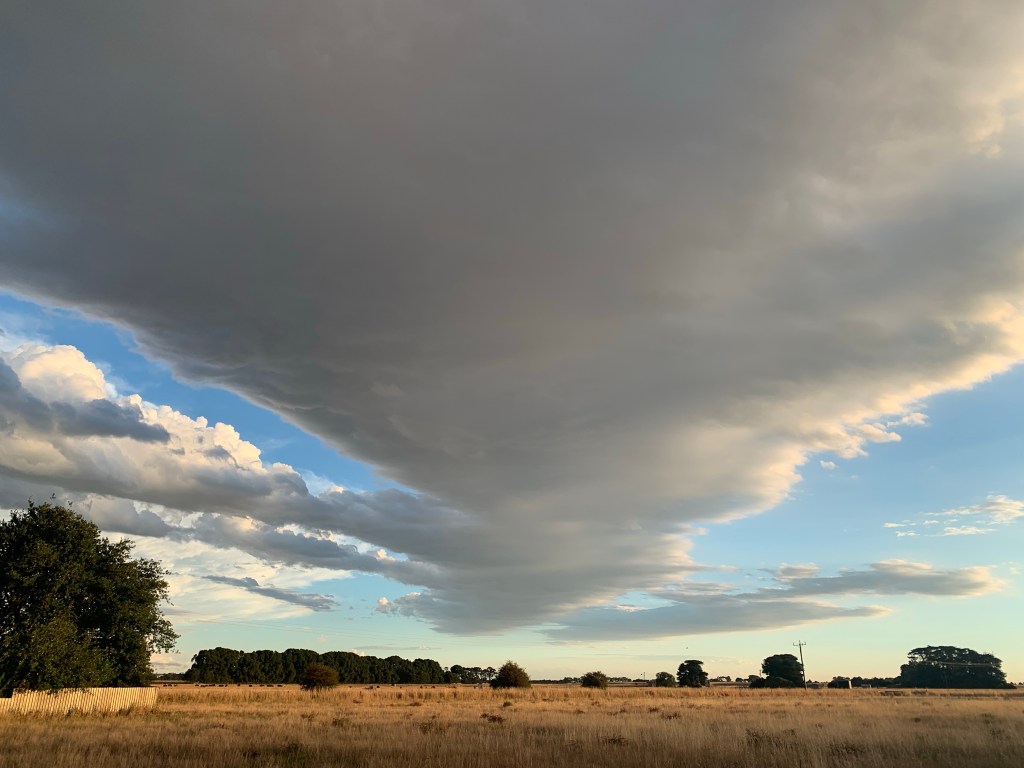
As you can see from the picture above, grasses die right back here in summer, good fuel for a fire. If you think a grass fire is nothing to worry about, think again.
Be safe, be prepared.
Til next time!
One question I’m asked on a regular basis is how far can I cut this shrub back?”
Well, as with lots of things in the garden, the answer can be varied. Not very helpful, I know…
A general rule of thumb to follow for shrubs, especially woody shrubs like Lavender, Marguerite Daisies, and Rosemary, all plants that seem to be commonly grown, is to cut them back after flowering.
How hard to cut them back depends on a few things though. Firstly, is the shape of the plant ok? Does it fit into its space and not encroach on another plant’s space?
Next, is the plant healthy and strong? Does it have long, woody stems with sparse growth at the ends, or is it compact and bushy?
The choice on how hard to cut can vary according to all of these situations.
If the plant is strong and healthy and just needs a trim to keep it in its place, you only need to take off the dead flowers and just a little growth so it doesn’t grow a lot to replace it.
If the shrub is long and ‘leggy’, with an untidy shape, you can cut it back harder. Firstly cut out as much dead wood as you can, then cut the long stems back as far as you need to encourage a nice (generally) rounded shape.
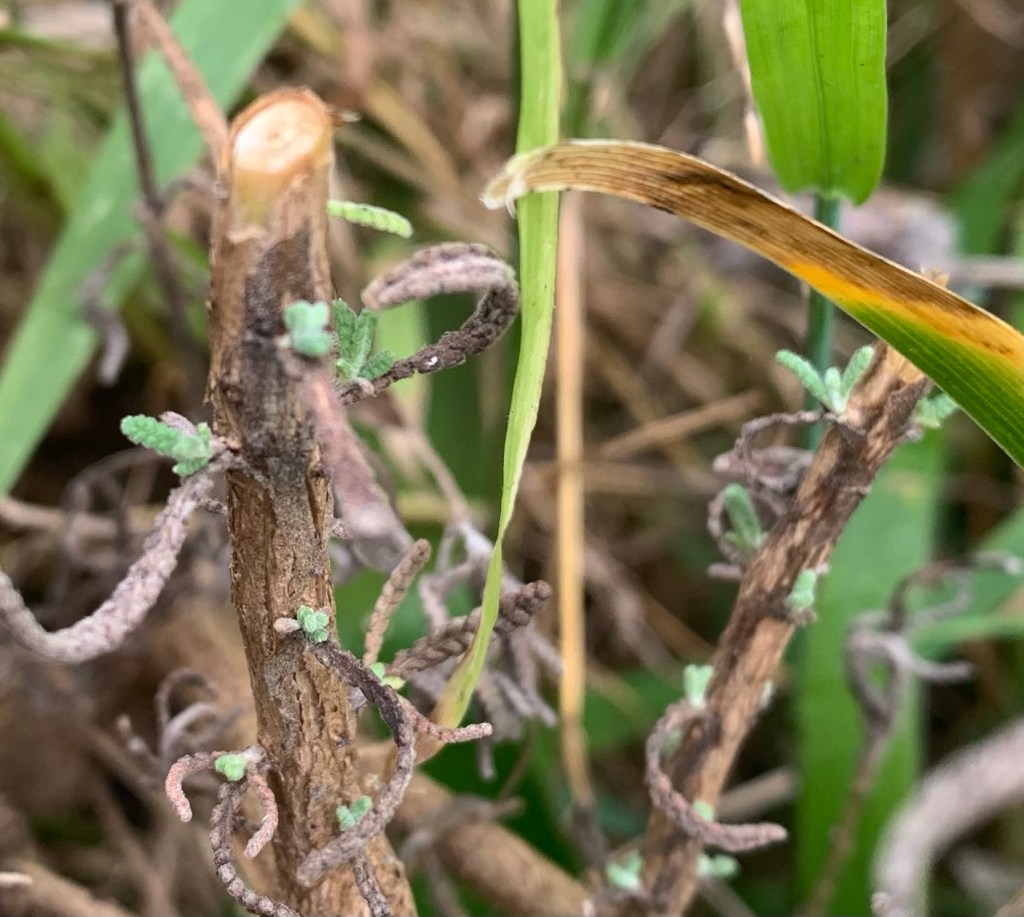
One thing to keep in mind is shrubs like the ones I mentioned above may not grow back from stems that have been cut hard so always try to find some new growth and cut back to there (pictured below) If there’s no new growth then remember it may not grow back and keep this in mind when you’re planning its future shape.

It is always helpful to research a bit into the plants you need to tend, find out when to prune, and often the information in how hard to prune will be available as well.
Gardening is a learning journey and, speaking from experience, you never finish that journey. Some plants will make the journey with you, other plants may not make it! Finding out how and when to prune plants goes a long way to being a successful gardener.
‘Til next time!
I’ve managed to get this year off to a good start.
My goal of delving into the world of podcasting has been achieved! I’m very excited to announce the first two episodes of The Flowerpot Pen are up and live on Anchor, Acast, and Spotify (just search for The Flowerpot Pen)

It’s taken a bit of time to work out the process but with the help of a few very patient people I’ve begun to get a handle on how to manage the process.
The Flowerpot Pen podcast is a work in progress. It will take some time to develop regular patterns and to finalise the content but I’ve got plenty of material to work with, the main problem is knowing where to start!
One of the main functions of this whole activity is to become a research tool for my writing projects but it will be fun to take you along on the journey with me. I hope to be able to bring likeminded people in to interview and also to bounce ideas off. If you, my dear readers have any topics for discussion you’ll find a contact form on my website at theflowerpotpen.com. Let me know what you want to hear about!
Til next time!
The year 2022 is off to a start. Apart from the turmoil the Covid pandemic is still creating, and debate over whether a tennis player (albeit a tennis player who has played a vocal part in the political turmoil surrounding a public health issue) should be allowed to ride roughshod over the hardships we here in Victoria have suffered over the last months and come to Melbourne to play a game, things are good.
We haven’t suffered any catastrophic bushfires or grassfires yet in these parts, and we’ve been able to travel freely to enjoy our families and our beautiful country. That’s not to say things won’t change…
On a personal level I’ve been spending a great deal of time at home so I’ve been able to enjoy pottering about enjoying creative activities and regularly getting into my garden to catch up on everything that’s been neglected.
There’s not really a lot of jobs that are urgently required over the hot summer months here in Victoria. Deadheading roses and giving them a light summer prune, keeping the soil’s moisture levels up, and keeping the summer grasses under control is really all I’m concentrating on.
Seed collection is something else we can do after the spring flowers have finished. Plants like Sweet Peas, wallflowers, vegetables which haven’t been eaten and have been allowed to flower, and anything else really that has formed a seed pod can all be harvested for seed, which can be stored in a dry, cool place until next season. There are many sources of information about collecting seeds online, each plant can be researched in its own right to make sure you use a suitable method.
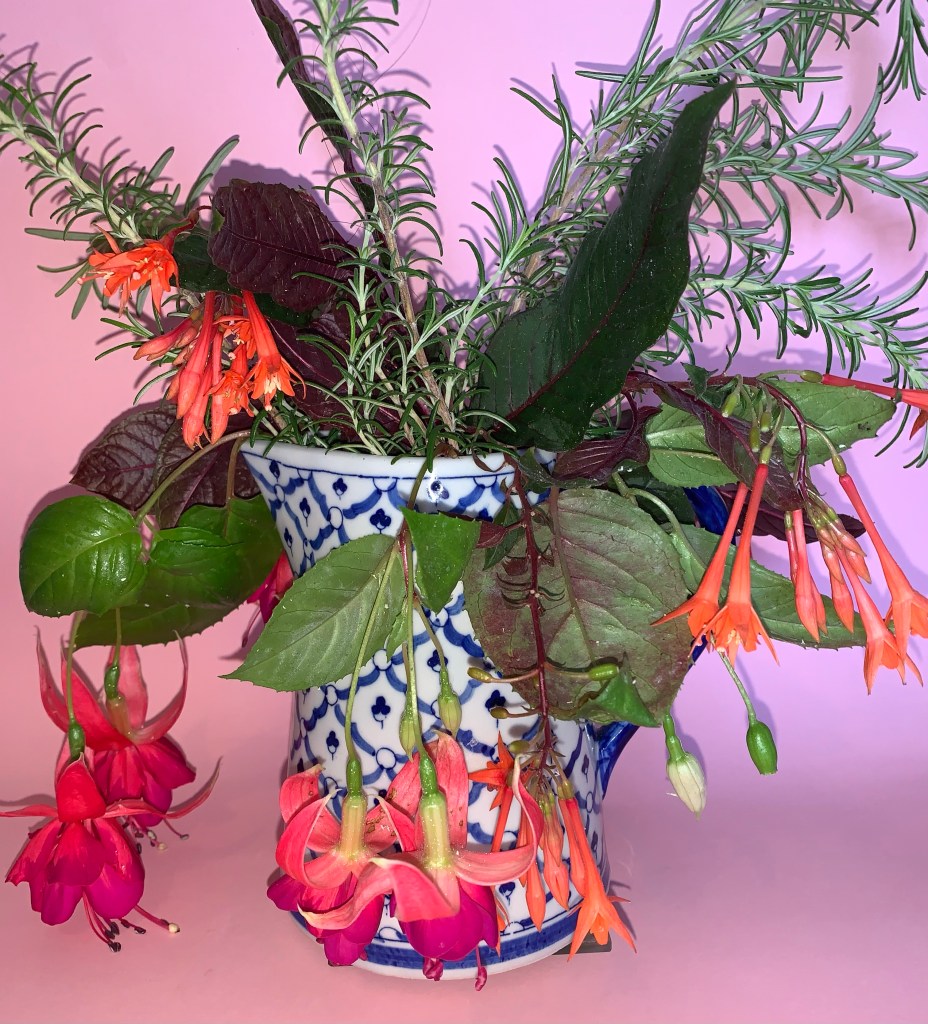
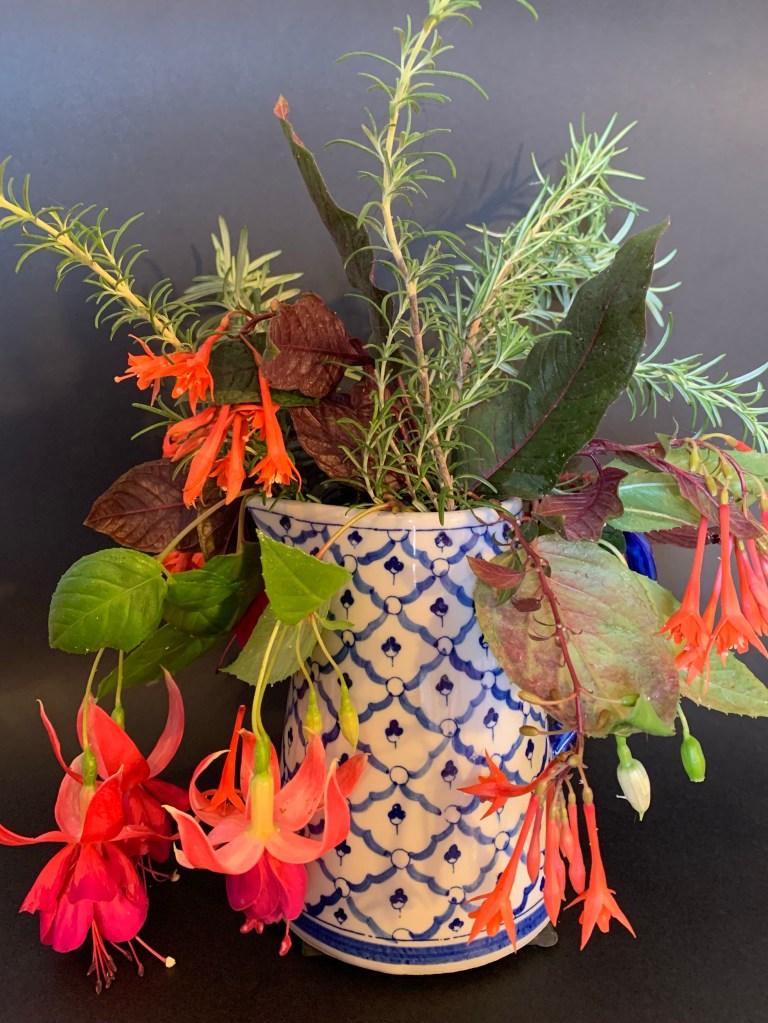
When I’ve got time to relax I like to gather flowers and foliage from my garden to put into one of my large collection of vases as a ‘floral arrangement’. I sometimes like to experiment with photography as well, so they make a great subject.
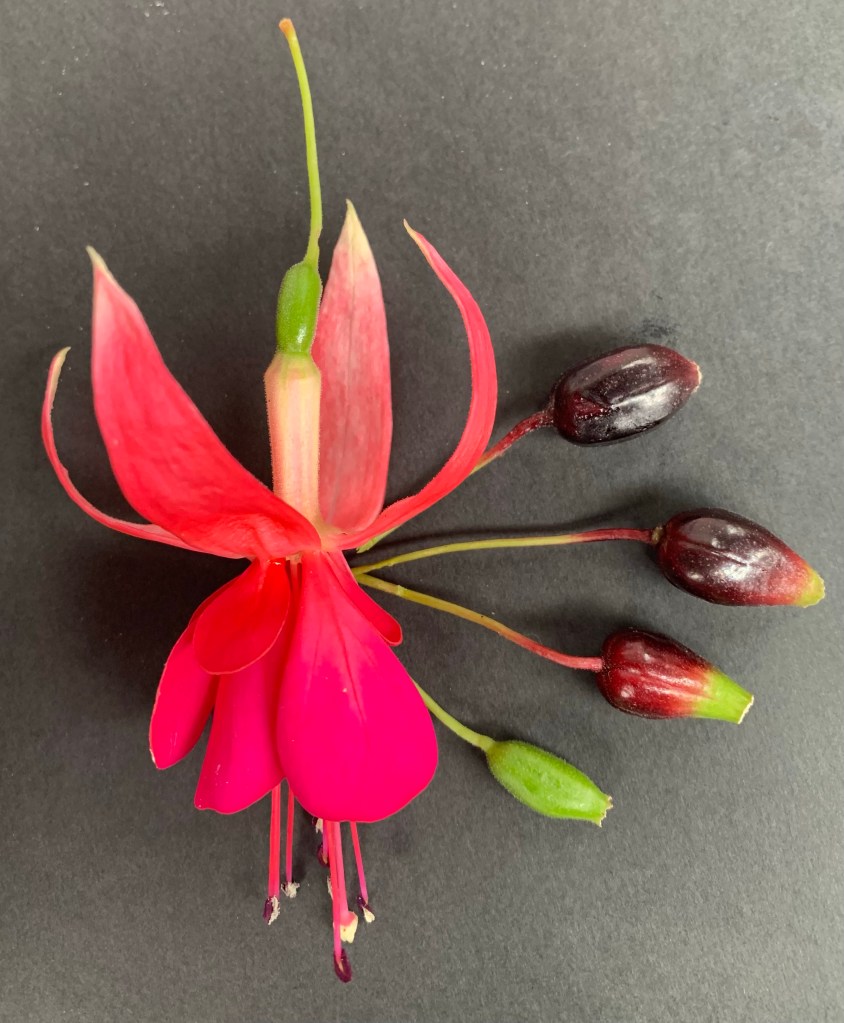
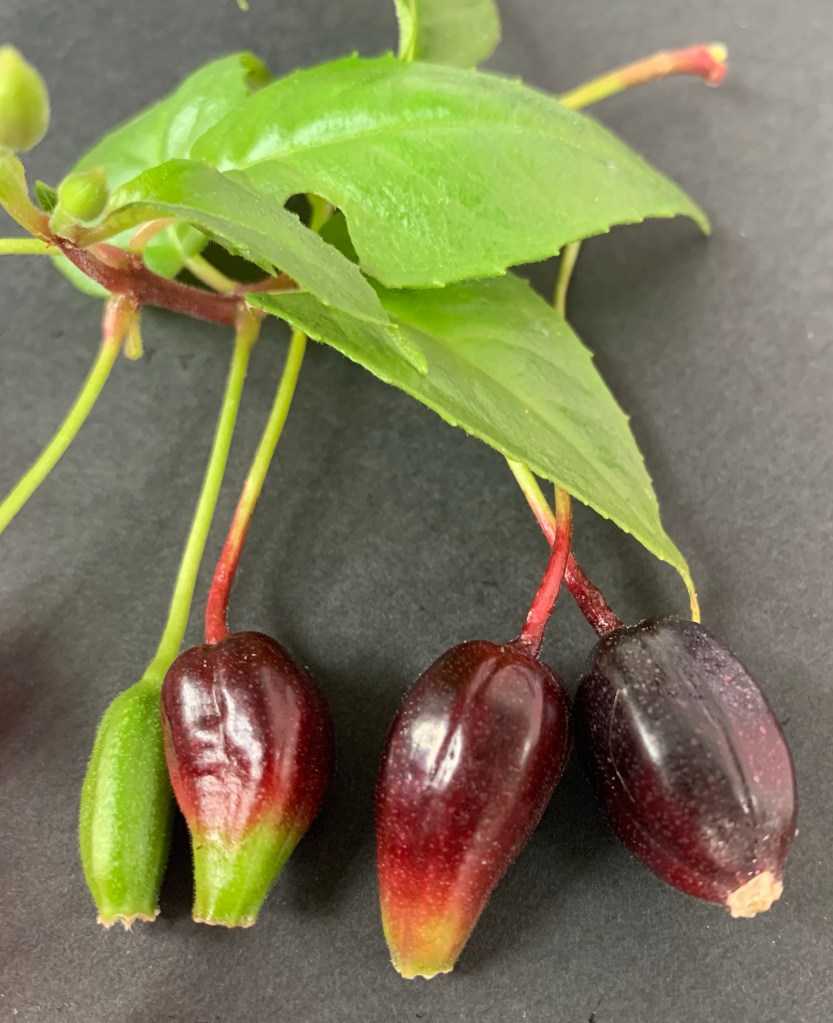
Most flowers are easy to place into an attractive arrangement, but one species I always have difficulty with are the Fuchsias. They tend to ‘dangle’ a little too much for my liking, but I’m always up for a challenge… within reason. I’ve included in this ‘glog’ (gardener’s log) a few of the results of this morning’s experiment. I’m also experimenting with backdrops and lighting. Flash? Or no flash? Overhead lighting or side lighting? Both? I may have to invest in something more technical.


As we kick off the wall into the swimming pool lane of 2022 I’m hoping we all collectively have an easier time of things throughout the year and can all take the time to dabble in our gardens and in our creativity.
Til next time!

We’re sliding pretty quickly into the end of 2021 and it feels like it’s not a moment too soon! There has been no other recent years quite like 2021, except probably for 2020.
The global Covid-19 pandemic has affected the world in many ways that I suppose could not have been foreseen, the rise in mis and dis information, the rise in a mindset that’s too easily swayed by something somebody has seen or heard on the internet, and the rise in divisions between people with different thought processes.
Other world events such as the return of the Taliban in Afghanistan, continuing wars and famines in Africa, the near collapse of democracy in America after a rebellious attack on their seat of power in January, and the statement at the climate change conference COP26 that we are at ‘code red’ with our climate emergency were all low lights in the year. Then there was/is Omicron!
Wow.
One way to cope with all of this negativity is to make a concerted effort to connect with our natural world and try to make a difference to both ourselves and our wider communities by nurturing growth in our gardens, our parks, our wild places.
From little things, big things grow. (There’s a song in that 🙃)
As we head on over to the year 2022, as with most years, we start to think of what we will fill our lives with and how we will live that life in a better, more fulfilling way. New Years resolutions are often about our health, our families, our work and often they come to nothing… you know it! But my NY resolution for this year is so fully achievable I feel like it will come to fruition.
My NY resolution for 2022 is to improve and expand my online presence and bring to you all a regular round of news and interest in all things gardens, environment, and even arts.
Including the oft mentioned podcast that has been lurking about waiting for my technical nouse to improve… 😁
So there it is, my end of year wrap up for The Flowerpot Pen. I will leave you all with my very warmest wishes for a safe and happy holiday season and an enjoyable New Year, and a welcome to the brightest little Daisy in mine and my husband’s life, Daisy May born 20/12/21 🌟🌼🌻🌸❤️

You really know it’s summer when a hovering Dragonfly captures your attention.
I was lucky enough the other day to see the pictured Dragonfly up close enough to capture in a photo.
As usual when my attention is captured by something, I have to find out a little more about that thing. Dragonflies turn out to be extremely interesting.
One site with some good information is smithsonianmag.com. Here’s some things I found out:
– dragonflies evolved approximately 300million years ago
– there are approximately 5000 known species
– Their larval stage can be up to 2 years
– Some adults only live a few weeks while some can live up to a year
– there is a species of dragonfly called the Globe Skimmer which can migrate across the Indian Ocean, a distance of 11,000 miles (17,702.784 km)
That’s just a few of the facts, take a look at the site to find out a bit more about this amazing creature. Personally I’m just happy to see them flitting about in all their magical, glittery finery and knowing the environment is enough to support them.
Til next time!