The deciduous trees haven’t really started their autumn colouring yet, but there’s plenty of colour in the flowers we have flowering right now.
Two plants that give a gorgeous yellow/orange hue in the garden are the Ginger Lily (Hedychium gardnerian) and Leonotis (Leonotis leonurus).
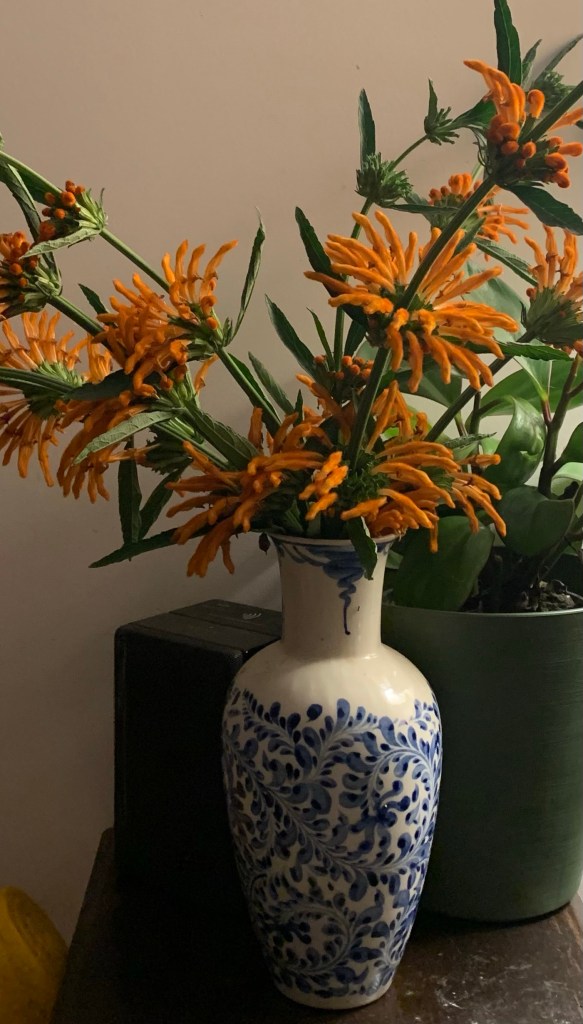
Leonotis is also known as Lion’s Ear, Lion’s Tail, and Wild Dagga and perhaps not surprisingly it’s a native of the southern parts of Africa.
It’s a pretty drought tolerant plant so it fits nicely into Mediterranean style gardens, coastal gardens, and cottage gardens where it’s very structural flower stalk and bright orange flowers make an interesting addition. It also comes with white or yellow flowers, although these seem to be less common.
Leonotis has been used medicinally and in some countries it has been banned for it’s darker side of being used as a ‘recreational’ plant (in no way do I endorse this usage!).
Leonotis flowers late summer to early autumn in these parts and can be grown in full sun to light shade. Prune it back quite severely after flowering to keep it compact.
The other plant I mentioned is the Ginger Lily. Some of you may think “that horrible thing, it’s everywhere!” and indeed, it has been declared a class 3 weed in Queensland, where you are unable to buy or sell it. It has also been declared an environmental weed in NSW, not to mention being on the list of 100 world’s worst weeds in the Global Invasive Species List (www.issg.org/database/welcome/)
However! Here in my cool temperate area and in colder places, it behaves itself quite nicely and lends a tropical feel to any garden that wants it. The large, orange/yellow flowers are very structural and last well in a vase which is always a bonus.
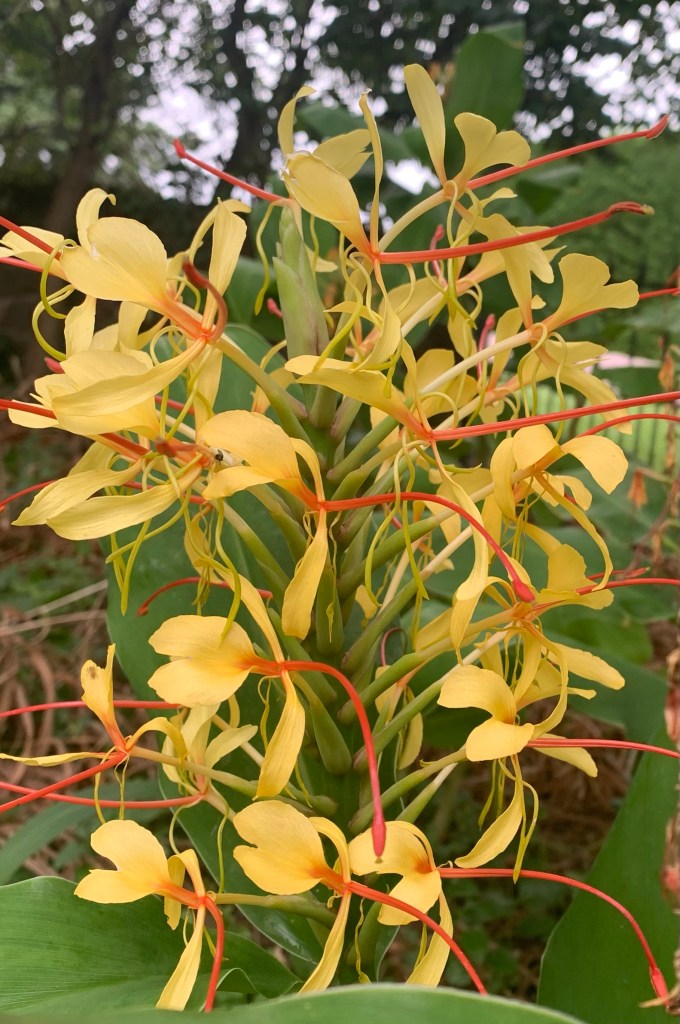
The Ginger Lily grows well in sun to part shade but does require a good deal of moisture in the soil to grow well. Cut to the ground after flowering.
This plant is a good example of knowing how plants behave in different growth conditions, how you can expect it to perform in your garden, and how to take control measures if there’s a possibility of it becoming a problem.
Another example of this is the Agapanthus, you either love them or hate them. I’ve lived in an area where they are a problem, no frosts and sandy soil, and areas where they’re not so much of a problem. The way to control them is to make sure you cut the flowers off before they go to seed.
I think they are a good, hardy plant that has a place in forming the structure of a garden, they make a great low hedge and can also make a good background for more delicate plants.
Til next time!
 The Flowerpot Pen
another interesting article
LikeLiked by 1 person